Close
International professional using character strengths to network across cultures at a professional event

How Character Strengths Help You Network Better Across Cultures

When You Feel Like a Fish Out of Water

That is how I would describe myself in many networking moments — watching people fall into easy conversation and laughter while I find myself alone in a corner, wondering how they make it look so effortless. It happens when I am in a room full of strangers, when the topics seem out of my league, when the jargon jungle closes in around me.

But then I remember why I came: to meet new people, learn something useful, and give new connections a chance to form.

In my first few years in New Zealand, I was acutely self-conscious of the way I looked and how I sounded. My fair skin and black hair meant I was frequently assumed to be from China (I’m from Singapore), and well-meaning folk would greet me with ni hao — to which I would simply say hello in return. For context, this was Hamilton: a smallish university city with international students coming and going, and a particular brand of parochialism I found difficult to reconcile with my very urban, cosmopolitan outlook. It was humbling, and at times uncomfortable.

While I was completing my PhD, I focused on building an academic network, attending as many symposiums and conferences as I could manage. But when the academic career did not materialise, I found myself having to build a completely different network — business owners, public servants, entrepreneurs — people who did not especially care that I had a doctorate. Venturing from the safe harbour of academia, where people enjoyed discussing abstract ideas and methodological debates, into a world of money, practicality, and politics, was disorienting and, at times, disaster-prone.

Speech bubbles of different shapes and colours representing different small talk topics

What saved me, eventually, was small talk. Once I could talk to one person about the weather, the food, or what was interesting about the venue, the rest felt more possible. Rapport came first. Everything else followed.

I share this not as a cautionary tale but as context: feeling like a fish out of water in networking situations is not a personal failing. It is an experience shared by international professionals navigating unfamiliar cultural codes, by migrants rebuilding professional lives from scratch, and by introverts everywhere who find the whole enterprise exhausting before it has even begun. What helps — for all of these groups — is not a better script or a more polished elevator pitch. It is a clearer sense of who you already are, and how to bring that forward with intention.

This is where character strengths come in.


What Are Character Strengths and Why Do They Matter for Networking?

The VIA character strengths framework, developed through research in positive psychology by Christopher Peterson and Martin Seligman, identifies 24 strengths — qualities like Bravery, Curiosity, Kindness, and Zest — that represent the best of who we are. Everyone possesses all 24 strengths in varying degrees. Some sit near the top of your profile almost without your noticing, because they are so intuitive. Others require more conscious effort. All of them are genuinely good, and all of them have a positive impact on others when applied with awareness.

Taking the free VIA Survey at viacharacter.org gives you a ranked list of all 24 — your own unique character profile. And here is what I have found, both in my own networking journey and in working with international professionals and career coaching clients: when you understand your strengths, networking becomes less about performing a version of yourself you think the room wants to see, and more about bringing forward what is already there.

It is also worth thinking differently about what networking actually is. It is not a dreaded event with fancy drinks and a business card quota. It is a series of small moments — a question asked, a laugh shared, a follow-up email sent three days later. It is not the event that gets you a job. It is the small conversations that help people remember you. That shift in framing alone can take the pressure off considerably.

Below, I want to walk through four character strengths that I have found particularly useful in networking contexts — especially for those of us who feel culturally out of place, socially uncertain, or simply not built for working the room.


Bravery: How Do You Face the Fear of Walking In?

To be brave is to face your challenges rather than avoid them.

A Māori proverb or whakataukī captures this beautifully: Tūwhitia te hopo, mairangatia te angitū — feel the fear and do it anyway. But the literal translation offers something even more useful: tūwhitia te hopo means eliminate the negative; mairangatia te angitū means accentuate the positive. It is not just encouragement. It is a strategy.

Bravery in networking might look like tuning out the voice that says it will be a room full of strangers who have nothing to say to me, and replacing it with I might learn something useful from someone I have never met. That is a small but significant reframe — and it is exactly what Bravery, applied intentionally, makes possible.

Bravery also works well in combination with other strengths, particularly Creativity. If walking into a room alone feels too exposing, Creativity might suggest going with a friend and treating it as a social outing. Or setting yourself a small, manageable goal — two new connections added to your LinkedIn network by the end of the evening — rather than facing the whole room at once. Small targets, honestly pursued, are far more useful than ambitious ones abandoned at the door.

If Bravery is in your top five strengths: you likely already show up, even when it is hard. The work is in noticing that courage and giving yourself credit for it. If it is not: Bravery is a strength you can call on deliberately. Naming the fear, finding a manageable first step, and walking toward it anyway — that is Bravery in practice, regardless of where it sits in your profile.


Curiosity and Love of Learning: What Happens When You Get Curious Instead of Self-Conscious?

If Bravery gets you through the door, Curiosity and Love of Learning are what make the conversation worth having.

Curiosity is the motivating force that draws you toward new experiences and new people. Love of Learning is what happens next — the desire to hold onto and deepen what you discover. They are among the most closely related strengths in the VIA framework, and together they are, in my experience, the ideal combination for navigating an unfamiliar culture. They give you a reason to be in the room that has nothing to do with impressing anyone.

I remember hovering at the edge of a group already deep in conversation, smiling and nodding as people spoke. Mutual eye contact was my cue to offer a question. I made mental notes of what was interesting. I watched how others moved easily between groups — a friendly nice talking to you, hope to see you around and they were gone, joining another conversation entirely. In many Asian cultural contexts, leaving a conversation feels impolite. Here, it is simply how networking works. Curiosity helped me observe that without judgment, and Love of Learning helped me file it away.

Getting curious about the other person also has a liberating side effect: it takes the focus off yourself. The more I thought about networking as making friends rather than securing career opportunities, the less stressful it became. Nothing to lose. Everything to gain. And a much better opening line than Hi, I have a PhD, what do you do? — which I have, regrettably, actually said. A genuine question, a light observation about the event, or even a shared complaint about the weather will take you much further.

For international professionals specifically: your cultural unfamiliarity is not a liability here. It is material. Genuine questions about how things work in your new country — asked with real curiosity rather than performed interest — make people feel interesting and valued. That is a networking superpower many locals do not have.


Social Intelligence: How Do You Read the Room When the Rules Are Unfamiliar?

Social intelligence is the ability to be aware of and understand our own feelings and thoughts, as well as those of the people around us — and to respond in ways that are appropriate to the situation.

It is worth distinguishing it briefly from the related concept of emotional intelligence. While emotional intelligence focuses on identifying and managing your own emotions, social intelligence extends further: it includes understanding the dynamics of relationships and interactions, reading social situations accurately, and responding in ways that actually land. In a networking context, this is the difference between knowing you feel nervous and knowing what to do with that nervousness so it does not derail the conversation.

Here is a real example. I once approached a group at a networking event and asked what had brought them along that evening. The answer was brief: our company are event sponsors and we got free tickets. The group was clearly comfortable among themselves and not especially interested in conversation with a stranger. I felt foolish for a moment. Embarrassed, even.

But Social Intelligence gave me a second reading: these were likely regulars who had attended too many of these events, were there out of obligation, and had probably exhausted their networking energy hours ago. It was not about me. So I smiled, nodded graciously, and walked to the food table — partly to regroup, partly because the food was genuinely good — and looked for someone else who seemed more available for conversation. Drink in hand, I felt considerably less exposed.

That small recalibration — moving from what did I do wrong to what was actually happening in that interaction — is Social Intelligence at work. It does not eliminate awkward moments. It helps you recover from them without losing your footing.

For those who find networking socially exhausting: Social Intelligence also means knowing your own limits. Arriving early when the room is quieter, giving yourself permission to step outside for a moment, setting a time limit for the event — these are not cheating. They are self-awareness in action.


Putting It All Together: How to Use Your Strengths Before Your Next Networking Event

Whether Bravery, Curiosity, Love of Learning, and Social Intelligence appear at the top of your VIA profile or further down, they are all available to you. The question is how consciously you are drawing on them.

If these strengths are among your top five: bring them to networking moments with more intention. Notice when you are using them well, and when anxiety is quietly suppressing them. If they sit lower in your profile: here is an opportunity to develop them — to bring them to mind deliberately, practise them in lower-stakes situations, and notice what shifts.

Whatever your profile looks like, the goal of networking is not to become someone you are not. It is to bring who you already are into the room — with enough cultural awareness to calibrate how you express it, and enough self-knowledge to know what you are working with.

Start with the free VIA Survey at viacharacter.org. Fifteen minutes. Twenty-four strengths. Your own unique profile, ready to be put to work.


For Career Practitioners: Supporting Clients Who Struggle with Networking

If you work with clients who find networking uncomfortable — whether because of cultural unfamiliarity, social anxiety, introversion, or simply never having been shown how — the character strengths framework offers a practical and genuinely useful coaching lens.

Rather than beginning with tactics, begin with strengths. Ask your client what they already bring into a room. Help them name the courage it takes to show up at all. Explore with them which strengths they are suppressing out of anxiety versus which they are calibrating with cultural awareness. These are different conversations, and they lead to different outcomes.

I facilitate the CDANZ Special Interest Group on Character Strengths — a warm, reflective community of career practitioners exploring how strengths-based approaches can deepen our work with clients. Our next meeting is on Thursday 23 April 2026, 7–8pm (NZ time), and the topic is directly relevant if you support clients who find networking challenging — whether that is international professionals navigating a new cultural context, or anyone dealing with social anxiety or uncertainty about where to begin.

The meeting is open to CDANZ members and non-members alike.

Register here: https://zoom.us/meeting/register/1FIbsNPYRGS9SydcbXqb6w


Dr Sherrie Lee is a career coach for cross-cultural and mid-career transitions, based in Wellington, New Zealand. She is a Certified Career Services Provider™, leads the CDANZ Special Interest Group on Character Strengths, and works with international professionals, migrants, and academics navigating career change across cultures. Learn more at thediasporicacademic.com or book a free 20-minute discovery call.


International professionals applauding a speaker

The Credential Trap: Why International Professionals Struggle to Get Hired in New Zealand

For career-changer migrants navigating the gap between their qualifications and the New Zealand labour market — and for the advisors, institutions, and communities who support them

You did not come to New Zealand on a whim.

You spent months — maybe years — researching pathways, weighing up options, talking through the implications with your family. You chose a postgraduate programme strategically, understanding that study was the most viable route toward the life you were building here. You arrived with qualifications, with experience, with drive. And you arrived with a reasonable assumption: that the career you had built in your home country would count for something in this one.

It does count. But perhaps not in the way you expected.

This article is for two audiences. First, the career-changer migrants: mid-career professionals who are using international study as a deliberate migration pathway and want a clearer map of what the New Zealand  labour market actually looks for. Second, the career advisors, student services practitioners, and academic staff who support them, and who need better frameworks for the specific and often overlooked challenges this cohort faces.

Because these two conversations belong together. What happens — or fails to happen — in a career advisory session has direct consequences for a real person’s ability to build the life they came here for. Career-changer migrants have made a huge investment of money, time and energy to study, often at postgraduate level, with a clear goal of finding work and settling in their destination of choice — and hope.

The Career Changer in the Room: A Cohort We Rarely Name

Most career support services are designed around a particular image of the international student: someone in their early twenties, fresh from an undergraduate degree, holding three possible futures lightly — return home, stay here, or move to a third country. That image is real for many students.

But it is not the whole picture.

A growing cohort arrives looking very different. They are in their thirties or forties. They have ten, fifteen, sometimes twenty years of professional experience. They are not holding their futures lightly — they have already made the decision. They enrolled in a postgraduate programme because it was the most viable pathway to the permanent residency they are working toward. Study, for them, is not just getting a degree. It is a calculated means to a specific end.

Researchers have named this pattern “edugration” — a deliberate blend of education and migration, where international study becomes a structured, multi-step immigration strategy. A 2024 study of Indian postgraduate students in the United Kingdom found that most participants were using the education pathway as a deliberate entry point to permanent residency, and most were in their late twenties to forties, with significant careers behind them (Udayanga, 2024). New Zealand is not unique in this — but our support systems have not kept pace with it.

If you are that person reading this: you are not unusual. You are part of a well-documented and growing cohort. And the challenges you are encountering are not a reflection of your capability — they are a reflection of a gap between what you were told the pathway would look like, and what it actually requires.

Qualified and Overlooked: Why Overseas Credentials Don’t Travel Well

Aria (a pseudonym) came to New Zealand from India with ten years of human resources experience at several global brands. She had managed recruitment pipelines, led organisational design projects, and navigated large, complex organisations. She enrolled in a postgraduate Master’s programme as her migration strategy — deliberate, planned, well-researched.

And she arrived believing that her experience, combined with a New Zealand qualification, would open doors in the local HR market.

This is an entirely reasonable belief. It is also, in the New Zealand context, incomplete — and that gap between reasonable expectation and local reality is where this cohort most needs support.

A systematic review of 74 studies on international graduate workforce integration found that immigrants’ earnings — particularly those with foreign degrees or who arrived at an older age — are consistently lower than their qualifications predict (Han et al., 2022). A local qualification helps, but even that does not fully close the gap with locally born graduates. Recruitment processes frequently demand the display of cultural capital — a tacit familiarity with local norms, communication styles, and workplace expectations that no overseas role, however senior, can fully provide. Employer bias, often framed as a question of “cultural fit,” operates alongside formal qualifications — and sometimes more powerfully than them.

Critically, credential recognition does not just affect whether you get hired — it affects the quality of what becomes possible once you are. Zikic and Klehe’s (2021) quantitative study of 356 skilled migrants found that when migrants’ credentials were not locally recognised, the positive effects of career planning on employment quality were significantly reduced. Put plainly: it is not only harder to get through the door without recognised credentials — it is harder to plan meaningfully toward the career you actually want once you are inside.

The question New Zealand employers are really asking is not ‘What have you achieved?’ It is ‘Do you understand how we work here, and do you know anyone who can vouch for you?’

This is the credential trap. It catches capable, experienced professionals not because they lack ability, but because they arrive with an incomplete roadmap. Pham et al. (2024) found that international graduates consistently underestimated the importance of social and cultural capital before entering the labour market, only discovering their critical role after failing to secure roles. University programmes — including postgraduate ones — emphasise qualifications and skills. They rarely prepare students for the filters that actually operate in the local labour market.

What New Zealand Employers Are Actually Looking For

New Zealand’s labour market has features that are easy to miss if you have New Zealand’s labour market has features that are easy to miss if you have worked primarily in large multinational environments — even Western ones.

Workplaces here tend to be flat in structure and relationship-driven in culture. Decisions are made through conversation and consensus as much as through hierarchy. Communication is often indirect — understatement and humility are read as positive attributes, not weakness. And community involvement is genuinely woven into how people are assessed: not as a nice-to-have on a CV, but as a signal of character and belonging.

Aria had spent her career in organisations where Western multinationals set the cultural tone. She was fluent in global business English, comfortable with performance frameworks, experienced across cultures. She assumed this would translate. But the specific nuances of New Zealand workplace culture — its particular combination of informality, egalitarianism, and community orientation — was something she had not encountered before. This is not a deficit. It is simply unfamiliarity. And unfamiliarity can be addressed — but only if it is named.

Research on social capital and migrant integration in Aotearoa notes that New Zealand has one of the highest immigration rates in the OECD — nearly 30% of the population is foreign-born — yet the labour market remains deeply relationship-driven (Roskruge & Poot, 2025). Bridging social capital, meaning connections across different groups and communities, is especially important for migrants’ employment outcomes. Bonding capital — connections within your own cultural community — matters for wellbeing, but it is not sufficient for career advancement on its own.

The practical implication of this is significant. Pham (2020) found that 45% of graduates secured their first role through personal introduction — not through formal job applications. For career-changer migrants, this statistic has particular weight: the professional network they spent a decade building is, for most practical purposes, inaccessible from New Zealand. They are not starting from zero in experience. But they are starting from zero in local networks. And local networks and connections are how most people here actually get hired.

The Support Gap: Why Generic Career Advice Isn’t Enough

When Aria came to see me, she expected we would focus on CV formatting and interview technique. She was six months from completing her Master’s and thinking in tactical terms.

What she needed was a different kind of conversation entirely.

Me: “You’ve got great experience, and New Zealand employers will respect that. But what they’re also asking themselves is: does this person understand how things work here? Can they navigate Kiwi workplace culture? Do they have connections in the local community? Those things are harder to show on a CV, which is exactly why we need to start building them now.”

Han et al. (2022) identify this as a meso-level challenge — not a gap in individual capability, but in the institutional and organisational supports surrounding international graduates. Career services may be limited in scope due to resourcing constraints, or oriented toward the local student who is still deciding what to do with their degree. The career-changer migrant — who already knows exactly what they want — needs something different: structured planning support, and quickly.

Zikic and Klehe (2021) found that it is career planning, not career exploration, that predicts employment quality nine months later. Students who moved early into goal-directed planning — a specific target sector, a realistic entry-level role, a timeline, a network-building strategy — achieved significantly better outcomes. The implication is clear: the first advisory conversation with a career-changer migrant should begin shifting them from orientation into planning. For this cohort, open-ended exploration is a luxury they cannot afford.

Research on the  education-migration nexus in Australia  found that many experienced international student migrants describe their trajectory as resembling an endurance race — requiring sacrifice and resilience they had not anticipated (Tran et al., 2025). Many ended up in roles well below their previous seniority, not through lack of capability, but simply to keep the migration pathway open. This is the predictable shape of a transition that is poorly mapped in advance. Career practitioners who understand this can reframe it as a phase — one with a logic and a timeline — rather than leaving students to encounter it as an unexpected and demoralising surprise.

Volunteering as Community Entry: Building the Network That Gets You Hired

When I told Aria that volunteering should be her immediate priority, she heard it as advice to fill a gap on her CV. I had to reframe it — that volunteering was meaningful way to understand local culture and contribute to a community.

Me: “This isn’t about your CV. You already have plenty for a CV. This is about building the network that will get you introduced to the role you actually want. In New Zealand, that network starts in the community. Volunteering is how you enter communities you’re not yet part of.”

A New Zealand-based longitudinal study by Soltani and Donald (2024) provides a framework for understanding volunteering and community engagement as part of career planning.  Their study of postgraduate students — including international students from Asia — found that participation in a landscape of practice: engagement across multiple communities including volunteer organisations, student networks, church groups, and workplace settings, was the primary mechanism through which international students built social and cultural capital simultaneously. International students engaged in significantly more boundary encounters — deliberate crossings into new communities — than their domestic peers, because their existing networks simply did not transfer.

For the career-changer migrant, this is the critical insight: volunteering is not just a a quick way to get local experience. It is the means by which you enter the social fabric that underpins life in New Zealand. ISANA New Zealand notes that community engagement is viewed on CVs here not merely as initiative, but as a signal of cultural integration — of genuine commitment to belonging, not just to working.

Soltani and Donald also found that lecturers and institutional contacts played a bridging role — providing access to professional networks that international students could not yet reach independently. This is why alumni mentoring programmes, employer engagement events, and career expos are not optional extras for this cohort. They are the scaffolding that makes boundary encounters possible before students have built enough local presence to create them on their own.

Practical starting points for career-changer migrants like Aria include the university’s volunteering and leadership programme for students, Volunteer Wellington, and the Yes for Success work experience programme. Student clubs and professional associations offer lower-stakes entry points — places to build intercultural fluency and local presence before taking it into job interviews.

Your Strengths Are Real — Here Is How to Deploy Them

If you are the career-changer migrant reading this, here is what the research — and career practitioners working with this cohort — want you to hear:

You are not starting over. You are carrying a decade or more of professional experience, cross-cultural competence, and the kind of resilience that comes from making a major life transition deliberately and with clear purpose. What changes is not your capability — it is the context in which it needs to be demonstrated, and the strategies needed to activate it.

Zikic and Klehe (2021) found that two personal resources were the strongest predictors of quality employment for skilled migrants: proactivity and social support. Proactivity — the disposition to take initiative, anticipate challenges, act before problems compound — was one of the most powerful factors in their model. If you have built a career across global organisations, you almost certainly have this. The task is to direct it toward the right strategies in the New Zealand context, rather than doubling down on the job application process alone.

Pham et al. (2024) identified six forms of capital that international graduates draw on: human (qualifications and skills), social (networks), cultural (local norms), identity (professional self-concept), psychological (resilience), and agentic — the capacity to develop strategies that effectively mobilise the other five based on one’s background, expertise, and context. The most successful graduates were not those with the strongest qualifications. They were those who understood which capital to activate, and when. The career-changer migrant typically has all six. What they often lack is a clear map of how to deploy them in New Zealand.

Soltani and Donald (2024) add a further dimension: psychological capital and career agency — the growing sense, developed through active community participation, that one has the confidence and capacity to shape one’s own trajectory. For mid-career professionals who have been highly effective in their home context and find themselves suddenly uncertain, this is often the most fragile dimension, and the most important to rebuild. It is restored not through reflection alone, but through action — through showing up, contributing, and being seen.

Rebuilding agency is further supported by intentional support. Pham (2023) found that international graduates who developed stronger employability outcomes were those who engaged in active self-reflection about their cultural backgrounds and strengths — making their identity and psychological capital visible to themselves, and to employers. Career practitioners can create the conditions for that reflection: through structured programmes, mentoring, and coaching that help career-changer migrants name and deploy what they already have, while building the context-specific knowledge the local market requires.

For Aria, that meant being explicit about how to access the alumni mentoring programme and decoding the unwritten rules of networking in New Zealand. For example, attending a career expo was reframed: not as an opportunity to hand out CVs, but as a chance to practise talking to employers about genuine interest in their work and to build the kind of connections that convert, over time, into introductions. As career practitioners, we are building a bridge between the capabilities our students already have and the context they are learning to work within.

The career you want in New Zealand will not come from your CV alone. It will come from the community you build here. That is not a setback — it is an invitation.

For Advisors and Institutions: Five Principles for Supporting This Cohort

The career-changer migrant requires a distinct approach. Not more intensive support — different support. The following principles are drawn from the research and from practice.

1. Name the credential trap early, and name it with care.  Many in this cohort arrive with a well-developed but incomplete theory of how their qualifications will translate. Zikic and Klehe (2021) are explicit: migrants need to understand that credential-based entry does not guarantee success, and that their own agency is crucial. This conversation, done well, is one of the most valuable a career advisor can offer. Done too bluntly, it can undermine confidence at a vulnerable moment. The frame matters: this is not bad news about their qualifications — it is important information about how New Zealand works.

2. Move from exploration to structured planning — and do it early.  Career exploration alone does not predict employment quality. Career planning does. The first advisory conversation should begin to establish a specific target sector, a realistic entry point, a timeline, and a network-building strategy. Orientation is not enough for this cohort.

3. Reframe volunteering as community entry, not CV building.  In New Zealand, community engagement is a structural pathway to the social capital and cultural familiarity that employers screen for. Experienced professionals will take this seriously when it is framed as the deliberate, evidence-based strategy it is — not as a suggestion to fill gaps on a CV.

4. Be the bridge.  Soltani and Donald (2024) found that lecturers and institutional contacts play a critical role in providing access to professional networks that international students cannot yet independently reach. Mentoring programmes, alumni connections, and employer engagement are not optional extras for this cohort. They are the scaffolding. Actively connect career-changer migrants to these from the outset.

5. Set honest expectations about the transition.  The likely step down in seniority or salary in the first role is real and, in most cases, temporary. Han et al. (2022) note that overeducation experienced as permanent — rather than as a phase — is what damages life satisfaction. Helping students name this as a predictable transition, not a verdict on their worth, requires sensitive and careful reframing — and it is work only a trusted advisor can do.

It Takes a Community

Just as it takes a village to raise a child, it takes a community to support the career-changer migrant in their journey. They have made one of the most significant decisions a person can make — to leave behind a country, a professional network, a social world built over decades, in pursuit of a better life for themselves and their family. More than a CV review, they need a community willing to receive them.

That community is made up of many people, each with a different role. Career advisors who unpack the hidden job market with care. Lecturers who open their networks. Volunteer coordinators who welcome newcomers without requiring existing connections. Employers who understand that cultural fit is something that can be learned, and that the capacity to build it is itself a skill. Alumni who remember what the transition felt like and make themselves available to those who are in the middle of it.

Soltani and Donald’s (2024) research found that what developed students’ employability and psychological wellbeing was not any single programme or intervention. It was the accumulation of boundary encounters — small moments of connection across difference, each one building the familiarity and belonging that eventually becomes, for want of a better word, home. Research cannot mandate those encounters into existence. People do. Institutions do. Communities do.

For the career-changer migrant: your experience matters. Your qualifications matter. And the community you build here will matter most of all. Start building it now — through a volunteer shift, a student club meeting, an alumni coffee, a conversation with a stranger who might become a colleague. The path to the career you came here for runs through people. It is not a detour. It is a map full of possibilities.

For everyone who works alongside them: the village is not a metaphor. It is the job.

References

Han, Y., Gulanowski, D., & Sears, G. J. (2022). International student graduates’ workforce integration: A systematic review. International Journal of Intercultural Relations, 86, 163–189. https://doi.org/10.1016/j.ijintrel.2021.11.003 

ISANA NZ. (n.d.). Encouraging international student engagement with the community. Student Experience Information. https://www.isana.nz/toolkit/student-experience-information/encouraging-international-student-engagement-with-the-community 

Pham, T. (2020, July 22). Social capital’s role in graduate employment success – Monash Lens. https://lens.monash.edu/social-capitals-key-role-in-lifting-graduate-employment-outcomes/ 

Pham, T. (2023). Strategies Undertaken by International Graduates to Negotiate Employability. In Rethinking Graduate Employability in Context (pp. 299–318). Springer International Publishing. https://doi.org/10.1007/978-3-031-20653-5_14 

Pham, T., Soltani, B., & Singh, J. K. N. (2024). Employability capitals as essential resources for employment obtainment and career sustainability of international graduates. Journal of Further and Higher Education, 48(4), 436–448. https://doi.org/10.1080/0309877x.2024.2344771 

Roskruge, M., & Poot, J. (2025). Evidence of the effects of ethnic diversity, years of residence, and location on migrant bridging, bonding, and linking, social capital: a New Zealand synthesis. Asia-Pacific Journal of Regional Science, 9(3), 831–867. https://doi.org/10.1007/s41685-025-00386-6 

Soltani, B., & Donald, W. E. (2024). A landscape of practice approach to enhance employability: insights from domestic and international postgraduates. Higher Education, Skills and Work-Based Learning, 14(6), 1340–1353. https://doi.org/10.1108/heswbl-11-2023-0320 

Tran, L. T., Tan, G., Bui, H., & Rahimi, M. (2025). Evolving pathways: From the education-migration nexus to the education-work-migration nexus in Australia. Journal of Sociology, 61(2), 273–290. https://doi.org/10.1177/14407833241311240 

Udayanga, S. (2024). Challenges in navigating the education-migration pathways, and subjective well-being of highly educated immigrants: the case of Indian student immigrants in the United Kingdom. Frontiers in Sociology, 9. https://doi.org/10.3389/fsoc.2024.1385664 

Zikic, J., & Klehe, U. (2021). Going against the grain: The role of skilled migrants’ self‐regulation in finding quality employment. Journal of Organizational Behavior, 42(8), 1023–1041. https://doi.org/10.1002/job.2550

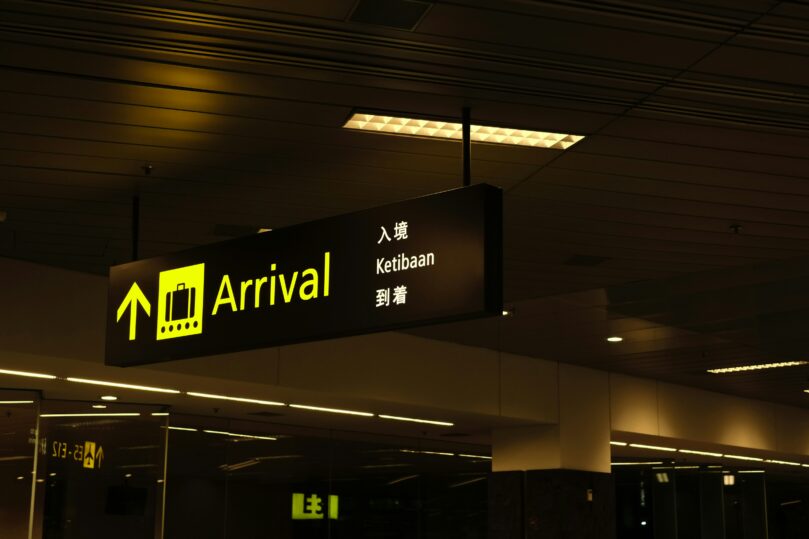
Arrival sign in Changi Airport, Singapore

Navigating the Third Space: What International Professionals Need to Know About Working Across Borders

Building a Career Between Worlds: Understanding Third Culture Identity and Cross-Border Professional Life


A few days ago, I shared on LinkedIn about my recent trip to Singapore. I reflected on becoming “more foreign than local” in my birthplace, and the uncomfortable reality of existing in what I call the “third space” of international professionals.

That post got me thinking more deeply about this experience. I wasn’t just downloading post-holiday emotions, but I was describing something that many international professionals experience but rarely articulate in everyday conversation.

This article is an exploration of that third space: what it means, why it matters, and why I believe these stories need to be shared more openly. And at the end, I’ll share how you can be part of creating that space for honest conversation.


What is the Third Space? Understanding Third Culture Identity for Global Professionals

The Third Space is a theory attributed to Homi K. Bhabha and defined in his book The Location of Culture (1994). A Third Space is an undefined middle ground where people actively negotiate cultural meanings, producing identities that are fluid and continually evolving.

Nodes and lines forming triangles superimposed on speech bubbles
Image by Gerd Altmann from Pixabay

I’ve made several trips back home to Singapore since leaving the country to start life afresh in New Zealand more than 10 years ago. Each trip brought back different memories and emotions. This particular trip centred around spending time with family and attending to personal matters and family responsibilities. In short, it felt like a working holiday with strings attached. I don’t think I can truly behave or feel like a tourist in my home country, but at the same time, it was becoming less intuitive and comfortable than before.

One particular incident stood out as an example of negotiating cultural meanings in this third space.

A Real Example: Navigating Cultural Expectations as an International Professional

I was catching up with a friend near their workplace and they introduced me to their colleagues who were nearby. It started off as a friendly exchange of self-introductions and they were naturally curious about my life in New Zealand. In such conversations, I find myself pointing out what I enjoy about living and working in New Zealand, but also highlighting how I miss certain things in Singapore like the food, convenience and efficiency. Now that I talk about it, it feels like a natural script where you present a balanced view so as not to appear you’ve got the good life and they haven’t. Then came a response I didn’t expect, or perhaps should have expected: “But you’re coming back home to Singapore, right?”

I paused. Missed a beat. Then said:

“Well, for now New Zealand is home.” Followed by light laughter all around.

What I wanted to say, but didn’t think it good manners to elaborate with acquaintances, was this:

“Why is it so important for you that I return to Singapore? What does it matter to you if I did or didn’t? Would you like me less if I said ‘never in a million years’ or like me more if I said ‘for sure, can’t wait to return home for good’?”

And when I think back to what I said, it was a mix of truth and face-saving. It is true that at present, New Zealand is my home, where I live, work and have community. And it is true that I cannot say this will be the case in the future because it is unseen and more importantly, uncertain. But equally true is the fact that I needed a response to counter the proposition that I was surely going to return to my home country without the indignation of having the notion of loyalty and national pride rolled up in one fat presumption.

(Pardon my words—I’m a poet after all.)

In other words, I needed a credible response without making a big deal out of it and still entertain the notion that I could return, just not on their terms!

Funny how a couple of seconds of small talk exploded into a soul-searching exercise within me.

The Expectation to “Return Home”: A Common Challenge for Migrant Professionals

And when I think back to various conversations with close friends and relatives, there I found it again: an expectation that I will return and my response of possibility. To be clear, I often think about the possibility of returning ‘home’ and different scenarios leading to that. But it is the default position and expectation of my Singaporean friends and family that truly unnerves me.

Sunset backdrop with two silhouettes in foreground
Image by Arifur Rahman from Pixabay

In New Zealand, I rarely have conversations with others about ‘going back home’ because I’m not a visitor and have a very full and settled life in this country! But when I think back to the process of getting where I am today, and even in more recent memory, there were notable occasions where ‘going back home’ or being singled out as foreign was the response.

When I was doing my PhD and asking about career pathways: “Oh, you want to stay and work here?”

When I asked the secondhand shop owner where the violin was made: “Where you’re from.”

When asked by the motel owner where I was from and I said Wellington: “No, where are you really from?”

And on many of those occasions came my face-saving meek sounding laughter, somehow saying, ah ha, I know what you’re thinking and it’s not okay, but I don’t want to turn this into an awkward situation and cause myself any more discomfort.

Like the light laughter I dispensed when positioned as a patriotic daughter of my homeland.

A defense mechanism that perhaps perpetuates the presumption and attitudes, but also saves me from having to launch into a tirade that would be further misunderstood and mess up the social order of conversation (which by the way is a real thing according to Conversation Analysis, a theoretical framework I used to analyse chat messages between peers in my PhD).


Why the Third Space Matters for International Career Success

Because everyday conversation tends to be polite or follow convention.

Because it is risky to try to defend your own cultural status to a relative stranger.

Because matters of self-identity and the process of identity making are complex.

We need a space to work all of this out, and the Third Space holds room for discomfort and discovery.

The Third Space Comes Alive When:

  • You recognise that you are in a liminal zone of sociocultural realities
  • You participate in a tug of war of loyalties and self-disclosure
  • You translate between worlds about religious and cultural traditions
  • You struggle and try to make peace with incidents and emotions that linger on your consciousness
  • You want to work out who you really are and where you really belong behind the multiple identities, hybrid accent, and the undeniable color of your skin

It’s not a problem to solve. It’s a reality to understand and navigate.


The Hidden Challenges of Building an International Career

And here’s what I know from a decade of working with international professionals—expatriates, international students, migrant professionals: we rarely talk about this experience honestly. When is ever the right time or place to discuss the messy, complicated reality of living between worlds? That stays private, unspoken, often unacknowledged even to ourselves.

Woman placing finger over closed lips
Photo by Kristina Flour on Unsplash

Common Experiences International Professionals Face (But Rarely Discuss):

  • The paralysis of imposter syndrome when your credentials aren’t immediately recognised
  • The exhaustion of code-switching between cultural communication styles
  • The grief of missing weddings, funerals, and the everyday moments of family life
  • The invisible labour of maintaining professional and personal networks across time zones
  • The courage it takes to keep rebuilding, again and again
  • The quiet moments of wondering: “Where is home? Who am I now?”

These are the experiences that live in the third space. The tensions that sit uncomfortably in your belly. The emotions you can’t quite explain to people who’ve only ever lived in one place. The complexity that doesn’t fit into simple narratives about “international careers.”

If you’re navigating a career and life across cultures, borders, and systems, you’re not imagining this complexity. Those emotions? They’re real. And they matter.


Why International Professionals Need to Share Their Stories

When I was planning my move from Singapore to New Zealand, I devoured every resource I could find about immigration processes, job search strategies, and credential recognition. What I couldn’t find were the stories I actually needed—the ones about navigating the third space:

The Questions That Really Matter for International Career Transitions:

  • How do you maintain your sense of professional identity when you’re starting over?
  • What does it feel like when you’re overqualified on paper but underemployed in practice?
  • How do you build a career when your network is 10,000 kilometers away?
  • When does it start feeling like home?
  • How do you reconcile the person you were “there” with the person you’re becoming “here”?

The practical information is important. But understanding the emotional and psychological journey—the reality of existing in the third space—that’s just as important, if not even more so, when we want to thrive, not merely survive as international professionals.

Yet these stories remain largely untold. We share them in quiet conversations with other international professionals, in late-night messages to friends who “get it.” But publicly? We stick to the polished narratives.

I believe we need to change that.

Not because everyone’s story needs to be public. But because those of us willing to share can create understanding, validation, and support for international professionals navigating this journey.

When we openly discuss the reality of the third space—the tensions, the growth, the complexity—we give others permission to acknowledge their own experiences. We create community where there was isolation. We transform individual struggles into collective wisdom.

That’s why I’m creating a space for these conversations: The International Career Journey Podcast, a podcast dedicated to the authentic experiences of professionals who’ve crossed borders to build their careers.


Introducing: The International Career Journey Podcast

A podcast for professionals navigating careers across borders—from anywhere, to anywhere.

I want to have honest, in-depth conversations with international professionals about their journeys. About the visa rejections, the cultural misunderstandings, the career setbacks, the identity questions, and yes, the eventual breakthroughs and growth. I hope to interview people in the next few months and launch the podcast in the second half of 2026.

Retro microphone on a table with festive bokeh lights. A vintage-style microphone placed on a wooden table with warm bokeh lights.
AI generated image from Pixabay

What Makes This International Career Podcast Different

This isn’t about celebrating “success stories” or promoting the myth that international careers are all adventure and opportunity. It’s about the full, honest journey:

  • Real challenges faced and how they were overcome (or not)
  • Cultural adaptation in workplace contexts
  • Career progression strategies across borders
  • The emotional and identity aspects of international work
  • Practical insights other professionals can actually use
  • The question we’re all navigating: what does “home” mean when you’ve lived in multiple places?

The Format: Intimate, Honest Conversations About Global Careers

Each episode is approximately 30 minutes—long enough for depth, short enough for your commute. The structure is conversational, not scripted. I’ll ask the questions I wish I had the answers to before I made my international career move:

  • What surprised you most about working in [country]?
  • Tell me about a moment when you felt completely out of your depth
  • How has your sense of identity evolved?
  • What do you wish you’d known before you moved?
  • When did it start feeling less foreign?

Looking for Season 1 Podcast Guests (Recording March-May 2026)

Here’s where I need your help.

If you’re a professional with an international career story, I want to hear from you. Your story doesn’t need to be dramatic or “successful” by conventional measures. It just needs to be real.

Who I’m Looking For: 7 Types of International Professional Stories

1) The New Arrival

You relocated to a new country for work and have been there 2+ years. You’ve navigated the visa process, job search, and cultural adaptation. You have fresh insights about building a career in a new country.

2) The Migrant Professional

You grew up or studied in one country and moved to another for work. You’re more or less settled in your new country and have 5+ years work experience. You’ve navigated the transition from familiar to foreign and can speak to the opportunities and challenges of ‘starting all over’.

3) The Serial Mover

You’ve worked in 3+ countries across different regions. You’ve built a truly global career spanning continents. You understand the art of professional reinvention across borders and have strategies for maintaining career momentum while moving.

4) The Returner

You left your home country to work overseas and have since returned. You can share insights on reverse culture shock, reintegration, and what it’s like to go “home” after years away.

5) The Cross-Border Remote Worker

You work remotely for international companies or clients. You’ve navigated the tax, legal, and practical challenges of working across borders while potentially living in multiple locations.

6) The Aspiring International Professional

You’re actively preparing to work in another country. You’re in the research, application, or planning phase. You can share your preparation journey and what you’re learning.

7) The Support Professional

You work in organisational or consultant roles supporting international career transitions. Examples: global mobility specialists, HR professionals managing relocations, immigration advisors. You have behind-the-scenes insights to share.


Why Share Your International Career Story?

The interview process is surprisingly valuable for reflection on your journey and growth. And your story could be exactly what someone needs to hear to make their next brave move—or to simply feel less alone in their current challenges. By sharing your personal insights, you’re contributing something valuable to a global community.

Or Do You Know Someone With a Great International Career Story?

Share this article with them. Tag someone who should be a guest. Help me find the voices that need to be heard.

What’s Involved: Podcast Details

  • 30-minute Zoom conversation (conversational, not formal)
  • No special equipment needed
  • Recording: March – May 2026
  • Season 1 Launch: Second half of 2026

How to Apply to Be a Podcast Guest

If you’re interested in being a guest, please complete this application form: https://forms.gle/jPX4srS6itf3BRn26

I’ll review all applications and respond within 5-7 business days.

Application Deadline: 28 February 2026


Stay Connected: Subscribe for Updates on International Career Insights

Want to stay updated?
Subscribe to my newsletter International Career Journey on LinkedIn or Substack. Subscribe for podcast updates, guest features, and reflections on international career journeys.

Or follow me on:

Have questions?
Leave or comment or send me a direct message. I’d love to hear from you.


Frequently Asked Questions About Being a Podcast Guest

Q: I’m not “successful enough” or “expert enough.” Can I still apply?

A: Yes! I’m looking for real, authentic stories—not just success stories. If you’re navigating an international career journey and have insights to share, you’re qualified. Some of the most valuable episodes will be from people still figuring things out.

Q: I have a strong accent or English isn’t my first language. Is that okay?

A: Absolutely. Your perspective is valuable regardless of accent. This podcast celebrates diversity. As long as you can communicate your experiences clearly, your voice deserves to be heard.

Q: What if I’m nervous about being recorded?

A: Totally normal! The conversation is relaxed and conversational—I’ll guide you through it. You can practice beforehand, and you’ll get to preview the episode before it’s published. Just think of the interview like a conversation with a friend.

Q: Can I talk about my business or services?

A: This podcast focuses on professional career journeys, not business promotion. You’re welcome to mention your current role and company in your introduction, but the conversation centers on your international career experiences and insights—not marketing services. Your LinkedIn profile and brief bio will be shared on the episode page.

Q: I have a unique situation that doesn’t fit the profiles exactly. Can I still apply?

A: Yes! The profiles are guidelines. If you have an international professional career story worth sharing, I want to hear it.

Q: What if my schedule changes and I need to reschedule?

A: Life happens! Just let me know as soon as possible and we’ll find another time that works.

Q: Will this be video or just audio?

A: Both. We’ll record a video via Zoom and the podcast will be shared on YouTube and audio-only podcast channels like Spotify.


About the Host: Dr Sherrie Lee

I am a career coach for international professionals. I’m born in Singapore, based in New Zealand, living in the Third Space. With over a decade of experience working with international professionals—expatriates, international students, and migrant professionals—I understand the unique challenges of building careers across borders because I’ve lived it myself. Through my career coaching work and this newsletter, International Career Journey, I help professionals navigate the third space and transform cross-cultural complexity into career strength.


Podcast (launching second half of 2026): The International Career Journey Podcast

Reflections on World Refugee Day 20 June 2024

Through a series of serendipitous encounters, I attended a community dinner event on Thursday 20 June 2024 celebrating World Refugee Day. The event was organised by Voice of Aroha, with support from the New Zealand Refugee Youth Council, Wellington City Council, Porirua Multicultural Council and Everybody Eats (Wellington) where the dinner event was held. Everybody Eats is a pay-as-you-feel community restaurant that serves up 3 course set dinners transformed from rescued food. The World Refugee Day dinner event on that day was a heartfelt synergy of social cohesion, environmental responsibility and community voices. I have been engaged with migrant and ethnic communities for the past 10 years. But that evening was the first time I was part of a celebratory event that recognised and gave voice to the different journeys of refugees, and their stories of survival and triumph.

Image by Sujo26 from Pixabay

It was an intimate affair with around 60 people gathered to celebrate World Refugee Day over a 3 course meal prepared by a Colombian family. The family was invited to come out from the kitchen and share with the diners, not just about the dishes they prepared, but about their refugee journeys to Aotearoa New Zealand. Echoing their words, they prepared the food ‘with love’. To my mind and mouth, the meal they prepared was also a testament to their culture, strength and resilience.

The evening also featured former refugee guest speakers who included Soulivione Phonevilay, a former refugee from Laos and President of the Porirua Multicultural Council, and Abdul Samad Haidari, a Hazara-Afghani former refugee now based in Wellington.

Soulivione shared her family’s journey from a refugee camp in Thailand more than 40 years ago, to their final safe haven in New Zealand through framed family photos passed around the diners. She also shared a little known fact that 60-70% of workers in the Whittakers’ factory (located in Porirua) are from migrant and refugee backgrounds, and is the reason she believes for Whittaker’s success as one of New Zealand’s most loved brands. The next time we pick up a Whittaker’s Peanut Slab Bar, we’d do well to remember the hands and hearts that made that chocolate treat.

Abdul, who has been in New Zealand for just over a year, shared poetry from his recent book The Unsent Condolences. The poems reflect Abdul’s experiences of “flight from war torn Afghanistan to Iran as a child of the oppressed Hazara ethnic group, and later boat travel to Indonesia where he remained as a ‘stateless’ refugee without his family for 10 years until being accepted in 2023 to live in Aotearoa New Zealand.” Abdul spoke about the 10 years he spent as a refugee in Indonesia where there was no recognition of human rights for refugees. The poetry he shared expresses how it feels like to live under ‘the elbows of authoritarianism’ and be threatened by ‘the swords of tyranny’.

These two speakers stood out for me because of the conflicting and confronting messages that come with refugee stories. One the one hand, we want to celebrate the triumphs over persecution and family hardship, but on the other hand, we must not forget the atrocities and trauma that refugees experience in their long journey to escape and find safety in whichever place that will take them. I am grateful to Soulivione, Abdul and all the speakers who shared their stories. News articles and reports provide facts to startle, titillate and lull you into a comfortable spectator’s seat. An event like this, stories shared over a common meal, threaded by the indomitable spirit of those who have had to rebuild their lives from scratch, invites you into their space.

The evening ended with music, dance and laughter, no doubt a message of hope and joy that comes with being human – no matter your culture, language or journey that brought you to this land.

The ‘other’ in ESOL: Is it really about othering?

Image by Gerd Altmann from Pixabay

I was confronted by a recent headline that read:

ESOL outdated: English for speakers of other languages guilty of othering

ESOL stands for English for Speakers of Other Languages. In New Zealand and other English-speaking countries (eg, Australia, US), the term is used to differentiate the intended audience from mainstream English language instruction. 

The article claims that “there is something Anglo-centric and othering about the term”. There’s an argument to be made that someone not born into an English speaking environment and who receives English language training is orienting themselves to an ‘Anglo’ worldview, eg, that English is important for them to want to learn it, that the world they live in or wish to live in operates on an English-speaking basis and all its norms and assumptions. The term is also Anglo-centric in that it is those who provide that type of English language instruction are dominated by the Anglo centres of the world (ie., US, Canada, UK, Australia, New Zealand).

Image by Alison from Pixabay

I recognise that Anglo-centricity can give rise to othering, but it is also important to distinguish between the issue of Anglo-centricity – that is, how the English language and associated culture is the dominant and unquestioned way of life, and the issue of othering – marking someone or some group as different with intended or unintended negative connotations.

We can use any number of labels to identify those who are learning the English language, and labels in the English learning and teaching context help to differentiate pedagogical approaches. Whether the label or term becomes ‘othering’ will depend on the context in which it is used.

For the learner, ESOL might be a strange term for them since it’s a given that they speak other languages. Why not simply call it an English language class? Or better yet, describe what they can do with the English, eg, Conversational English, English for Work, Everyday English. And this is probably what happens with naming English classes. So while ESOL is used to refer to the type of English language instruction, learners don’t necessarily use the term to describe their own learning. So whether the term ESOL is ‘othering’ for the learner may be moot as they simply consider themselves English language learners.

Then what about others who use the term, like teachers of ESOL? The teaching of ESOL (or TESOL) as a type or approach of English language instruction will vary among teachers, but we can look to TESOL International Association for a core set of 6 principles for the exemplary teaching of English learners:

  1. Know Your Learners
  2. Create Conditions for Language Learning
  3. Design High-Quality Lessons for Language Development
  4. Adapt Lesson Delivery as Needed
  5. Monitor and Assess Student Language Development
  6. Engage and Collaborate within a Community of Practice

  These principles are intended to:

  • respect, affirm, and promote students’ home languages and cultural knowledge and experiences as resources
  • celebrate multilingualism and diversity
  • support policies that promote individual language rights and multicultural education
  • guide students to be global citizens
Image by Hebi B. from Pixabay

So if we hold the teachers of English to speakers of other languages to the principles and intentions of affirming the learners’ home languages and cultures, the term ESOL is far from ‘othering’: it is inclusive, respectful and aspirational.

And to go back to the issue of Anglo-centricity, the underlying ethos of the terms ESOL and TESOL would appear to challenge the status quo of Anglo-centricity in a way that aims to be beneficial for both English language learners and the wider community.

So why this accusation of ‘ESOL’ being guilty of ‘othering’? The ESOL terminology not only serves to make clear the audience of English language instruction, but also aims to affirm learners’ heritage and their linguistic and cultural resources.

It’s encouraging to know that there are advocates for inclusivity and those who call out discriminatory language. But has the word ‘other’ in ESOL tripped people up? There’s nothing othering about the term nor its intended use. And it’s concerning if we start reading ‘othering’ into a term that means no harm.

Sure, re-name course titles and qualifications to signal a wider audience of English language learners. But don’t erase a term or label when there’s a useful function for differentiation, and more importantly, when there’s a specific intention of making learners the centre in language training.

If we want to deal with ‘othering’, let’s look beyond the single word or label. Better yet, let’s welcome the ‘other’ relative to ourselves. If we recognise that those who are learning English speak ‘other’ languages, how about we start to be curious about their languages, and unpack what this ‘other’ means to us, and start to unravel a multitude of languages we can recognise, learn and embrace?

And if you’re ready, you’re in luck. New Zealand Chinese Language Week is coming up and runs from 25 September to 1 October. As a speaker of English, Mandarin and some Hokkien, I’m delighted to share ‘other’ languages with you, and I’m curious about ‘other’ languages different communities around me speak.

Ko taku reo, taku ohooho, ko taku reo taku mapihi mauria.

My language is my awakening, my language is the window to my soul.

Don`t copy text!