Close

Not a Side Hustle: Rebuilding Work, Identity, and Home After a Big Move

In this podcast episode, I chat with a fellow Singaporean, Adlena Wong, whom I got to know on LinkedIn, proving that LinkedIn does work in connecting people with shared interests. It wasn’t just because Adlena was a fellow Singaporean that got me curious, but it was her candid reflections on LinkedIn that either resonated with my experiences or provided a counterpoint to what I experienced. Plus her food business and signature bak chor mee (minced meat noodles) meal prep kit certainly appealed to the Singaporean craving for heritage comfort food.

An important theme that came up in our conversation was “side hustle”, a term people use to describe a business or project you run in your spare time, but often seen as less important than your main job. For Adlena, her food entrepreneurship journey was not just a side hustle and mattered in ways that regular employment did not offer.

It made me reflect on my foray into podcasting, a side hustle of sorts, but certainly an important aspect of my personal development and desire to connect more deeply with the topics and themes I’ve been writing about for years – crossing borders, feeling different, and discovering how being and belonging is an ongoing dance.

I’ve written about the portfolio career as something that happened to me over time, and how reflection helped me understand its deeper implications. Sometimes talking about our career as a portfolio of experiences and skills can liberate us from the shaky career ladder of progression and paychecks. I’m not suggesting that the moment we fail the career-ladder stress test, we simply become a portfolio of whatever has happened to date. I am suggesting that we use a different lens to appreciate how our skills, talents and experiences have shaped us and led us up and down and across the career game board. And even more than that, explore different ways to think and talk about our careers.

If you’re someone who has crossed borders and cultures, what does your portfolio look like?

Or to use a food metaphor, what do your main course, side dishes, desserts and specials look like?

Watch or Listen to the Episode

Watch on YouTube: https://youtu.be/eAjLLa3Lw-4

Listen on Spotify: https://open.spotify.com/episode/4t4hQVdUVejoGMtk6TI66X?si=YcPehUm5RoW1odIp6XC7eg 

Meet the Guest: From Communications Career to Food Entrepreneur

Adlena Wong is the founder of Super Shiok Eats, a Singaporean food business in Auckland, New Zealand, and a part-time internal communications lead at a public sector organisation there. She moved from Singapore to New Zealand roughly eight years ago, arriving just before the COVID-19 pandemic, and is a communications professional and mother of two daughters.

Why “Side Hustle” Undersells the Work of Building Something New

A “side hustle” undersells committed work because the label measures effort by job title and hours, not by the intensity of care behind it. Adlena makes this case for Super Shiok Eats: the business grew out of necessity rather than a formal career plan, but the effort, energy, and dedication she pours into it disqualifies it from being casual.

Someone can be a casual worker in title terms while still bringing full dedication — and that level of commitment, not the formality of the role, is what actually defines “real” work.

For Adlena, her day job as an internal comms lead is what pays the bills. Super Shiok Eats, on the other hand, is where she sees no ceiling on what’s possible — a distinction worth naming for anyone weighing a “day job” against a passion project they’re reluctant to call minor.

How to Turn a Difficult Season Into a New Direction

Turning a difficult season into a new direction often starts with using enforced disruption to finally test an idea you’d already been holding onto. Adlena had completed her food safety certification about a year after arriving in New Zealand — a long-held ambition to eventually start a food business — and when COVID-19 lockdown hit, she needed a personal outlet beyond childcare and supporting her husband’s work-from-home routine, so she began cooking and selling food beyond her immediate family and friends.

What started as something that felt “silly” to launch mid-pandemic turned out to be well-timed: with international travel closed off, homesick members of the diaspora in New Zealand became customers, telling Adlena that her food — including her bak chor mee (minced meat noodles) — helped them feel less homesick and reconnected them to specific memories of home. It’s a reminder that constrained, disruptive periods can sometimes create the exact conditions — time, need, and a captive community — that a new direction requires.

What Your First Jobs Abroad Might Actually Look Like

Your first jobs abroad might look nothing like your prior career, and that’s normal. Before returning to communications work, Adlena took on several unrelated roles while settling into her new environment:

  1. Paper delivery run — found through a local Facebook community group; a way to exercise and learn her new neighbourhood while fitting around school drop-off and pick-up.
  2. Teacher aide — grew out of volunteering at her eldest daughter’s school, and gave her insight into how the local schooling system works from the inside.
  3. Daycare helper — a further extension of her hands-on involvement in her children’s early education environment.
  4. Contract communications role — a six-month maternity cover at an insurance company, which led to her current position as an internal communications lead.

The pattern is a useful one for anyone starting over: taking work that’s unrelated to your prior career, but that fits your immediate circumstances, can be a legitimate bridge back to your field rather than a detour from it.

What an Isolating Start Can Teach You About Family Resilience

An isolating start can force a family to rely on itself in ways that build resilience faster than a wider support network would allow. Adlena describes arriving in a new country and going into lockdown shortly after as a “double whammy” — new to the place and then isolated within it — but in hindsight frames it as a positive turning point: two years of relative self-reliance strengthened her family unit in a way she believes would have been harder to achieve back home, where extended family and social obligations would have competed for attention.

Why Workplace Culture Feels So Different After an International Move

Workplace culture feels different after an international move mainly because of pace and trust — two things rarely named outright but felt daily. Asked to pinpoint the biggest difference she’s experienced, Adlena points to pace: having to slow down significantly compared to the fast, efficiency-driven environment she was used to. She frames this as an open question rather than a settled judgement — she isn’t sure whether it’s harder for migrants to slow down, or harder for locals to speed up.

A second lens raised in conversation: the level of interpersonal trust in workplaces and communities, where relationships and an assumption of good faith carry significant weight. Adlena reframes her home country’s more rules-heavy environment not necessarily as low trust, but as a “nanny state” habit of being taken care of — contrasted with a more laissez-faire “she’ll be right” culture in her new country. For anyone navigating culture shock at work, this kind of reframing — treating friction as difference rather than deficiency — can make the adjustment easier to sit with.

How to Hold Onto Your Identity While Building a Life Somewhere New

Holding onto your identity while building a life somewhere new means separating home from life rather than forcing yourself to choose one. Adlena identifies clearly with her country of origin — she holds its passport, speaks with its accent, and runs a business built around its food — while drawing that clear distinction:

Home is always where you’re from. Life is where you are.

She describes this as her version of “work-life balance” applied to geography — home remains thousands of kilometres away, but her present, day-to-day life is firmly in her new country. Family ties, especially with her mother and her husband’s family, still anchor “home” to where she came from. This kind of dual framing — rather than forcing a single answer to “where are you from” or “where is home” — is a useful model for anyone who feels pressure to fully “belong” to only one place.

Why a Career Change Abroad Can Unlock Confidence You Didn’t Have at Home

A career change abroad can unlock confidence because starting where nobody knows your professional reputation removes the pressure to stay on a single, predictable track. Adlena credits exactly this — the relative anonymity of starting over in a new country — with giving her the confidence to pivot away from a traditional, upward-only career path, in contrast to her home country, where she believes she’d most likely still be climbing toward a formal, single-track leadership title.

Despite founding and growing her own business, she has deliberately stayed hands-on with the fundamentals of her craft — writing, research, email campaigns, photography, and event organisation — rather than moving entirely into oversight. She credits this hands-on approach with giving her the practical skills (branding, marketing, communication) that made her business possible. For anyone facing a career change, this suggests that skills built in one context can transfer directly into building something of your own, even in an unrelated industry.

What People Moving Abroad Often Miss Most About Home

What people miss most about home after moving abroad is often small and practical, not grand or cultural. For Adlena, it’s public transport — an efficient, affordable, reliable transit system, contrasted with the cost trade-offs she now weighs in her new country, like choosing between a costlier bus fare and parking — a reminder that everyday conveniences, once taken for granted, are often what’s felt most acutely once they’re gone.

How to Know Which Advice to Trust When You’re Weighing a Move Overseas

The advice worth trusting when weighing a move overseas usually comes from people who made a similar trade-off recently, not from generic reassurance that a move is simply “right” or “wrong.” Adlena leans on the perspective of peers who moved around the same time as her, rather than earlier generations of migrants whose circumstances differ, and the advice she returns to is about trade-offs: things she might not have had at home — such as owning two cars or living in a landed property with a garden — are part of what she’s gained by moving, weighed against what she’s given up.

The One Thing to Remember Before You Move Overseas

No matter what happens, you can always come home. That’s Adlena’s answer when asked what she’d tell her pre-move self — and the same reassurance she hopes to pass on to her own daughters if their life circumstances ever become difficult: home remains a place to return to, regardless of outcome.

Q&A Highlights

Where is home for you? 

“I think it would still be Singapore. I spent most of my life being born and raised there, and family is still there — our parents are all back home. That tie still being there makes it hard to break, just because we are in a different country.”

What’s the one thing you miss about Singapore? 

“Public transport — good, efficient, reliable public transport that doesn’t cost you an arm and a leg and make you question your life decisions, like: Should I pay $10 to take a bus or take the car and pay $7 for my parking?”

If you could tell your pre-move self one thing, what would it be?

“No matter what happens, you can always come home. If it doesn’t work out, if life gets too hard, come home. That’s what home is.”

About Dr Sherrie Lee

Dr Sherrie Lee is a career coach and educator for international professionals, ICF certified in positive psychology coaching. She is a Professional Member of CDANZ, where she hosts the Character Strengths Special Interest Group, and writes and speaks regularly on international careers, character strengths, and cross-cultural belonging.

Learn more at thediasporicacademic.com, book a free 20-minute discovery call, connect on LinkedIn, or subscribe to the monthly newsletter International Career Journey on Substack.

Subscribe to the podcast International Career Journey on your platform of choice: 🎥 Subscribe on YouTube 🎙️Subscribe on Spotify
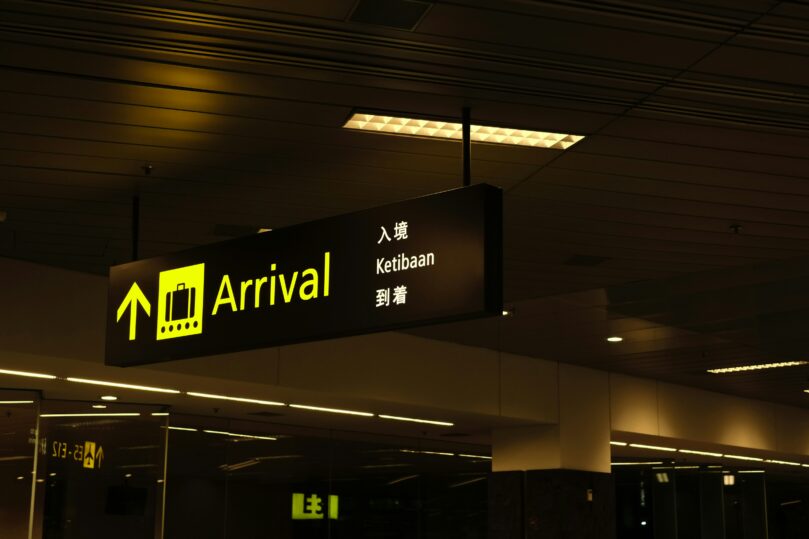

Arrival sign in Changi Airport, Singapore

Navigating the Third Space: What International Professionals Need to Know About Working Across Borders

Building a Career Between Worlds: Understanding Third Culture Identity and Cross-Border Professional Life


A few days ago, I shared on LinkedIn about my recent trip to Singapore. I reflected on becoming “more foreign than local” in my birthplace, and the uncomfortable reality of existing in what I call the “third space” of international professionals.

That post got me thinking more deeply about this experience. I wasn’t just downloading post-holiday emotions, but I was describing something that many international professionals experience but rarely articulate in everyday conversation.

This article is an exploration of that third space: what it means, why it matters, and why I believe these stories need to be shared more openly. And at the end, I’ll share how you can be part of creating that space for honest conversation.


What is the Third Space? Understanding Third Culture Identity for Global Professionals

The Third Space is a theory attributed to Homi K. Bhabha and defined in his book The Location of Culture (1994). A Third Space is an undefined middle ground where people actively negotiate cultural meanings, producing identities that are fluid and continually evolving.

Nodes and lines forming triangles superimposed on speech bubbles
Image by Gerd Altmann from Pixabay

I’ve made several trips back home to Singapore since leaving the country to start life afresh in New Zealand more than 10 years ago. Each trip brought back different memories and emotions. This particular trip centred around spending time with family and attending to personal matters and family responsibilities. In short, it felt like a working holiday with strings attached. I don’t think I can truly behave or feel like a tourist in my home country, but at the same time, it was becoming less intuitive and comfortable than before.

One particular incident stood out as an example of negotiating cultural meanings in this third space.

A Real Example: Navigating Cultural Expectations as an International Professional

I was catching up with a friend near their workplace and they introduced me to their colleagues who were nearby. It started off as a friendly exchange of self-introductions and they were naturally curious about my life in New Zealand. In such conversations, I find myself pointing out what I enjoy about living and working in New Zealand, but also highlighting how I miss certain things in Singapore like the food, convenience and efficiency. Now that I talk about it, it feels like a natural script where you present a balanced view so as not to appear you’ve got the good life and they haven’t. Then came a response I didn’t expect, or perhaps should have expected: “But you’re coming back home to Singapore, right?”

I paused. Missed a beat. Then said:

“Well, for now New Zealand is home.” Followed by light laughter all around.

What I wanted to say, but didn’t think it good manners to elaborate with acquaintances, was this:

“Why is it so important for you that I return to Singapore? What does it matter to you if I did or didn’t? Would you like me less if I said ‘never in a million years’ or like me more if I said ‘for sure, can’t wait to return home for good’?”

And when I think back to what I said, it was a mix of truth and face-saving. It is true that at present, New Zealand is my home, where I live, work and have community. And it is true that I cannot say this will be the case in the future because it is unseen and more importantly, uncertain. But equally true is the fact that I needed a response to counter the proposition that I was surely going to return to my home country without the indignation of having the notion of loyalty and national pride rolled up in one fat presumption.

(Pardon my words—I’m a poet after all.)

In other words, I needed a credible response without making a big deal out of it and still entertain the notion that I could return, just not on their terms!

Funny how a couple of seconds of small talk exploded into a soul-searching exercise within me.

The Expectation to “Return Home”: A Common Challenge for Migrant Professionals

And when I think back to various conversations with close friends and relatives, there I found it again: an expectation that I will return and my response of possibility. To be clear, I often think about the possibility of returning ‘home’ and different scenarios leading to that. But it is the default position and expectation of my Singaporean friends and family that truly unnerves me.

Sunset backdrop with two silhouettes in foreground
Image by Arifur Rahman from Pixabay

In New Zealand, I rarely have conversations with others about ‘going back home’ because I’m not a visitor and have a very full and settled life in this country! But when I think back to the process of getting where I am today, and even in more recent memory, there were notable occasions where ‘going back home’ or being singled out as foreign was the response.

When I was doing my PhD and asking about career pathways: “Oh, you want to stay and work here?”

When I asked the secondhand shop owner where the violin was made: “Where you’re from.”

When asked by the motel owner where I was from and I said Wellington: “No, where are you really from?”

And on many of those occasions came my face-saving meek sounding laughter, somehow saying, ah ha, I know what you’re thinking and it’s not okay, but I don’t want to turn this into an awkward situation and cause myself any more discomfort.

Like the light laughter I dispensed when positioned as a patriotic daughter of my homeland.

A defense mechanism that perhaps perpetuates the presumption and attitudes, but also saves me from having to launch into a tirade that would be further misunderstood and mess up the social order of conversation (which by the way is a real thing according to Conversation Analysis, a theoretical framework I used to analyse chat messages between peers in my PhD).


Why the Third Space Matters for International Career Success

Because everyday conversation tends to be polite or follow convention.

Because it is risky to try to defend your own cultural status to a relative stranger.

Because matters of self-identity and the process of identity making are complex.

We need a space to work all of this out, and the Third Space holds room for discomfort and discovery.

The Third Space Comes Alive When:

  • You recognise that you are in a liminal zone of sociocultural realities
  • You participate in a tug of war of loyalties and self-disclosure
  • You translate between worlds about religious and cultural traditions
  • You struggle and try to make peace with incidents and emotions that linger on your consciousness
  • You want to work out who you really are and where you really belong behind the multiple identities, hybrid accent, and the undeniable color of your skin

It’s not a problem to solve. It’s a reality to understand and navigate.


The Hidden Challenges of Building an International Career

And here’s what I know from a decade of working with international professionals—expatriates, international students, migrant professionals: we rarely talk about this experience honestly. When is ever the right time or place to discuss the messy, complicated reality of living between worlds? That stays private, unspoken, often unacknowledged even to ourselves.

Woman placing finger over closed lips
Photo by Kristina Flour on Unsplash

Common Experiences International Professionals Face (But Rarely Discuss):

  • The paralysis of imposter syndrome when your credentials aren’t immediately recognised
  • The exhaustion of code-switching between cultural communication styles
  • The grief of missing weddings, funerals, and the everyday moments of family life
  • The invisible labour of maintaining professional and personal networks across time zones
  • The courage it takes to keep rebuilding, again and again
  • The quiet moments of wondering: “Where is home? Who am I now?”

These are the experiences that live in the third space. The tensions that sit uncomfortably in your belly. The emotions you can’t quite explain to people who’ve only ever lived in one place. The complexity that doesn’t fit into simple narratives about “international careers.”

If you’re navigating a career and life across cultures, borders, and systems, you’re not imagining this complexity. Those emotions? They’re real. And they matter.


Why International Professionals Need to Share Their Stories

When I was planning my move from Singapore to New Zealand, I devoured every resource I could find about immigration processes, job search strategies, and credential recognition. What I couldn’t find were the stories I actually needed—the ones about navigating the third space:

The Questions That Really Matter for International Career Transitions:

  • How do you maintain your sense of professional identity when you’re starting over?
  • What does it feel like when you’re overqualified on paper but underemployed in practice?
  • How do you build a career when your network is 10,000 kilometers away?
  • When does it start feeling like home?
  • How do you reconcile the person you were “there” with the person you’re becoming “here”?

The practical information is important. But understanding the emotional and psychological journey—the reality of existing in the third space—that’s just as important, if not even more so, when we want to thrive, not merely survive as international professionals.

Yet these stories remain largely untold. We share them in quiet conversations with other international professionals, in late-night messages to friends who “get it.” But publicly? We stick to the polished narratives.

I believe we need to change that.

Not because everyone’s story needs to be public. But because those of us willing to share can create understanding, validation, and support for international professionals navigating this journey.

When we openly discuss the reality of the third space—the tensions, the growth, the complexity—we give others permission to acknowledge their own experiences. We create community where there was isolation. We transform individual struggles into collective wisdom.

That’s why I’m creating a space for these conversations: The International Career Journey Podcast, a podcast dedicated to the authentic experiences of professionals who’ve crossed borders to build their careers.


Introducing: The International Career Journey Podcast

A podcast for professionals navigating careers across borders—from anywhere, to anywhere.

I want to have honest, in-depth conversations with international professionals about their journeys. About the visa rejections, the cultural misunderstandings, the career setbacks, the identity questions, and yes, the eventual breakthroughs and growth. I hope to interview people in the next few months and launch the podcast in the second half of 2026.

Retro microphone on a table with festive bokeh lights. A vintage-style microphone placed on a wooden table with warm bokeh lights.
AI generated image from Pixabay

What Makes This International Career Podcast Different

This isn’t about celebrating “success stories” or promoting the myth that international careers are all adventure and opportunity. It’s about the full, honest journey:

  • Real challenges faced and how they were overcome (or not)
  • Cultural adaptation in workplace contexts
  • Career progression strategies across borders
  • The emotional and identity aspects of international work
  • Practical insights other professionals can actually use
  • The question we’re all navigating: what does “home” mean when you’ve lived in multiple places?

The Format: Intimate, Honest Conversations About Global Careers

Each episode is approximately 30 minutes—long enough for depth, short enough for your commute. The structure is conversational, not scripted. I’ll ask the questions I wish I had the answers to before I made my international career move:

  • What surprised you most about working in [country]?
  • Tell me about a moment when you felt completely out of your depth
  • How has your sense of identity evolved?
  • What do you wish you’d known before you moved?
  • When did it start feeling less foreign?

Looking for Season 1 Podcast Guests (Recording March-May 2026)

Here’s where I need your help.

If you’re a professional with an international career story, I want to hear from you. Your story doesn’t need to be dramatic or “successful” by conventional measures. It just needs to be real.

Who I’m Looking For: 7 Types of International Professional Stories

1) The New Arrival

You relocated to a new country for work and have been there 2+ years. You’ve navigated the visa process, job search, and cultural adaptation. You have fresh insights about building a career in a new country.

2) The Migrant Professional

You grew up or studied in one country and moved to another for work. You’re more or less settled in your new country and have 5+ years work experience. You’ve navigated the transition from familiar to foreign and can speak to the opportunities and challenges of ‘starting all over’.

3) The Serial Mover

You’ve worked in 3+ countries across different regions. You’ve built a truly global career spanning continents. You understand the art of professional reinvention across borders and have strategies for maintaining career momentum while moving.

4) The Returner

You left your home country to work overseas and have since returned. You can share insights on reverse culture shock, reintegration, and what it’s like to go “home” after years away.

5) The Cross-Border Remote Worker

You work remotely for international companies or clients. You’ve navigated the tax, legal, and practical challenges of working across borders while potentially living in multiple locations.

6) The Aspiring International Professional

You’re actively preparing to work in another country. You’re in the research, application, or planning phase. You can share your preparation journey and what you’re learning.

7) The Support Professional

You work in organisational or consultant roles supporting international career transitions. Examples: global mobility specialists, HR professionals managing relocations, immigration advisors. You have behind-the-scenes insights to share.


Why Share Your International Career Story?

The interview process is surprisingly valuable for reflection on your journey and growth. And your story could be exactly what someone needs to hear to make their next brave move—or to simply feel less alone in their current challenges. By sharing your personal insights, you’re contributing something valuable to a global community.

Or Do You Know Someone With a Great International Career Story?

Share this article with them. Tag someone who should be a guest. Help me find the voices that need to be heard.

What’s Involved: Podcast Details

  • 30-minute Zoom conversation (conversational, not formal)
  • No special equipment needed
  • Recording: March – May 2026
  • Season 1 Launch: Second half of 2026

How to Apply to Be a Podcast Guest

If you’re interested in being a guest, please complete this application form: https://forms.gle/jPX4srS6itf3BRn26

I’ll review all applications and respond within 5-7 business days.

Application Deadline: 28 February 2026


Stay Connected: Subscribe for Updates on International Career Insights

Want to stay updated?
Subscribe to my newsletter International Career Journey on LinkedIn or Substack. Subscribe for podcast updates, guest features, and reflections on international career journeys.

Or follow me on:

Have questions?
Leave or comment or send me a direct message. I’d love to hear from you.


Frequently Asked Questions About Being a Podcast Guest

Q: I’m not “successful enough” or “expert enough.” Can I still apply?

A: Yes! I’m looking for real, authentic stories—not just success stories. If you’re navigating an international career journey and have insights to share, you’re qualified. Some of the most valuable episodes will be from people still figuring things out.

Q: I have a strong accent or English isn’t my first language. Is that okay?

A: Absolutely. Your perspective is valuable regardless of accent. This podcast celebrates diversity. As long as you can communicate your experiences clearly, your voice deserves to be heard.

Q: What if I’m nervous about being recorded?

A: Totally normal! The conversation is relaxed and conversational—I’ll guide you through it. You can practice beforehand, and you’ll get to preview the episode before it’s published. Just think of the interview like a conversation with a friend.

Q: Can I talk about my business or services?

A: This podcast focuses on professional career journeys, not business promotion. You’re welcome to mention your current role and company in your introduction, but the conversation centers on your international career experiences and insights—not marketing services. Your LinkedIn profile and brief bio will be shared on the episode page.

Q: I have a unique situation that doesn’t fit the profiles exactly. Can I still apply?

A: Yes! The profiles are guidelines. If you have an international professional career story worth sharing, I want to hear it.

Q: What if my schedule changes and I need to reschedule?

A: Life happens! Just let me know as soon as possible and we’ll find another time that works.

Q: Will this be video or just audio?

A: Both. We’ll record a video via Zoom and the podcast will be shared on YouTube and audio-only podcast channels like Spotify.


About the Host: Dr Sherrie Lee

I am a career coach for international professionals. I’m born in Singapore, based in New Zealand, living in the Third Space. With over a decade of experience working with international professionals—expatriates, international students, and migrant professionals—I understand the unique challenges of building careers across borders because I’ve lived it myself. Through my career coaching work and this newsletter, International Career Journey, I help professionals navigate the third space and transform cross-cultural complexity into career strength.


Podcast (launching second half of 2026): The International Career Journey Podcast

Embracing the Journey of an International Professional

🌍 Here’s my story of how I became an international professional.

My life motto: Carpe Diem

“Carpe diem. Seize the day. Make your lives extraordinary.”

The quote comes from the film Dead Poets Society, spoken by the character John Keating (played by the late Robin Williams), a teacher inspiring his students to pursue their passion and do something great. I watched the film when I was just 12 years old, ready to enter high school, and in those years of schooling and later on at university. I found myself drawn to exploration, self-discovery, and defying expectations. That spirit remains a driving force in my life and career today.

It represents more than just motivation. Carpe Diem speaks to my desire to be bold and use my talents, to be brave and make a difference, and to believe that whatever I do serves a greater purpose beyond my own needs.

My identity: A Chinese Singaporean

I was born and raised in Singapore, a multicultural city-state and former British colony, where English is the main language of education and public life. In multicultural Singapore, Chinese, Malay, Indian, Eurasian and other ethnic communities live side-by-side, and so I was part of a social fabric of cultural and linguistic diversity from an early age,

As a Chinese Singaporean, I grew up speaking English at home, school, and with friends, while also learning Chinese and Mandarin as a second language under Singapore’s bilingual policy. Our official mother tongue was assigned based on ethnicity and was a second language by default. Singapore’s bilingual policy has evolved over the years with a current focus on reviving interest and proficiency in our ethnic languages. However, among my generation, we were impressed upon the social and economic importance of mastering English, a gateway to the Western world and prosperity.

The particular ideology, policy and pragmatism of my upbringing have no doubt contributed to my strong grounding in both Western and Asian cultures. This has enabled me to navigate global spaces with confidence and cross-cultural fluency. My language and cultural identity shapes how I see the world and informs my work as an international professional and career coach committed to cross-cultural understanding. I understand what it’s like to look ‘Asian,’ sound ‘Western,’ and yet not fully belong in either category.

Image by CatsWithGlasses from Pixabay

What does it mean to be international?

My sense of being ‘international’ began during a university course on the history of the English language. I was introduced to World Englishes and the debate on who ‘owns’ English. I was struck by how much judgment people receive based on their accent, race, or skin colour, even in multicultural contexts, and the sharp division and discrimination between native and non-native English speakers.

In all my youthful defiance, I told myself: No country or accent shall determine how I use English. I shall be an international speaker of English!

This deep desire to challenge the barriers and divisions imposed by so-called pure, prestigious or better versions of English later shaped my Master of TESOL and PhD study. The debate on who owns English was re-ignited through my essay on Re-imagining the Non-Native Speaker. In my PhD research on international learners, one of my research agenda items was to dispel the deficit framing of non-native English speakers.

In corporate settings, I realised how many brilliant professionals around the world feel undermined not by lack of skill, but by cultural codes, accent bias, and the hidden hierarchies of language.

A 2013 British Council report states that English “now belongs to the world and increasingly to non-native speakers – who today far outnumber native speakers.” Indeed, the English language continues to evolve and it continues to serve as a global lingua franca, and yet old habits die hard. Our accent (and skin colour) continue to draw judgment from native and non-native English speakers alike. Just read the news about the racist backlash against Air New Zealand’s new CEO Nikhil Ravishankar.

It feels like contemporary notions of ‘inclusivity’ that celebrate and embrace differences are individual beliefs at best, and very slippery and airy concepts at worst. And I wonder if ‘international’ is a similar contemporary notion – Is it something that is celebrated and embraced? Or will it reveal its true colours when it is put to the test? And how much is one person’s experience of being international positively or negatively affected by the languages they speak, the accent of their spoken English, their passport, and the shade of their skin they were born with?

Photo by Christine Roy on Unsplash

How to thrive as an international professional

The complex realities of being international are discomforting, but I’m not here to dwell in the discomfort. Instead, I aim to raise awareness and spark conversation through writing. I’ve previously written about my experiences and tensions in looking, feeling and being different:

✍️ Living and thriving with labels: A journey towards cultural intelligence

✈️ The Diasporic Resident

🧭 How NOT to be a Migrant

The moral of my stories? Carpe diem. Seize the day. Make your lives extraordinary.

I hope discomfort gives your data. They can show us what still needs dismantling—and where we have power to influence change. So perhaps it’s time to stop scrolling or eye rolling and start thinking, feeling and doing things differently.

My coaching approach: Supporting international careers

As a career coach for international professionals, I’m here to help you, however you define yourself as ‘international’, to do these things:

🔍 Discover Your Strengths
Clarify who you are and how you want to contribute to the world.

❤️ Act With Purpose
Move beyond random applications and focus on how you add value.

🎯 Build Career Confidence
Master tools and strategies to manage manage your career on your own terms—for life!

An invitation to international professionals

If you’re navigating a career change, adapting to a new cultural environment, or exploring your identity as an international professional, this space is for you.

🌍 Learn more about my career journey here.

🔗 Subscribe on LinkedIn, or on Substack, follow along, let’s make our lives extraordinary—wherever in the world we are.

The Diasporic Resident

What happened to the Diasporic Academic?

Almost 5 years ago, I re-named my blogging website ‘The Diasporic Academic’, inspired by a keynote presentation given by Wendy Larner at a conference on international education held in Wellington. A diasporic academic by her definition was someone with multiple national affiliations, for example, a researcher from one country based in another country working on a project, or travelling between countries for research purposes, and at the same time, having a role as an intermediary between cultures, for example, translating from one language to another, or providing a culturally nuanced interpretation of things. (To dig deeper into the concept of diasporic academics, I highly recommend reading Larner’s 2015 paper on which the keynote presentation was based, as well as a 2020 book chapter I co-authored with a fellow diasporic academic.)

No doubt I’ve long left my academic ambitions at the door of the once enamoured institution called a university, but my academic sense making and inquiry has been put to good use in my public sector career – demanding clarity in policy definitions, looking for evidence to support claims, assessing the value of outputs and interpreting the validity of outcomes. So I’m proud to say that the ‘academic’ part of my identity has taken on a new form, that of a conscientious public servant.

In terms of living out my ‘diasporic’ potential, it has been an interesting journey through the professional and personal contexts of living and working in Aotearoa New Zealand. Being visibly and audibly different from the ‘European norm’ of everyday affairs, I’ve gone through various degrees of identity crises or conscious raising moments. It has made me become more sensitive to social and cultural assumptions, both my own and those around me, and often wonder about what actually goes on in people’s heads when they have an intercultural interaction. We probably assume ‘nothing’ until a word or gesture prompts an ‘aha’ response. Or we might be deliberate about discovering differences and similarities if we actually talk about cultural differences with genuine interest and respect – and how rare is that!

Let’s talk about names – a diasporic reflection

One of the common assumptions we make is people’s names.

Your name is something you take for granted. You know what it is, the variations in different contexts, how you like to be addressed, how you don’t like to be addressed, what is acceptable and welcomed banter, and what is offensive or inappropriate. To illustrate, I’ll start with the ‘Western’ name, that is, one with a first name, middle name, and a family name: Elizabeth Bennett Brown, an officially recorded name.

If we know or assume that the person is single, officially we would address the person as ‘Miss Brown’. Friends might call the person ‘Liz’ or ‘Lizzy’ or ‘Beth’. When using the name in a professional context, the name could be written simply as ‘Elizabeth Brown’, and perhaps even ‘Lizzy Brown’ if that has been the version used over time or could even be a personal brand that warrants formal usage. If the person was married, we’d say hello to ‘Mrs Brown’ and perhaps infer that ‘Bennett’ was her maiden family name. Or maybe ‘Bennett’ was her actual middle name and her maiden family name is buried in school photos and the like. This is how the office, banks, schools, and various institutions would likely respond to the person with the name of ‘Elizabeth Bennett Brown’.

Now compare this with an officially recorded name of a Chinese Singaporean woman: Lim Bee Choo, Maureen. Lim = family name, Bee Choo, Maureen = given names. ‘Lim Bee Choo’ is the the romanised rendition of the Chinese name based on the dialect group of the person (in this case, Hokkien), ie, it is rendered as it is spoken, as opposed to how the Chinese character would be spoken in standard Mandarin (in this case, ‘林’ pronounced ‘Lin’). Maureen is the given English name. It’s quite common for a Chinese Singaporean to have an English name, and by that I mean a name that is given by the parents, recorded at birth, not a name taken at a later age in life. (Something that can be attributed to Singapore being a former British Colony but of course more complex than that, and maybe something to ruminate on later.)

As this is the person’s officially recorded name, we can assume this is the maiden name. If the person were married and wanted her married name officially recorded (eg, on the national identity card), the most common option would be to apply to have the married name added as an alias. This means the person’s maiden name is the principal name, and by default, the official name. Replacing your maiden name with a married name on an official identity document needs to be done by executing a Change of Name Deed Poll. (It’s extra work and costs money so I’ve yet to know of any married female friends who have done so.)

You could use your married name in other contexts (eg, professional name), and be known as Mrs Maureen Goh. Or to just indicate you’re not single (or to be ambiguous about it), Ms Maureen Lim. (In my mother’s generation, it was common to use your married by simply adding ‘Mrs’ in front of their husband’s name. So if Lim Bee Choo, Maureen married Tan Soo Teck, David, her married name could be Mrs Tan Soo Teck, David, or Mrs David Tan.)

To address Lim Bee Choo, Maureen (married or not) in less formal settings, family might call her ‘Bee Choo’ or ‘Choo’, or ‘Ah Choo’; her peers would call her ‘Maureen’, and would be professionally known as ‘Maureen Lim’, although school communications to parents would list her as Mrs Goh. (Note: I found a very helpful resource on Singapore naming conventions and culture, which also has similar entries for other countries and cultures. Absolutely worth reading if you regularly interact with friends or business associates from non-Western backgrounds.)

If Maureen had to list her official name on documents from the ‘Western world’, she would be careful to list ‘Lim’ as her family name, ‘Bee Choo, Maureen’ as given names. If she was forced to choose single names to fit the given categories, her name might be recorded as: Family Name – Lim; Middle Name – Bee; Given Name – Choo; Preferred Name: Maureen. Automated letters drawing from the categories would simply address her as ‘Choo Lim’, and if it were recorded that she was married, ‘Mrs Choo Lim’. ‘Maureen Lim’, as she was commonly addressed and acknowledged in Singapore, would have an automatic identity makeover in New Zealand.

The Inciting Incident

I love the concept of the inciting incident in film and novels: the event that sets the main character on the journey that will occupy them throughout the narrative. Like how Biff calls Marty McFly ‘chicken’ in Back to the Future, triggering Marty to react with determination to put Biff in his place, keenly aware of how his father was a pushover, an easy target for bullies.

Just like how inciting incidents upset the balance within the main character’s world, inciting incidents in my life in New Zealand have made me question why the people around me held the assumptions they did, and why I reacted the way I did. These inciting incidents have touched on deeply personal things such as my name, the colour of my skin and hair, and my customs. And nothing gets me going more than inciting incidents about my name, the most common inciting incidents of them all.

Imagine Elizabeth Bennett Brown, Lim Bee Choo, Maureen, and myself found ourselves in conversation during tea break at a business seminar in Auckland, and our name tags reflected our names as follows: Lizzy Brown; Choo Bee Lim; Sherrie Lee. Our imaginary (and all too real) conversation could go like this:

SHERRIE LEE
Hi, (reading name tag) Choo Bee, I’m Sherrie (SHAIR-ree).

CHOO BEE LIM
Oh, it’s actually Bee Choo, long story about computer systems, …

SHERRIE LEE
No, I get it! Of course, you’re Bee Choo! (laughs). And you’re either from Malaysia or Singapore right?

CHOO BEE LIM
Born in Malaysia, but grew up in Singapore. Most people call me Maureen, only my family calls me Bee Choo. But when I came to New Zealand, after filling out a couple of forms, my default name is Choo, and a real struggle to get Bee Choo or Maureen recognised as my proper name. (sigh) So it’s not too bad that I managed to get Bee Choo on my name tag, even though it’s the wrong order! (joint laughter) I’m guessing you’re from Singapore?

SHERRIE LEE
Yep, born and bred. Looks like our accents and names give us away. (joint laughter)

LIZZY BROWN joins the conversation.

LIZZY BROWN
Hello, I’m Lizzy.

CHOO BEE LIM
Hi Lizzy, I’m Bee Choo or just call me Maureen.

LIZZY BROWN
Maureen it is, I’m better with English names. Hi (reading name tag) Sherrie (sher-REE).

SHERRIE LEE
(cringing inside but smiling outside) Hi Lizzy. It’s Sherrie (SHAIR-ree), like the drink, rhymes with ‘cherry’.

LIZZY BROWN
Rhymes with cherry, cute, I can remember that (laughs), so Sherrie (SHAIR-ree).

SHERRIE LEE
(more cringing inside but a wider smile outside)

CHOO BEE LIM
We’re just talking about our names and the difficulty with Chinese names.

LIZZY BROWN
Actually I don’t think your Chinese name is too difficult, they look like English words to me, so ‘Choo Bee’, have I got that right?

CHOO BEE LIM
It’s actually Bee Choo, they got the names mixed up. It’s ok, Maureen is fine.

SHERRIE LEE
(attempting neutral small talk) Lizzy, is that short for Elizabeth?

LIZZY BROWN
Yes, it is. And Sherrie (sher-REE), what’s your real name?

SHERRIE LEE
(even more cringing inside) Sherrie (SHAIR-ree) is my real name, my mother gave me that name.

LIZZY BROWN
(laughs) I mean, what’s your Chinese name?

SHERRIE LEE
(with defiance and a steely look in her eyes) I don’t use it.

LIZZY BROWN
I used to have Chinese borders, students studying at uni, and one girl would change her name every semester. First it was Lucy, then it became Anna, not sure what name she does by now (laughs). Maureen, did you have a different name before?

CHOO BEE LIM
No, my name is Maureen, always has been.

LIZZY BROWN
(laughs) Nice talking to you (walks to another group of people).

CHOO BEE LIM and SHERRIE LEE exchange knowing glances and laugh out loud.

The Diasporic Resident

The inciting incident about names was an imaginary movie scene, created from personal and observed experiences of cultural assumptions and hidden meanings, and snatches of phrases from well-meaning individuals not yet familiar with the Chinese diaspora in Southeast Asia. If this is sounding too academic, it might as well be. After all, it will be a part history part anthropology lesson if I start unpacking Chinese naming conventions, cultural norms and expectations, and colonial influences. (Try Chapter 1 of my 2019 thesis if you’re up for some fairly readable academese.)

Inciting incidents like these that help me appreciate who I am in the world, the world of ‘European norms’ in a settler colony, with the Crown gradually unpacking and honouring Treaty obligations, as well as the wider world of migration and multiculturalism. In the immediate world of my living and working, it can often feel like I’m justifying my existence to others around me – why I should be accepted and feel valued. And when I’m considering my relationship with tangata whenua (the Māori, the peoples of the land), I have questions about what it means to be tauiwi (foreigner/immigrant), especially a non-white immigrant. Whereas if I’m operating in a world where the mobility of people and their culture and languages is welcome, then there’s much more freedom to embrace and celebrate differences. 

After finishing my PhD, I truly wanted to be an academic operating in that world of migration and multiculturalism, desiring to be that cultural intermediary or broker who could help explain the unspoken thoughts in people’s heads during the kind of conversation Lizzy, Bee Choo and I had. Although I am not that academic I thought I’d be, I can be a diasporic resident in the world of cultures and clashes.

So here’s a challenge to myself and fellow diasporic residents – the next time an inciting incident about your name occurs, will you be that diasporic resident who explains the story behind your name?

Final Destination: I’ve Found What I’m Looking For

Image by Jan Vašek from Pixabay

Seven years ago I made the most significant life decision to date – uprooting my family from Singapore and moving to New Zealand for what many would regard as ‘a better life’. I felt my family was complete with three young children, had an epiphany about doing research and preparing for an academic career in international education, and wanted to start fresh in a new place that would welcome us wholeheartedly, a place we could grow to love, a place we trusted to provide a more equitable future for our family.

Today, seven years after making that decision, I have finally found what I’ve been looking for. 2021 has become the year of the ‘final destination’ not because there’s nowhere else to go from now on, but the culmination of residency, house ownership, established relationships and meaningful employment has marked the end of a seven year journey towards being and feeling settled.

I never thought it would have taken seven years when the typical time was 24 months, at least according to well-meaning advice from the New Zealand government in the form of a settlement curve (Note: While they say it is different for everyone, there’s no other example given). But perhaps those seven years were necessary to build up resilience through struggles of varying depth and emotion, and to fully appreciate the complex feelings and mental state around migration and settlement.

The journey started on shaky ground. 

We arrived in Hamilton in late November 2014 close to the start of the summer holidays and were left wondering if we had chosen a ghost town to reside in in the first couple of months. That meant having to do a whole lot of DIY in finding familiar people and networks, much like how we had to figure out how to DIY around the house. You might consider this just an initial blip of an otherwise upward trending settlement experience (again, according to the settlement curve theory). But the experience was more like ‘peaks and troughs’ unevenly spread out, interspersed with flatline day-to-day routine living of school drop-offs and pick-ups, supermarket runs and going to church.

Peaks were often associated with feeling part of the community (whether this was school, work or church) where we could express ourselves without fear of ridicule or suspicion. These were positive outcomes of coming to New Zealand. But the most significant peak was securing sufficiently paid employment that was considered relevant for a residency application. That was the biggest deciding factor for our future in the country after I completed my PhD study. This meant moving from Hamilton to Wellington, and changing my life and career trajectory altogether.

The troughs, in contrast, can be characterised by feelings of rejection by the host country. Rather than singular events, it was the reminders of how Kiwis were largely ‘friendly but not friend making’; efforts to establish personal relationships were either misplaced or flat out unreciprocated. But then again, new friendships in my stage of life – middle-aged with three children turning into teenagers – were going to be far and few between. And so I quietly resigned myself to the temporary friendships with fellow international PhD students for several years. When I started working, navigating collegial relationships in the New Zealand workplace was another new experience to grapple with. I remember having coffee with a new team and feeling like a foreigner all over again with jokes and cultural and sports references zipping past over my head. And during times like these, I would hear the soundtrack playing the song of whether the strange would ever truly become familiar. 

Through the seven years of peaks and troughs and flatlines in between, as well as pandemic induced lockdowns and border restrictions, I have learnt how to do more of ‘living in the moment’ – a challenge for someone who thrives on order and being organised. Carpe diem – seize the day – as my 20 year old self would remind me.

I’ve also realised that the initial dream of ‘a better life’ in New Zealand has changed into something else. It has been muted by the reality of creeping housing prices and inflation, petty politics and shortsighted planning. But the desire for a more equitable future for the family is playing out in different ways and unfolding over time. The grass is always greener on the other side, and to New Zealand’s credit, the air is fresher and personal freedoms are greater on this side of the world. Particularly with greater personal freedom, I’ve experienced and achieved a number of things which would have been difficult or impossible if I had remained in Singapore.

Part of the dream of ‘a better life’ was about creating an environment where we could appreciate different worldviews and other cultures while being comfortable with ourselves and others. Today we have the permission to call New Zealand home, a house we own, a community we belong to, new and meaningful friendships, and most recently, landing a job that meets my pragmatic, professional, intellectual and aspirational needs. So in some ways, I’ve fulfilled my dream, but it’s really a dream in progress, working at embracing all of the good, and overcoming the struggles and setbacks.

P.S. The title of this blog post is a response to U2’s song. It has a catchy tune but I’m glad I’m not singing this in my head anymore.

Don`t copy text!