Close

Nurturing career hope in challenging times

Rose blooming against the odds”, photograph by Sherrie Lee

It is tough out there for job seekers.

Headlines shout bad news almost daily: “Young people struggle to find work” and “Unemployment rate soars”. It’s no wonder our minds get into a tailspin and our anxiety levels rise.

I experienced it during my job search following job redundancy, and I sense it now among graduating students, as well as their parents who have started posting on LinkedIn about their young people in need of a lucky job break.

As a career consultant, and a former international student graduate who struggled to find work in New Zealand, I share how you can become “career-hopeful” in very trying times.

First, it’s worth noting that bad news stays in our minds longer than good news. It also takes 3-5 positive events or interactions to counter a negative one. It’s not about denying the facts of the job market or the state of the economy, but it’s about focusing on things we can control and engaging in activities that help us improve our mood, practice skills or learn new ones, and ultimately provide hope that we can look forward to our future.

The STAR mnemonic is often used as an interview technique for demonstrating your competencies: Situation, Task, Action, Result: Describe the Situation and explain the Task with details about the Action you took, concluding with the Result of your action. We also use the STAR approach to develop our CV and cover letter. Because STAR is used to help articulate your abilities and values, it can also be used to help create positive events and interactions in your job search journey.

S for Situation and Success. Instead of describing a situation, you are creating one. Think about another S word – success. What is one thing you would like to be successful at? One common challenge for jobseekers is networking. Even for an extrovert like me, and particularly in a time when there are few relevant jobs to apply for, the last thing I wanted to do was to dress up, go someplace, and meet people in the hope of finding work. Yet, research tells us time and time again that our networks are an important factor in finding work opportunities and potential intel. The act of networking also provides an opportunity for us to let others know about who we are and contribute something valuable to a conversation. If you’re not naturally sociable or are feeling sceptical about networking, perhaps set yourself a challenge – attend one networking event with the goal of meeting and talking to at least two new people. If you make it to the networking event and chat with a few people, congrats! You’ve overcome fear or inertia and have learned to make new connections.

Find opportunities to take control of the situation and set yourself some achievable goals – the feeling of success should not be underestimated. For me, networking was a dopamine boost for my job search journey. It helped me get out of comfy clothes and remind myself that I was – and still am – a professional with something valuable to share and a curiosity to learn.

T for Task and Test. Set yourself some tasks to do towards a specific purpose. And here’s another T word to consider – test. Use these tasks to test your ideas and thinking and help you make decisions. For example, you might be thinking of switching industries or getting a new qualification. Talk to people in the industry or those who have made the switch or talk to the course provider about the entry requirements and career prospects. Make time to explore a question you have, a ‘what if’ scenario, and seek out others to help you find answers. Setting up smaller tasks and testing things helps to break down major decision-making into doable steps.

I often set up informational interviews with people when I want to find out more about moving to a different field or area of work.  For example, I connected with people working in the training and coaching industry when I was considering becoming a career coach. These were a mix of coffee chats and short video calls that helped me understand what people did, and what they enjoyed about it, testing my own career ideas.

A for Action and Active. What actions could you take to engage in sharing or improving your skills and knowledge? You could volunteer your time and services in the local community or learn something new through a free online course on platforms like Coursera. Or give yourself permission to take a break from job searching and pick up a new hobby. Making a conscious decision to do something else that is meaningful will help you be refreshed and encouraged in your job search journey.

I enrolled in a micro-credential course in disruptive technologies which entailed weekly online guest lectures and working on assignments. This not only helped me gain new knowledge about an area I was interested in, but the structure also provided me with a routine and something to look forward to apart from just job hunting.

R for Result and Resilience. The result of all the above is Resilience. Identifying what you would like to be successful at, setting yourself doable tasks, testing ideas, and staying actively engaged in endeavours other than job hunting, will all help to improve your career resilience. We can’t deny the bumps we are experiencing, but we can learn to face up to them bravely and confidently.

It wasn’t always easy for me to wake up each day to bad news streaming on social media about not finding jobs. However, I found that by focusing my energy on things I could do, people I wanted to meet, and things I wanted to learn, I was in a much better frame of mind to look for work that resonated with my aspirations and values.

I hope the STAR approach provides a way for you to find career hope just as it has done for me.

This article was written for the Careers Newsletter produced by the Careers and Employment Team at Te Herenga Waka — Victoria University of Wellington

Reflections on World Refugee Day 20 June 2024

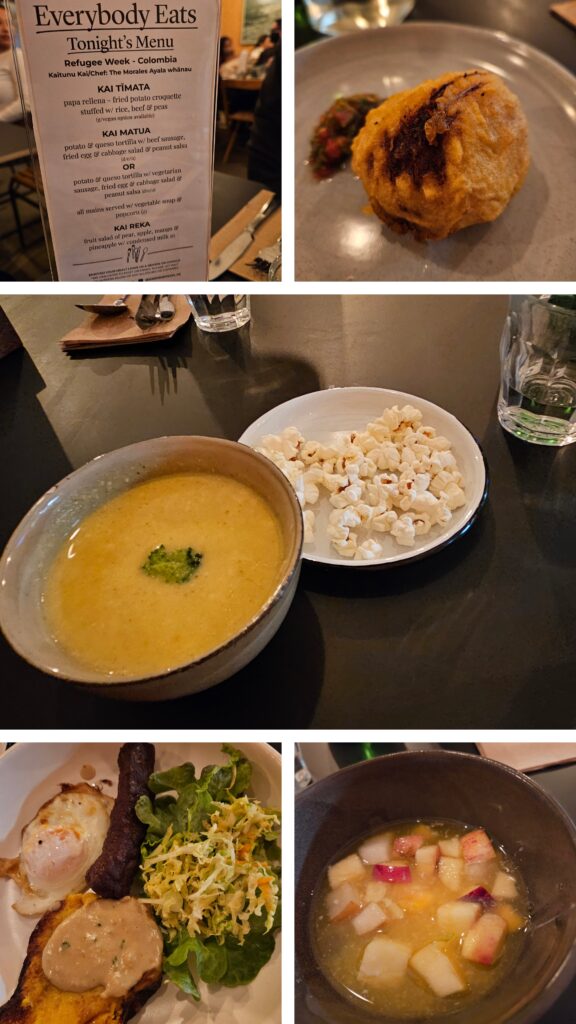
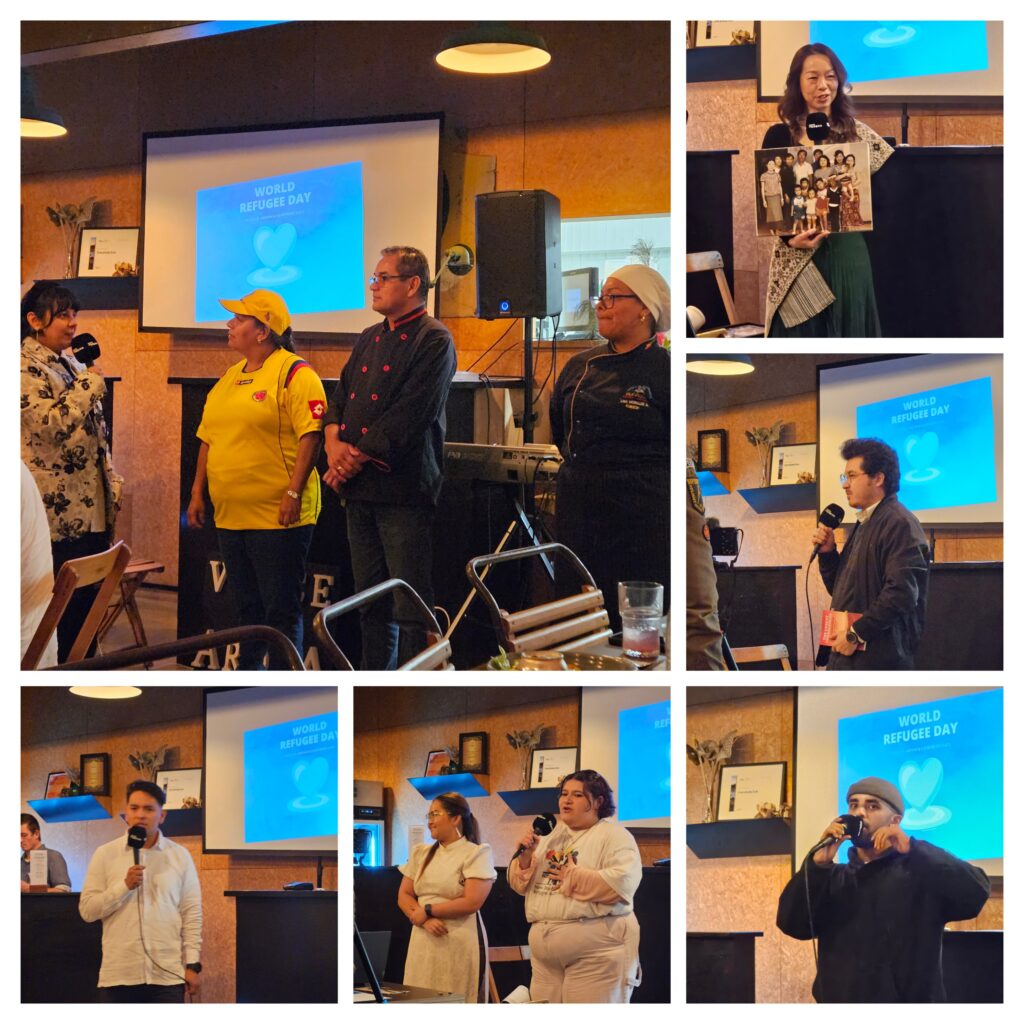
Through a series of serendipitous encounters, I attended a community dinner event on Thursday 20 June 2024 celebrating World Refugee Day. The event was organised by Voice of Aroha, with support from the New Zealand Refugee Youth Council, Wellington City Council, Porirua Multicultural Council and Everybody Eats (Wellington) where the dinner event was held. Everybody Eats is a pay-as-you-feel community restaurant that serves up 3 course set dinners transformed from rescued food. The World Refugee Day dinner event on that day was a heartfelt synergy of social cohesion, environmental responsibility and community voices. I have been engaged with migrant and ethnic communities for the past 10 years. But that evening was the first time I was part of a celebratory event that recognised and gave voice to the different journeys of refugees, and their stories of survival and triumph.

Image by Sujo26 from Pixabay

It was an intimate affair with around 60 people gathered to celebrate World Refugee Day over a 3 course meal prepared by a Colombian family. The family was invited to come out from the kitchen and share with the diners, not just about the dishes they prepared, but about their refugee journeys to Aotearoa New Zealand. Echoing their words, they prepared the food ‘with love’. To my mind and mouth, the meal they prepared was also a testament to their culture, strength and resilience.

The evening also featured former refugee guest speakers who included Soulivione Phonevilay, a former refugee from Laos and President of the Porirua Multicultural Council, and Abdul Samad Haidari, a Hazara-Afghani former refugee now based in Wellington.

Soulivione shared her family’s journey from a refugee camp in Thailand more than 40 years ago, to their final safe haven in New Zealand through framed family photos passed around the diners. She also shared a little known fact that 60-70% of workers in the Whittakers’ factory (located in Porirua) are from migrant and refugee backgrounds, and is the reason she believes for Whittaker’s success as one of New Zealand’s most loved brands. The next time we pick up a Whittaker’s Peanut Slab Bar, we’d do well to remember the hands and hearts that made that chocolate treat.

Abdul, who has been in New Zealand for just over a year, shared poetry from his recent book The Unsent Condolences. The poems reflect Abdul’s experiences of “flight from war torn Afghanistan to Iran as a child of the oppressed Hazara ethnic group, and later boat travel to Indonesia where he remained as a ‘stateless’ refugee without his family for 10 years until being accepted in 2023 to live in Aotearoa New Zealand.” Abdul spoke about the 10 years he spent as a refugee in Indonesia where there was no recognition of human rights for refugees. The poetry he shared expresses how it feels like to live under ‘the elbows of authoritarianism’ and be threatened by ‘the swords of tyranny’.

These two speakers stood out for me because of the conflicting and confronting messages that come with refugee stories. One the one hand, we want to celebrate the triumphs over persecution and family hardship, but on the other hand, we must not forget the atrocities and trauma that refugees experience in their long journey to escape and find safety in whichever place that will take them. I am grateful to Soulivione, Abdul and all the speakers who shared their stories. News articles and reports provide facts to startle, titillate and lull you into a comfortable spectator’s seat. An event like this, stories shared over a common meal, threaded by the indomitable spirit of those who have had to rebuild their lives from scratch, invites you into their space.

The evening ended with music, dance and laughter, no doubt a message of hope and joy that comes with being human – no matter your culture, language or journey that brought you to this land.

Image by Jeon Sang-O from Pixabay

Planned Happenstance – How to Make your Own Career Luck

Image by PIRO from Pixabay

We’re constantly bombarded by ‘get-rich-quick’ schemes – 5-day weight loss program, 3 days to a better you, be an overnight millionaire in a never-to-be-repeated 1-day course. I’ll admit I’ve been seduced by these promises of a sure-fire way to get what you want, only to find shortcuts end up as short circuits. There’s a power surge and the lights go off – and my enthusiasm goes *poof*

To be clear, if you’re attracted to a piece of advice and a pathway to success, by all means check it out and see if it makes sense and works for you. My own experience is that any change I want to see in myself or my circumstances depends on three things: motivation, habits, and accountability. For example, I had a repeated sprain in my arm for the past 6 months and this was related to a mixture of stress, body posture and working from home too much. I was motivated to fix this problem, so I signed up for a weekly Qigong class, and I had a physiotherapist friend check in to see if I was putting stretching and breathing lessons into practice. 4 weeks into the classes, I’m no Zen master but I certainly feel lighter and my arm looks to be sprain free – touch wood!

My experience with fixing my sprained arm parallels another real life issue – finding out about job opportunities. In this very tough employment environment, networking and uncovering the hidden job market becomes so important that I find myself prioritising this over refreshing the Seek job listings. Motivation – big fat check. As for habits – I needed to get myself out of this abyss of gloom and out into the real world of people and conversations.

Photo by Brooke Cagle on Unsplash

Networking and Weak Ties

Networking is not just a buzzword for me. Networking is a concept built on the idea that networks are many connections (of people) linked on the basis of family, friendship, personal interests, employment, industry, business, and so on and so forth. My own PhD research utilised the principles of social networks and relationships to understand how first year international students sought out help for their assignments.

One of the most important ideas about networking pioneered by Stanford professor Mark G. Granovetter is that weak ties (eg, acquaintances, former colleagues) give you relatively more useful information than strong ties (eg, family, friends). Family and friends in your existing social circle hold information that you are already privy to, while acquaintances, former schoolmates and colleagues whom you don’t interact with on a regular basis are more likely to have information about jobs or leads that are unknown to you. (I highly recommend reading Granovetter’s seminal article “The Strength of Weak Ties”.)

Planned Happenstance

While the idea and evidence of the strength of weak ties is compelling, the actual reaching out to weak ties is another thing altogether. Here is where Planned Happenstance, a theory developed by another Stanford luminary the late John D. Krumboltz, comes into play (Mitchell, Levin, & Krumboltz, 1999; Krumboltz, 2009). Planned happenstance is about creating and transforming unplanned events into opportunities for learning and action. Yes, the term ‘planned happenstance’ is a deliberate oxymoron: ‘planned’ suggests being deliberate, while ‘happenstance’ appears to be fate or pure luck. Planned happenstance is not about relying on a lucky break or a knock on the door (and then never have it happen). Rather, it is about taking action to generate and find opportunities.

To illustrate, imagine that all day long you keep thinking you’re going to strike it rich by winning the lottery. You pray to the gods that you’ll be given lucky numbers. But nothing happens – because you haven’t even bought a ticket. So imagine you’re hoping that someone will shoulder tap you for your dream job. You pray to the gods you’ll be given the job you’ve been waiting for all your life. But nothing happens – because you haven’t left the house in the past 2 weeks.

In their book “Luck is No Accident”, Krumboltz and Levin sum it up like this:

“You have control over your own actions and how you think about the events that impact on your life. None of us can control the outcomes, but your actions can increase the probability that desired outcomes will occur. There are no guarantees in life. The only guarantee in life is that doing nothing will get you nowhere.” (Krumboltz & Levin, 2010, p. 9)

So what next? What are the habits we can cultivate to get us into action?

Make Your Own Luck

Prepare for action – Take small steps, do something different, say”yes,” and then work out how you’re going to do it. Your mind can limit what you believe you can do. So train your mind to say yes, rather than no, and develop a bias for action. One way that works for me is to consciously sign up for a networking event or say yes to a social function. It puts something in my calendar and gives me a runway of a few weeks to think through how I might prepare myself. One recent example is how I said yes to be a discussant for an international education research forum. There was one empty slot taking place in about a month, and when I was asked if I wanted to lead the session I said yes – not having a clearly defined topic in mind, or worrying too much about what others might think of me. I work best with deadlines, and as the date in June drew closer, I got my mind attuned to my research and developing key messages for the audience.

Overcome barriers to action – Realise that if your action fails, you are no worse off than if
you did nothing. Don’t forget to celebrate your small successes. Participate in confidence-building exercises, such as accepting compliments gracefully. I’ve sat in front of the laptop for many days on end, doom-scrolling through the jobs that either didn’t interest me or were jobs that I could certainly do – and so could hundreds more. I did have a job interview a few weeks ago which I thought went very well, but in the end they found someone else – and there were many great candidates to choose from. I was disappointed but nonetheless encouraged by the hiring manager’s feedback that they enjoyed interviewing me (which tells me it wasn’t just me thinking I had a great interview). I accepted that feedback and considered it a successful outcome – that I prepared well and the interview panel were impressed with my answers. This helps me be confident for the next interview opportunity.

Take action! Network, socialise and build relationships. At the next networking event or social function, aim to speak to three new people. Share your interests and experiences with people that you meet. You may find leads in the least expected spaces. I recently attended a networking session in Wellington organised by Yes for Success (formerly known as Dress for Success). I spoke to a few people and found out about contract marking which I’ve never considered. I also found out that Yes for Success had just launched a mentoring programme. I subsequently emailed them about it and spoke with the coordinator. I’m now looking forward to a possible mentor match who could also be an accountability partner in my foray into a new career reality.

Choose Your Own Adventure

Taken from Choose Your Own Adventure website

When I was growing up in the 80s, I read Choose Your Own Adventure books. I was hooked from the beginning with some trouble brewing head, a catastrophe to prevent, or a monster to fight. I loved it because I could play the hero and explore the different decision options, and hoped my choices didn’t lead to an ending that got me trapped under the quicksand forever.

Career transitions are becoming my new Choose Your Own Adventure books. With nothing much to lose, I’m been experimenting with different ideas and career options. Unlike the books I read, I can’t go back to page 75 and try a different course of action, but I can create many more pages of possibilities and endings. Plus I know I won’t get trapped under the quicksand forever. But not doing anything will.

References

Granovetter, M. S. (1973). The Strength of Weak Ties. American Journal of Sociology78(6), 1360–1380. http://www.jstor.org/stable/2776392

Krumboltz, J. D. (2009). The Happenstance Learning Theory. Journal of Career Assessment17(2), 135-154. https://doi.org/10.1177/1069072708328861

Krumboltz, J. D., & Levin, A. S. (2010). Luck is no accident: Making the most of happenstance in your life and career (2nd ed.). Atascadero, CA: Impact Publishers.

Mitchell, K. E., Levin, A. S., & Krumboltz, J. D. (1999). Planned happenstance: Constructing unexpected career opportunities. Journal of Counseling & Development, 77(2), 115–124. https://doi.org/10.1002/j.1556-6676.1999.tb02431.x

How NOT to be a Migrant

Image by Jan from Pixabay

In the past few years, I’ve written about my journey with labels: Living and Thriving with Labels and Don’t call me Migrant or Asian but who do you say I am? In a generous reading of a label like ‘migrant’, you could say it is a convenient shorthand that points people to specific information and services, and allows people to quickly adjust how they engage with the subject matter or people who identify as migrant. You might even say ‘migrant’ encourages feelings of empathy and curiosity. In a less sanguine light, ‘migrant’ perpetuates the tropes in our public consciousness – the yellow/brown/black skinned person who is struggling in a white world, who overcomes the odds to be one of them, overachieves but stays humble and grateful.

Continue reading “How NOT to be a Migrant”

Life as Counterpoint

In music, counterpoint is the relationship between two or more musical lines (or voices) which are harmonically interdependent yet independent in rhythm and melodic contour. In brief, contrasting yet complementary. I’m starting to see life as counterpoint where different strands of life form an almost impossible fugal work of art.

If I could choose a piece of fugal music as inspiration, it would be Bach’s Prelude and Fugue No.2 Well Tempered Clavier, Book 1.

Work life takes up the most time of one’s 24 hours 7 days a week life, a sure-fire routine of starting up the computer and digital tools, the scrolling and clicking, the joining and leaving meetings, near-novel in-person meetings, the now clichéd Teams-Zoom meetings, the chatter around desks and kitchens, and of course, the actual work of doing-thinking-pausing in various reps and combos.

Work life, for all its transactional, practical and obligatory functions, might as well be the basso ostinato, a fixed bass line or chord progression that is continuously repeated while the melody and harmonies above it vary.

Or is it home life with similar ritualistic routines but with much heavier practical and obligatory functions that becomes the basso ostinato? Without paid work, home life would be untenable. And home life is the life that meets our most basic needs of food, shelter, safety and comfort.

Most of my working life has been as a ‘working mum’ (as opposed to a ‘non-working mum’ or ‘mum’ who are firmly positioned in the home), and as the primary income earner, have developed a no-nonsense almost survivalist mantra of ‘no work, no money, no food, no clothes, no house, so work’.

The work and home life balance is more like a see saw that keeps the momentum going for both lives to thrive. It now becomes evident to me that of course both work life and home life form the basso ostinato, stubbornly persistent and intertwined.

My community life is less about survival and more about serving and lifting others up. I spend this life with my church community – the women’s group, playing the piano, leading church services, praying for others. No doubt, the basso ostinato of work life and home life provides the ballast for me to be able to serve others. You can’t pour from an empty cup, but when you start pouring, your cup overflows.

For whoever has will be given more, and they will have an abundance.
Whoever does not have, even what they have will be taken from them.
Matthew 25:29

My creative life has only recently resurfaced like a Phoenix rising from the ashes of unfulfilled dreams of being a professional pianist, a composer, a published poet – the things that have been considered fanciful, unrealistic and hobbies at best in my down-to-earth middle class Asian upbringing and a pragmatic, competitive, discouraging Singaporean society. Perhaps it was going through adulthood, motherhood, and if I may coin the term, migrant-hood, in a place like New Zealand, that the creative life could be re-born. And just to be clear, in case you thought I was now a full-fledged musician and published author, I am not.

Instead, I have become increasingly comfortable in my own skin, whatever shade it’s purported to be, and feel free and encouraged to write, experiment, create, sing for those who willing to be the audience. Perhaps it is living in Wellington, the creative capital of New Zealand, that is the fertile soil for anyone who is willing to give it a go. Last year, I self-published a poetry book How To Be Different, How To Be Me. And in the past year or so, I’ve tried to make time to write poetry. Poetry is may start with a flash of inspiration that causes words to appear magically on paper, but it is the working through the word choices, sequence, rhythm that makes the scenes and emotions come alive.

This year, my creative life branched out into songwriting. Inspired by a worship leading workshop I attended at The Street Church in a few months ago, I rekindled my desire to write music and wrote two songs. I’ve sung one of them in church, and will sing the second one at the Christmas Eve service. I’ve been encouarged by my church community, and I share these songs with you.

The Offering is a song about what we offer to God as an act of worship, and what God has offered to us – his one and only Son Jesus.

Silent Night Is Calling is a Christmas themed song, inspired by one of my favourite songs, We Are the Reason by singer and songwriter David Meece. In Silent Night Is Calling, I used ‘silent night’ as a motif for the different settings Jesus is present in our lives.

Life’s journey this year (and every year) can feel like it’s been full of routines and activities, and that is why the do-things-for-myself life becomes important. Often overlooked or considered dispensable, this life points to the rests, long pauses and empty bars of my fugal composition. The do-things-for-myself life is unwinding with a book or something on the iPad screen, baking seeded crackers, lying flat on my back in quiet contemplation, walking on my own around the neighbourhood. They are wordless unambitious indulgences.

Time and intention has written this year’s fugual composition, or rather, a movement of a much longer piece of music.

Don`t copy text!