Building a Career Between Worlds: Understanding Third Culture Identity and Cross-Border Professional Life
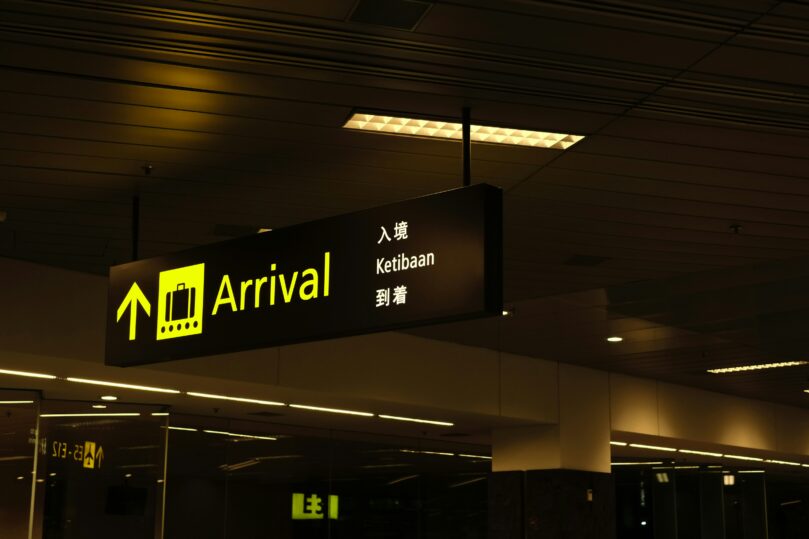
A few days ago, I shared on LinkedIn about my recent trip to Singapore. I reflected on becoming “more foreign than local” in my birthplace, and the uncomfortable reality of existing in what I call the “third space” of international professionals.
That post got me thinking more deeply about this experience. I wasn’t just downloading post-holiday emotions, but I was describing something that many international professionals experience but rarely articulate in everyday conversation.
This article is an exploration of that third space: what it means, why it matters, and why I believe these stories need to be shared more openly. And at the end, I’ll share how you can be part of creating that space for honest conversation.
What is the Third Space? Understanding Third Culture Identity for Global Professionals
The Third Space is a theory attributed to Homi K. Bhabha and defined in his book The Location of Culture (1994). A Third Space is an undefined middle ground where people actively negotiate cultural meanings, producing identities that are fluid and continually evolving.

I’ve made several trips back home to Singapore since leaving the country to start life afresh in New Zealand more than 10 years ago. Each trip brought back different memories and emotions. This particular trip centred around spending time with family and attending to personal matters and family responsibilities. In short, it felt like a working holiday with strings attached. I don’t think I can truly behave or feel like a tourist in my home country, but at the same time, it was becoming less intuitive and comfortable than before.
One particular incident stood out as an example of negotiating cultural meanings in this third space.
A Real Example: Navigating Cultural Expectations as an International Professional
I was catching up with a friend near their workplace and they introduced me to their colleagues who were nearby. It started off as a friendly exchange of self-introductions and they were naturally curious about my life in New Zealand. In such conversations, I find myself pointing out what I enjoy about living and working in New Zealand, but also highlighting how I miss certain things in Singapore like the food, convenience and efficiency. Now that I talk about it, it feels like a natural script where you present a balanced view so as not to appear you’ve got the good life and they haven’t. Then came a response I didn’t expect, or perhaps should have expected: “But you’re coming back home to Singapore, right?”
I paused. Missed a beat. Then said:
“Well, for now New Zealand is home.” Followed by light laughter all around.
What I wanted to say, but didn’t think it good manners to elaborate with acquaintances, was this:
“Why is it so important for you that I return to Singapore? What does it matter to you if I did or didn’t? Would you like me less if I said ‘never in a million years’ or like me more if I said ‘for sure, can’t wait to return home for good’?”
And when I think back to what I said, it was a mix of truth and face-saving. It is true that at present, New Zealand is my home, where I live, work and have community. And it is true that I cannot say this will be the case in the future because it is unseen and more importantly, uncertain. But equally true is the fact that I needed a response to counter the proposition that I was surely going to return to my home country without the indignation of having the notion of loyalty and national pride rolled up in one fat presumption.
(Pardon my words—I’m a poet after all.)
In other words, I needed a credible response without making a big deal out of it and still entertain the notion that I could return, just not on their terms!
Funny how a couple of seconds of small talk exploded into a soul-searching exercise within me.
The Expectation to “Return Home”: A Common Challenge for Migrant Professionals
And when I think back to various conversations with close friends and relatives, there I found it again: an expectation that I will return and my response of possibility. To be clear, I often think about the possibility of returning ‘home’ and different scenarios leading to that. But it is the default position and expectation of my Singaporean friends and family that truly unnerves me.

In New Zealand, I rarely have conversations with others about ‘going back home’ because I’m not a visitor and have a very full and settled life in this country! But when I think back to the process of getting where I am today, and even in more recent memory, there were notable occasions where ‘going back home’ or being singled out as foreign was the response.
When I was doing my PhD and asking about career pathways: “Oh, you want to stay and work here?”
When I asked the secondhand shop owner where the violin was made: “Where you’re from.”
When asked by the motel owner where I was from and I said Wellington: “No, where are you really from?”
And on many of those occasions came my face-saving meek sounding laughter, somehow saying, ah ha, I know what you’re thinking and it’s not okay, but I don’t want to turn this into an awkward situation and cause myself any more discomfort.
Like the light laughter I dispensed when positioned as a patriotic daughter of my homeland.
A defense mechanism that perhaps perpetuates the presumption and attitudes, but also saves me from having to launch into a tirade that would be further misunderstood and mess up the social order of conversation (which by the way is a real thing according to Conversation Analysis, a theoretical framework I used to analyse chat messages between peers in my PhD).
Why the Third Space Matters for International Career Success
Because everyday conversation tends to be polite or follow convention.
Because it is risky to try to defend your own cultural status to a relative stranger.
Because matters of self-identity and the process of identity making are complex.
We need a space to work all of this out, and the Third Space holds room for discomfort and discovery.
The Third Space Comes Alive When:
- You recognise that you are in a liminal zone of sociocultural realities
- You participate in a tug of war of loyalties and self-disclosure
- You translate between worlds about religious and cultural traditions
- You struggle and try to make peace with incidents and emotions that linger on your consciousness
- You want to work out who you really are and where you really belong behind the multiple identities, hybrid accent, and the undeniable color of your skin
It’s not a problem to solve. It’s a reality to understand and navigate.
The Hidden Challenges of Building an International Career
And here’s what I know from a decade of working with international professionals—expatriates, international students, migrant professionals: we rarely talk about this experience honestly. When is ever the right time or place to discuss the messy, complicated reality of living between worlds? That stays private, unspoken, often unacknowledged even to ourselves.

Common Experiences International Professionals Face (But Rarely Discuss):
- The paralysis of imposter syndrome when your credentials aren’t immediately recognised
- The exhaustion of code-switching between cultural communication styles
- The grief of missing weddings, funerals, and the everyday moments of family life
- The invisible labour of maintaining professional and personal networks across time zones
- The courage it takes to keep rebuilding, again and again
- The quiet moments of wondering: “Where is home? Who am I now?”
These are the experiences that live in the third space. The tensions that sit uncomfortably in your belly. The emotions you can’t quite explain to people who’ve only ever lived in one place. The complexity that doesn’t fit into simple narratives about “international careers.”
If you’re navigating a career and life across cultures, borders, and systems, you’re not imagining this complexity. Those emotions? They’re real. And they matter.
Why International Professionals Need to Share Their Stories
When I was planning my move from Singapore to New Zealand, I devoured every resource I could find about immigration processes, job search strategies, and credential recognition. What I couldn’t find were the stories I actually needed—the ones about navigating the third space:
The Questions That Really Matter for International Career Transitions:
- How do you maintain your sense of professional identity when you’re starting over?
- What does it feel like when you’re overqualified on paper but underemployed in practice?
- How do you build a career when your network is 10,000 kilometers away?
- When does it start feeling like home?
- How do you reconcile the person you were “there” with the person you’re becoming “here”?
The practical information is important. But understanding the emotional and psychological journey—the reality of existing in the third space—that’s just as important, if not even more so, when we want to thrive, not merely survive as international professionals.
Yet these stories remain largely untold. We share them in quiet conversations with other international professionals, in late-night messages to friends who “get it.” But publicly? We stick to the polished narratives.
I believe we need to change that.
Not because everyone’s story needs to be public. But because those of us willing to share can create understanding, validation, and support for international professionals navigating this journey.
When we openly discuss the reality of the third space—the tensions, the growth, the complexity—we give others permission to acknowledge their own experiences. We create community where there was isolation. We transform individual struggles into collective wisdom.
That’s why I’m creating a space for these conversations: The International Career Journey Podcast, a podcast dedicated to the authentic experiences of professionals who’ve crossed borders to build their careers.
Introducing: The International Career Journey Podcast
A podcast for professionals navigating careers across borders—from anywhere, to anywhere.
I want to have honest, in-depth conversations with international professionals about their journeys. About the visa rejections, the cultural misunderstandings, the career setbacks, the identity questions, and yes, the eventual breakthroughs and growth. I hope to interview people in the next few months and launch the podcast in the second half of 2026.

What Makes This International Career Podcast Different
This isn’t about celebrating “success stories” or promoting the myth that international careers are all adventure and opportunity. It’s about the full, honest journey:
- Real challenges faced and how they were overcome (or not)
- Cultural adaptation in workplace contexts
- Career progression strategies across borders
- The emotional and identity aspects of international work
- Practical insights other professionals can actually use
- The question we’re all navigating: what does “home” mean when you’ve lived in multiple places?
The Format: Intimate, Honest Conversations About Global Careers
Each episode is approximately 30 minutes—long enough for depth, short enough for your commute. The structure is conversational, not scripted. I’ll ask the questions I wish I had the answers to before I made my international career move:
- What surprised you most about working in [country]?
- Tell me about a moment when you felt completely out of your depth
- How has your sense of identity evolved?
- What do you wish you’d known before you moved?
- When did it start feeling less foreign?
Looking for Season 1 Podcast Guests (Recording March-May 2026)
Here’s where I need your help.
If you’re a professional with an international career story, I want to hear from you. Your story doesn’t need to be dramatic or “successful” by conventional measures. It just needs to be real.
Who I’m Looking For: 7 Types of International Professional Stories
1) The New Arrival
You relocated to a new country for work and have been there 2+ years. You’ve navigated the visa process, job search, and cultural adaptation. You have fresh insights about building a career in a new country.
2) The Migrant Professional
You grew up or studied in one country and moved to another for work. You’re more or less settled in your new country and have 5+ years work experience. You’ve navigated the transition from familiar to foreign and can speak to the opportunities and challenges of ‘starting all over’.
3) The Serial Mover
You’ve worked in 3+ countries across different regions. You’ve built a truly global career spanning continents. You understand the art of professional reinvention across borders and have strategies for maintaining career momentum while moving.
4) The Returner
You left your home country to work overseas and have since returned. You can share insights on reverse culture shock, reintegration, and what it’s like to go “home” after years away.
5) The Cross-Border Remote Worker
You work remotely for international companies or clients. You’ve navigated the tax, legal, and practical challenges of working across borders while potentially living in multiple locations.
6) The Aspiring International Professional
You’re actively preparing to work in another country. You’re in the research, application, or planning phase. You can share your preparation journey and what you’re learning.
7) The Support Professional
You work in organisational or consultant roles supporting international career transitions. Examples: global mobility specialists, HR professionals managing relocations, immigration advisors. You have behind-the-scenes insights to share.
Why Share Your International Career Story?
The interview process is surprisingly valuable for reflection on your journey and growth. And your story could be exactly what someone needs to hear to make their next brave move—or to simply feel less alone in their current challenges. By sharing your personal insights, you’re contributing something valuable to a global community.
Or Do You Know Someone With a Great International Career Story?
Share this article with them. Tag someone who should be a guest. Help me find the voices that need to be heard.
What’s Involved: Podcast Details
- 30-minute Zoom conversation (conversational, not formal)
- No special equipment needed
- Recording: March – May 2026
- Season 1 Launch: Second half of 2026
How to Apply to Be a Podcast Guest
If you’re interested in being a guest, please complete this application form: https://forms.gle/jPX4srS6itf3BRn26
I’ll review all applications and respond within 5-7 business days.
Application Deadline: 28 February 2026
Stay Connected: Subscribe for Updates on International Career Insights
Want to stay updated?
Subscribe to my newsletter International Career Journey on LinkedIn or Substack. Subscribe for podcast updates, guest features, and reflections on international career journeys.
Or follow me on:
- Website: https://thediasporicacademic.com/
- LinkedIn: https://www.linkedin.com/in/leesherrie/
- Facebook: https://www.facebook.com/diasporacademic/
- Instagram: https://www.instagram.com/drsherrielee.careercoach/
- YouTube: https://YouTube.com/@drsherrielee
Have questions?
Leave or comment or send me a direct message. I’d love to hear from you.
Frequently Asked Questions About Being a Podcast Guest
Q: I’m not “successful enough” or “expert enough.” Can I still apply?
A: Yes! I’m looking for real, authentic stories—not just success stories. If you’re navigating an international career journey and have insights to share, you’re qualified. Some of the most valuable episodes will be from people still figuring things out.
Q: I have a strong accent or English isn’t my first language. Is that okay?
A: Absolutely. Your perspective is valuable regardless of accent. This podcast celebrates diversity. As long as you can communicate your experiences clearly, your voice deserves to be heard.
Q: What if I’m nervous about being recorded?
A: Totally normal! The conversation is relaxed and conversational—I’ll guide you through it. You can practice beforehand, and you’ll get to preview the episode before it’s published. Just think of the interview like a conversation with a friend.
Q: Can I talk about my business or services?
A: This podcast focuses on professional career journeys, not business promotion. You’re welcome to mention your current role and company in your introduction, but the conversation centers on your international career experiences and insights—not marketing services. Your LinkedIn profile and brief bio will be shared on the episode page.
Q: I have a unique situation that doesn’t fit the profiles exactly. Can I still apply?
A: Yes! The profiles are guidelines. If you have an international professional career story worth sharing, I want to hear it.
Q: What if my schedule changes and I need to reschedule?
A: Life happens! Just let me know as soon as possible and we’ll find another time that works.
Q: Will this be video or just audio?
A: Both. We’ll record a video via Zoom and the podcast will be shared on YouTube and audio-only podcast channels like Spotify.
About the Host: Dr Sherrie Lee
I am a career coach for international professionals. I’m born in Singapore, based in New Zealand, living in the Third Space. With over a decade of experience working with international professionals—expatriates, international students, and migrant professionals—I understand the unique challenges of building careers across borders because I’ve lived it myself. Through my career coaching work and this newsletter, International Career Journey, I help professionals navigate the third space and transform cross-cultural complexity into career strength.
Podcast (launching second half of 2026): The International Career Journey Podcast