Close
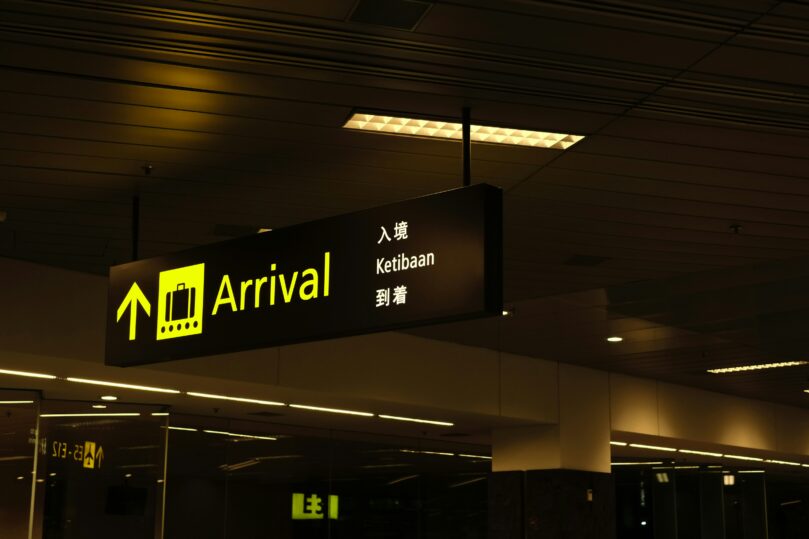
Arrival sign in Changi Airport, Singapore

Navigating the Third Space: What International Professionals Need to Know About Working Across Borders

Building a Career Between Worlds: Understanding Third Culture Identity and Cross-Border Professional Life


A few days ago, I shared on LinkedIn about my recent trip to Singapore. I reflected on becoming “more foreign than local” in my birthplace, and the uncomfortable reality of existing in what I call the “third space” of international professionals.

That post got me thinking more deeply about this experience. I wasn’t just downloading post-holiday emotions, but I was describing something that many international professionals experience but rarely articulate in everyday conversation.

This article is an exploration of that third space: what it means, why it matters, and why I believe these stories need to be shared more openly. And at the end, I’ll share how you can be part of creating that space for honest conversation.


What is the Third Space? Understanding Third Culture Identity for Global Professionals

The Third Space is a theory attributed to Homi K. Bhabha and defined in his book The Location of Culture (1994). A Third Space is an undefined middle ground where people actively negotiate cultural meanings, producing identities that are fluid and continually evolving.

Nodes and lines forming triangles superimposed on speech bubbles
Image by Gerd Altmann from Pixabay

I’ve made several trips back home to Singapore since leaving the country to start life afresh in New Zealand more than 10 years ago. Each trip brought back different memories and emotions. This particular trip centred around spending time with family and attending to personal matters and family responsibilities. In short, it felt like a working holiday with strings attached. I don’t think I can truly behave or feel like a tourist in my home country, but at the same time, it was becoming less intuitive and comfortable than before.

One particular incident stood out as an example of negotiating cultural meanings in this third space.

A Real Example: Navigating Cultural Expectations as an International Professional

I was catching up with a friend near their workplace and they introduced me to their colleagues who were nearby. It started off as a friendly exchange of self-introductions and they were naturally curious about my life in New Zealand. In such conversations, I find myself pointing out what I enjoy about living and working in New Zealand, but also highlighting how I miss certain things in Singapore like the food, convenience and efficiency. Now that I talk about it, it feels like a natural script where you present a balanced view so as not to appear you’ve got the good life and they haven’t. Then came a response I didn’t expect, or perhaps should have expected: “But you’re coming back home to Singapore, right?”

I paused. Missed a beat. Then said:

“Well, for now New Zealand is home.” Followed by light laughter all around.

What I wanted to say, but didn’t think it good manners to elaborate with acquaintances, was this:

“Why is it so important for you that I return to Singapore? What does it matter to you if I did or didn’t? Would you like me less if I said ‘never in a million years’ or like me more if I said ‘for sure, can’t wait to return home for good’?”

And when I think back to what I said, it was a mix of truth and face-saving. It is true that at present, New Zealand is my home, where I live, work and have community. And it is true that I cannot say this will be the case in the future because it is unseen and more importantly, uncertain. But equally true is the fact that I needed a response to counter the proposition that I was surely going to return to my home country without the indignation of having the notion of loyalty and national pride rolled up in one fat presumption.

(Pardon my words—I’m a poet after all.)

In other words, I needed a credible response without making a big deal out of it and still entertain the notion that I could return, just not on their terms!

Funny how a couple of seconds of small talk exploded into a soul-searching exercise within me.

The Expectation to “Return Home”: A Common Challenge for Migrant Professionals

And when I think back to various conversations with close friends and relatives, there I found it again: an expectation that I will return and my response of possibility. To be clear, I often think about the possibility of returning ‘home’ and different scenarios leading to that. But it is the default position and expectation of my Singaporean friends and family that truly unnerves me.

Sunset backdrop with two silhouettes in foreground
Image by Arifur Rahman from Pixabay

In New Zealand, I rarely have conversations with others about ‘going back home’ because I’m not a visitor and have a very full and settled life in this country! But when I think back to the process of getting where I am today, and even in more recent memory, there were notable occasions where ‘going back home’ or being singled out as foreign was the response.

When I was doing my PhD and asking about career pathways: “Oh, you want to stay and work here?”

When I asked the secondhand shop owner where the violin was made: “Where you’re from.”

When asked by the motel owner where I was from and I said Wellington: “No, where are you really from?”

And on many of those occasions came my face-saving meek sounding laughter, somehow saying, ah ha, I know what you’re thinking and it’s not okay, but I don’t want to turn this into an awkward situation and cause myself any more discomfort.

Like the light laughter I dispensed when positioned as a patriotic daughter of my homeland.

A defense mechanism that perhaps perpetuates the presumption and attitudes, but also saves me from having to launch into a tirade that would be further misunderstood and mess up the social order of conversation (which by the way is a real thing according to Conversation Analysis, a theoretical framework I used to analyse chat messages between peers in my PhD).


Why the Third Space Matters for International Career Success

Because everyday conversation tends to be polite or follow convention.

Because it is risky to try to defend your own cultural status to a relative stranger.

Because matters of self-identity and the process of identity making are complex.

We need a space to work all of this out, and the Third Space holds room for discomfort and discovery.

The Third Space Comes Alive When:

  • You recognise that you are in a liminal zone of sociocultural realities
  • You participate in a tug of war of loyalties and self-disclosure
  • You translate between worlds about religious and cultural traditions
  • You struggle and try to make peace with incidents and emotions that linger on your consciousness
  • You want to work out who you really are and where you really belong behind the multiple identities, hybrid accent, and the undeniable color of your skin

It’s not a problem to solve. It’s a reality to understand and navigate.


The Hidden Challenges of Building an International Career

And here’s what I know from a decade of working with international professionals—expatriates, international students, migrant professionals: we rarely talk about this experience honestly. When is ever the right time or place to discuss the messy, complicated reality of living between worlds? That stays private, unspoken, often unacknowledged even to ourselves.

Woman placing finger over closed lips
Photo by Kristina Flour on Unsplash

Common Experiences International Professionals Face (But Rarely Discuss):

  • The paralysis of imposter syndrome when your credentials aren’t immediately recognised
  • The exhaustion of code-switching between cultural communication styles
  • The grief of missing weddings, funerals, and the everyday moments of family life
  • The invisible labour of maintaining professional and personal networks across time zones
  • The courage it takes to keep rebuilding, again and again
  • The quiet moments of wondering: “Where is home? Who am I now?”

These are the experiences that live in the third space. The tensions that sit uncomfortably in your belly. The emotions you can’t quite explain to people who’ve only ever lived in one place. The complexity that doesn’t fit into simple narratives about “international careers.”

If you’re navigating a career and life across cultures, borders, and systems, you’re not imagining this complexity. Those emotions? They’re real. And they matter.


Why International Professionals Need to Share Their Stories

When I was planning my move from Singapore to New Zealand, I devoured every resource I could find about immigration processes, job search strategies, and credential recognition. What I couldn’t find were the stories I actually needed—the ones about navigating the third space:

The Questions That Really Matter for International Career Transitions:

  • How do you maintain your sense of professional identity when you’re starting over?
  • What does it feel like when you’re overqualified on paper but underemployed in practice?
  • How do you build a career when your network is 10,000 kilometers away?
  • When does it start feeling like home?
  • How do you reconcile the person you were “there” with the person you’re becoming “here”?

The practical information is important. But understanding the emotional and psychological journey—the reality of existing in the third space—that’s just as important, if not even more so, when we want to thrive, not merely survive as international professionals.

Yet these stories remain largely untold. We share them in quiet conversations with other international professionals, in late-night messages to friends who “get it.” But publicly? We stick to the polished narratives.

I believe we need to change that.

Not because everyone’s story needs to be public. But because those of us willing to share can create understanding, validation, and support for international professionals navigating this journey.

When we openly discuss the reality of the third space—the tensions, the growth, the complexity—we give others permission to acknowledge their own experiences. We create community where there was isolation. We transform individual struggles into collective wisdom.

That’s why I’m creating a space for these conversations: The International Career Journey Podcast, a podcast dedicated to the authentic experiences of professionals who’ve crossed borders to build their careers.


Introducing: The International Career Journey Podcast

A podcast for professionals navigating careers across borders—from anywhere, to anywhere.

I want to have honest, in-depth conversations with international professionals about their journeys. About the visa rejections, the cultural misunderstandings, the career setbacks, the identity questions, and yes, the eventual breakthroughs and growth. I hope to interview people in the next few months and launch the podcast in the second half of 2026.

Retro microphone on a table with festive bokeh lights. A vintage-style microphone placed on a wooden table with warm bokeh lights.
AI generated image from Pixabay

What Makes This International Career Podcast Different

This isn’t about celebrating “success stories” or promoting the myth that international careers are all adventure and opportunity. It’s about the full, honest journey:

  • Real challenges faced and how they were overcome (or not)
  • Cultural adaptation in workplace contexts
  • Career progression strategies across borders
  • The emotional and identity aspects of international work
  • Practical insights other professionals can actually use
  • The question we’re all navigating: what does “home” mean when you’ve lived in multiple places?

The Format: Intimate, Honest Conversations About Global Careers

Each episode is approximately 30 minutes—long enough for depth, short enough for your commute. The structure is conversational, not scripted. I’ll ask the questions I wish I had the answers to before I made my international career move:

  • What surprised you most about working in [country]?
  • Tell me about a moment when you felt completely out of your depth
  • How has your sense of identity evolved?
  • What do you wish you’d known before you moved?
  • When did it start feeling less foreign?

Looking for Season 1 Podcast Guests (Recording March-May 2026)

Here’s where I need your help.

If you’re a professional with an international career story, I want to hear from you. Your story doesn’t need to be dramatic or “successful” by conventional measures. It just needs to be real.

Who I’m Looking For: 7 Types of International Professional Stories

1) The New Arrival

You relocated to a new country for work and have been there 2+ years. You’ve navigated the visa process, job search, and cultural adaptation. You have fresh insights about building a career in a new country.

2) The Migrant Professional

You grew up or studied in one country and moved to another for work. You’re more or less settled in your new country and have 5+ years work experience. You’ve navigated the transition from familiar to foreign and can speak to the opportunities and challenges of ‘starting all over’.

3) The Serial Mover

You’ve worked in 3+ countries across different regions. You’ve built a truly global career spanning continents. You understand the art of professional reinvention across borders and have strategies for maintaining career momentum while moving.

4) The Returner

You left your home country to work overseas and have since returned. You can share insights on reverse culture shock, reintegration, and what it’s like to go “home” after years away.

5) The Cross-Border Remote Worker

You work remotely for international companies or clients. You’ve navigated the tax, legal, and practical challenges of working across borders while potentially living in multiple locations.

6) The Aspiring International Professional

You’re actively preparing to work in another country. You’re in the research, application, or planning phase. You can share your preparation journey and what you’re learning.

7) The Support Professional

You work in organisational or consultant roles supporting international career transitions. Examples: global mobility specialists, HR professionals managing relocations, immigration advisors. You have behind-the-scenes insights to share.


Why Share Your International Career Story?

The interview process is surprisingly valuable for reflection on your journey and growth. And your story could be exactly what someone needs to hear to make their next brave move—or to simply feel less alone in their current challenges. By sharing your personal insights, you’re contributing something valuable to a global community.

Or Do You Know Someone With a Great International Career Story?

Share this article with them. Tag someone who should be a guest. Help me find the voices that need to be heard.

What’s Involved: Podcast Details

  • 30-minute Zoom conversation (conversational, not formal)
  • No special equipment needed
  • Recording: March – May 2026
  • Season 1 Launch: Second half of 2026

How to Apply to Be a Podcast Guest

If you’re interested in being a guest, please complete this application form: https://forms.gle/jPX4srS6itf3BRn26

I’ll review all applications and respond within 5-7 business days.

Application Deadline: 28 February 2026


Stay Connected: Subscribe for Updates on International Career Insights

Want to stay updated?
Subscribe to my newsletter International Career Journey on LinkedIn or Substack. Subscribe for podcast updates, guest features, and reflections on international career journeys.

Or follow me on:

Have questions?
Leave or comment or send me a direct message. I’d love to hear from you.


Frequently Asked Questions About Being a Podcast Guest

Q: I’m not “successful enough” or “expert enough.” Can I still apply?

A: Yes! I’m looking for real, authentic stories—not just success stories. If you’re navigating an international career journey and have insights to share, you’re qualified. Some of the most valuable episodes will be from people still figuring things out.

Q: I have a strong accent or English isn’t my first language. Is that okay?

A: Absolutely. Your perspective is valuable regardless of accent. This podcast celebrates diversity. As long as you can communicate your experiences clearly, your voice deserves to be heard.

Q: What if I’m nervous about being recorded?

A: Totally normal! The conversation is relaxed and conversational—I’ll guide you through it. You can practice beforehand, and you’ll get to preview the episode before it’s published. Just think of the interview like a conversation with a friend.

Q: Can I talk about my business or services?

A: This podcast focuses on professional career journeys, not business promotion. You’re welcome to mention your current role and company in your introduction, but the conversation centers on your international career experiences and insights—not marketing services. Your LinkedIn profile and brief bio will be shared on the episode page.

Q: I have a unique situation that doesn’t fit the profiles exactly. Can I still apply?

A: Yes! The profiles are guidelines. If you have an international professional career story worth sharing, I want to hear it.

Q: What if my schedule changes and I need to reschedule?

A: Life happens! Just let me know as soon as possible and we’ll find another time that works.

Q: Will this be video or just audio?

A: Both. We’ll record a video via Zoom and the podcast will be shared on YouTube and audio-only podcast channels like Spotify.


About the Host: Dr Sherrie Lee

I am a career coach for international professionals. I’m born in Singapore, based in New Zealand, living in the Third Space. With over a decade of experience working with international professionals—expatriates, international students, and migrant professionals—I understand the unique challenges of building careers across borders because I’ve lived it myself. Through my career coaching work and this newsletter, International Career Journey, I help professionals navigate the third space and transform cross-cultural complexity into career strength.


Podcast (launching second half of 2026): The International Career Journey Podcast

Who Am I? Finding Identity as an International Professional

“You’ll never please everyone. So who are you really choosing to be?”

After living away from my home country for more than 10 years, I still struggle to answer one simple question: who am I?

It’s not that I lack a label. I call myself an ‘international professional’ – a term that sounds respectable enough. ‘International’ suggests movement across borders. ‘Professional’ implies accumulated knowledge and expertise. But this convenient shorthand still falls short of capturing who I really am.

As a career coach working with international professionals, I see this struggle everywhere. In networking events. In job interviews. In LinkedIn profiles that somehow all sound the same. We’ve learned to package ourselves neatly into expected categories – the ambitious expat, the global nomad, the third culture kid. But these labels often feel hollow because they don’t capture our actual experiences or what truly drives us.

The truth is, being able to articulate who you are matters. Potential employers want to understand your story. Collaborators need to know what you bring beyond credentials. Your professional network connects with you because of shared values and experiences, not just shared industries.

Yet so often, we default to stereotypes or generic descriptions that don’t distinguish us from anyone else.

Image by Gerd Altmann from Pixabay

The Challenge of Self-Definition

So how do you break free from generic labels and articulate who you really are?

I’ve considered the usual options, and none quite work.

Why Common Labels Don’t Fit

Citizen of the world? Too easy, too cheap, and hollow in every practical sense. You are really only a citizen of one country, maybe two if that’s allowed. Citizenship carries the heavy responsibility of representation, belonging, and defending the country’s honour. How can I possibly do that for the world when it is hard enough to do it justice for my own country?

Personal demographics? I could list my age, gender, ethnicity, and my multiple roles as mother, wife, worker and community volunteer. But I don’t feel like exposing my personal life to a wide faceless readership. There’s little chance of meaningful dialogue in the internet sphere of partial fleeting attention.

Professional credentials? I could dig deep into what I do and the value I bring. After all, isn’t that what we do on LinkedIn? We position ourselves as an authority on X, with sure-fire strategies for Y, and crystal ball gazing into the future of Z. But I hear the dissenting voice: oh no, not another cringy self-promotional humble brag!

Confessional authenticity? Maybe I ditch being professional and go confessional. I could reveal my deepest fears, my latest desires, my 2025 bucket list. Would this be the authentic voice that people want to hear? Or just a higher level of cringe for the naysayers?

AI-generated image of an elderly father and young son riding a donkey.

The Father, Son, and Donkey Parable

I’m reminded of the story of the father, his son, and a donkey. They tried every way to travel well, but couldn’t win.

At first, the father rode while the son walked. Bystanders chided the father for letting his young son walk. Then the son rode while the father walked. Now the criticism targeted the son for letting his elderly father walk. Then both rode the donkey together. But the outcry was about cruelty – how could they make the donkey bear the weight of two people? Finally, father and son carried the donkey on their backs. All they heard was laughter and derision.

The moral? You will never please all audiences. So do what you believe is sensible and within your own moral conscience, instead of responding to every possible criticism.

My Story: A Different Kind of International

Applying this moral, who am I beyond the label of ‘international professional’?

I’ll answer with a story.

Growing Up in Singapore

I am from Singapore. I grew up in systems based on meritocracy and competition, shaped by cultural notions of generational respect and family pride.

My peers and I were always trying to go ‘international’ – for culture, education, and lifestyle. But it was a ‘western’ kind of international, with specific countries in mind, ranked in order of preference. This particular form of being international was prestigious, desirable, and an investment for future advancement.

As the internet opened up the world in new ways – connecting us to information, opportunities, and people beyond our borders – going international shifted from dream to possibility. We could see what was out there. We could imagine ourselves in those places. The world felt within reach in a way it hadn’t for previous generations.

But while international-oriented people zigged, I zagged. I wasn’t craving a specific kind of international label or a fast-tracked pathway to success. I wanted to explore ideas that mattered to me and find my own kind of international.

My First International Experience: Canada

My first experience of being international was as an exchange student at Simon Fraser University in Burnaby, just outside Vancouver.

It was also my first experience of snow. It was supposed to be magical. It turned out to be a slushy, sneaker-soaked disappointment I will never forget.

But thank goodness that experience didn’t define my international journey. My dormitory was truly international – local Canadians, international and exchange students from various Asian and European countries. I had eye-opening interactions for my 21-year-old self who had lived a fairly sheltered life in conservative Singapore.

The moments I remembered: Being told off by my Swiss dorm mate for having the radio on too loud at 7 am. (I was playing classical music at what I thought was a reasonable low volume.) Being clueless about putting a paper plate in the oven and nearly burning down the kitchen. Observing a standoff between my Chinese dorm mate cleaning a fish in the shared kitchen sink and the Swiss making remarks in accented English which my Chinese friend either didn’t catch or couldn’t care less about.

I remember squeezing into a car driven by Chinese Jeff who had a broken side window taped up with cardboard. Canadian Bob wasn’t wearing a seatbelt. I kept asking annoying questions: Is this okay? Is it legal? Am I allowed to sit in the middle? All the way to the cinema to watch Good Will Hunting.

I really lapped up the ‘go for it’ attitude of the Canada I experienced then. It was liberating to just try things out and not worry about what others would think. Being international felt like I could be free to explore who I wanted to be!

The Mountain Climb That Changed Everything

The deepest memory I have was going on a mountain climb at the start of Spring.

Weather was great, they said. Won’t you come along? Winter and slushy snow were things of the past. I was no fitness buff but had gotten used to walking around the nearby hills. So I thought, sure, what’s not to like about a mountain climb with friends?

On the day of the hike, I came prepared in my own way. Jeans and track shoes. Umbrella, water bottle, beanie and gloves in backpack.

Of course, everyone else wore appropriate hiking gear. I was the only one in jeans. What did I know about proper hiking clothes? Not much really.

My ignorance became my downfall just a couple of hours in. It was getting difficult to move in jeans. Then it started to rain. Out came my umbrella, which became more burden than help when navigating rocky terrain. I was slowing down as others leaped ahead. Then it started to snow. I could barely make out where the rest of the group was.

My beanie and gloves came in handy at least. But my track shoes were thoroughly soaked and my feet were icy cold. Two guys stayed with me to make sure I kept moving – one behind me, one ahead. The snow was getting heavier. There was no way but up.

I felt like a total fool for thinking the Canadian gung-ho spirit was all I needed for a mountain hike. I felt I was going to die. I was tired, unfit, and miserable about the weather, my incompetence, and totally overwhelmed by the challenge.

But I had two cheerleaders, one from behind and one in front. I somehow managed to inch my way up to the top.

The rest of the group was there, waiting for me. We even took a photo of our victory pose.

Author’s photo: Grouse Mountain, Vancouver (date withheld)

What Being International Really Means

That was the defining experience for me about being international. Exploring a new country and culture. Being unprepared but doing it anyway. Having cross-cultural friendships through shared and meaningful experiences.

It was a brief four months. Over time I’ve lost touch with all these wonderful friends. But those experiences sealed in me this desire to be international and the very real notion that what doesn’t kill you will only make you stronger.

This wasn’t just a memorable trip. It was my inciting incident – the moment that shaped my values, my approach to challenges, and what I look for in my professional life. It taught me that being international isn’t about prestige or following a prescribed path. It’s about the willingness to be uncomfortable, to rely on others, and to push through when you feel unprepared.

My Answer: Identity Through Story

So who am I?

An international professional who is motivated by the ability to explore freely and be part of a multi-cultural environment of shared and meaningful experiences.

I had to say that through a story. A sentence or two would just be a string of context-less words.

When people ask me now – in interviews, at conferences, in coaching conversations – I don’t just list my credentials. I tell them about standing in the snow on that mountain, feeling utterly out of my depth, and making it to the top anyway. That story tells them more about who I am and how I work than any resume bullet point ever could.

Image by Colin Behrens from Pixabay

Your Turn: What’s Your Defining Moment?

As international professionals, we all have these moments. The experiences that shape who we are and why we do what we do. But many of us have never taken the time to identify them or articulate why they matter.

So here’s my challenge to you:

Think back to your own inciting incident. What was the defining moment or experience that shaped who you are as an international professional? Not the expected milestones – your first degree, your first job, your first promotion. But the moment that revealed something fundamental about your values, your resilience, or what truly motivates you.

Maybe it was a moment of cultural misunderstanding that taught you empathy. A professional setback that redirected your path. A conversation that changed how you saw yourself. An unexpected friendship that expanded your worldview.

Take time to reflect on it. What made it significant? What did you learn about yourself? How does it connect to who you are today and what you’re trying to build in your career?

Then practice articulating it. Not as a rehearsed elevator pitch, but as a genuine story that helps others understand what drives you. This is how you move beyond generic labels and stereotypes. This is how you show people who you really are.

Because here’s what I’ve learned through years of coaching international professionals: The ones who can articulate their story with clarity and authenticity are the ones who build meaningful careers and connections. They’re the ones who find opportunities that truly fit them, rather than just chasing what looks prestigious.

But now that you know my backstory, I can leave you with just a few more words:

Carpe diem. Seize the day. Make your lives extraordinary. Be your own kind of international.


Dr Sherrie Lee is a Certified Career Services Provider™ and career coach specialising in cross-cultural career transitions. With a PhD in Education focusing on cultural networking practices and over 10 years of facilitation, training and coaching experience, she helps international professionals build authentic networks and thrive in new work cultures. Learn more about Dr Sherrie Lee and book a free no-obligation 20-min call to find out how career coaching can help you.

Embracing the Journey of an International Professional

🌍 Here’s my story of how I became an international professional.

My life motto: Carpe Diem

“Carpe diem. Seize the day. Make your lives extraordinary.”

The quote comes from the film Dead Poets Society, spoken by the character John Keating (played by the late Robin Williams), a teacher inspiring his students to pursue their passion and do something great. I watched the film when I was just 12 years old, ready to enter high school, and in those years of schooling and later on at university. I found myself drawn to exploration, self-discovery, and defying expectations. That spirit remains a driving force in my life and career today.

It represents more than just motivation. Carpe Diem speaks to my desire to be bold and use my talents, to be brave and make a difference, and to believe that whatever I do serves a greater purpose beyond my own needs.

My identity: A Chinese Singaporean

I was born and raised in Singapore, a multicultural city-state and former British colony, where English is the main language of education and public life. In multicultural Singapore, Chinese, Malay, Indian, Eurasian and other ethnic communities live side-by-side, and so I was part of a social fabric of cultural and linguistic diversity from an early age,

As a Chinese Singaporean, I grew up speaking English at home, school, and with friends, while also learning Chinese and Mandarin as a second language under Singapore’s bilingual policy. Our official mother tongue was assigned based on ethnicity and was a second language by default. Singapore’s bilingual policy has evolved over the years with a current focus on reviving interest and proficiency in our ethnic languages. However, among my generation, we were impressed upon the social and economic importance of mastering English, a gateway to the Western world and prosperity.

The particular ideology, policy and pragmatism of my upbringing have no doubt contributed to my strong grounding in both Western and Asian cultures. This has enabled me to navigate global spaces with confidence and cross-cultural fluency. My language and cultural identity shapes how I see the world and informs my work as an international professional and career coach committed to cross-cultural understanding. I understand what it’s like to look ‘Asian,’ sound ‘Western,’ and yet not fully belong in either category.

Image by CatsWithGlasses from Pixabay

What does it mean to be international?

My sense of being ‘international’ began during a university course on the history of the English language. I was introduced to World Englishes and the debate on who ‘owns’ English. I was struck by how much judgment people receive based on their accent, race, or skin colour, even in multicultural contexts, and the sharp division and discrimination between native and non-native English speakers.

In all my youthful defiance, I told myself: No country or accent shall determine how I use English. I shall be an international speaker of English!

This deep desire to challenge the barriers and divisions imposed by so-called pure, prestigious or better versions of English later shaped my Master of TESOL and PhD study. The debate on who owns English was re-ignited through my essay on Re-imagining the Non-Native Speaker. In my PhD research on international learners, one of my research agenda items was to dispel the deficit framing of non-native English speakers.

In corporate settings, I realised how many brilliant professionals around the world feel undermined not by lack of skill, but by cultural codes, accent bias, and the hidden hierarchies of language.

A 2013 British Council report states that English “now belongs to the world and increasingly to non-native speakers – who today far outnumber native speakers.” Indeed, the English language continues to evolve and it continues to serve as a global lingua franca, and yet old habits die hard. Our accent (and skin colour) continue to draw judgment from native and non-native English speakers alike. Just read the news about the racist backlash against Air New Zealand’s new CEO Nikhil Ravishankar.

It feels like contemporary notions of ‘inclusivity’ that celebrate and embrace differences are individual beliefs at best, and very slippery and airy concepts at worst. And I wonder if ‘international’ is a similar contemporary notion – Is it something that is celebrated and embraced? Or will it reveal its true colours when it is put to the test? And how much is one person’s experience of being international positively or negatively affected by the languages they speak, the accent of their spoken English, their passport, and the shade of their skin they were born with?

Photo by Christine Roy on Unsplash

How to thrive as an international professional

The complex realities of being international are discomforting, but I’m not here to dwell in the discomfort. Instead, I aim to raise awareness and spark conversation through writing. I’ve previously written about my experiences and tensions in looking, feeling and being different:

✍️ Living and thriving with labels: A journey towards cultural intelligence

✈️ The Diasporic Resident

🧭 How NOT to be a Migrant

The moral of my stories? Carpe diem. Seize the day. Make your lives extraordinary.

I hope discomfort gives your data. They can show us what still needs dismantling—and where we have power to influence change. So perhaps it’s time to stop scrolling or eye rolling and start thinking, feeling and doing things differently.

My coaching approach: Supporting international careers

As a career coach for international professionals, I’m here to help you, however you define yourself as ‘international’, to do these things:

🔍 Discover Your Strengths
Clarify who you are and how you want to contribute to the world.

❤️ Act With Purpose
Move beyond random applications and focus on how you add value.

🎯 Build Career Confidence
Master tools and strategies to manage manage your career on your own terms—for life!

An invitation to international professionals

If you’re navigating a career change, adapting to a new cultural environment, or exploring your identity as an international professional, this space is for you.

🌍 Learn more about my career journey here.

🔗 Subscribe on LinkedIn, or on Substack, follow along, let’s make our lives extraordinary—wherever in the world we are.

Character Strengths in your Career Development

Understanding who you are at your core can transform your career journey.

“Who am I?” It’s a question that sounds simple but can feel overwhelming, especially when you’re standing at the crossroads of your career. As a career coach, I’ve seen countless students and graduates get caught up in the external pressures of choosing the “right” degree or the highest-paying job, while neglecting the most important question: Who are you, and how do you want to contribute to the world?

This is where character strengths come in—and they might just be the missing piece in your career development puzzle.

Listen to the podcast based on this article: Discover Your Character Strengths for your Career Development.

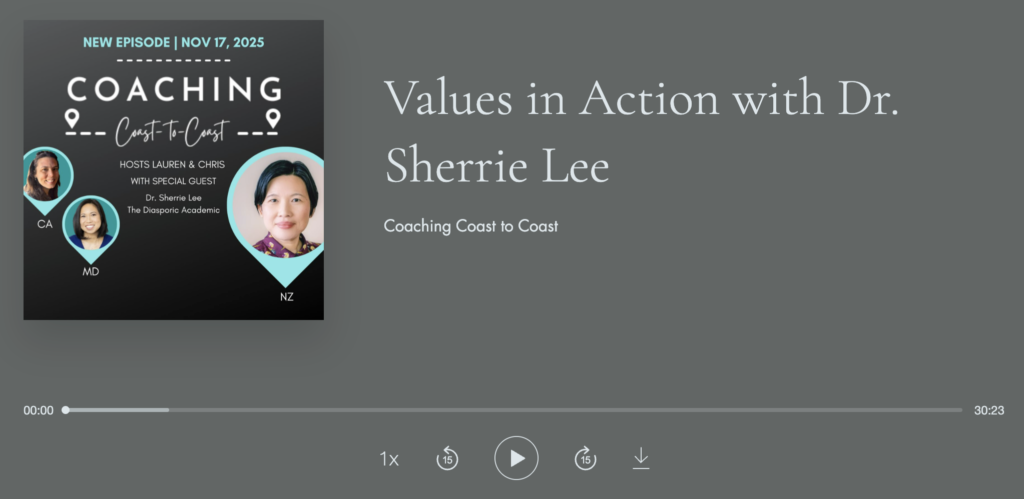
Listen to the latest podcast Values in Action with Dr Sherrie Lee where I was guest on the Coaching Coast to Coast program

Continue reading the article ⬇️

What Are Character Strengths?

Character strengths are the positive traits of your personality that influence how you think, feel, and behave. Picture this: when you’re browsing the latest books at the library or showing genuine interest during networking conversations, you’re seeing your strength of Curiosity in action.

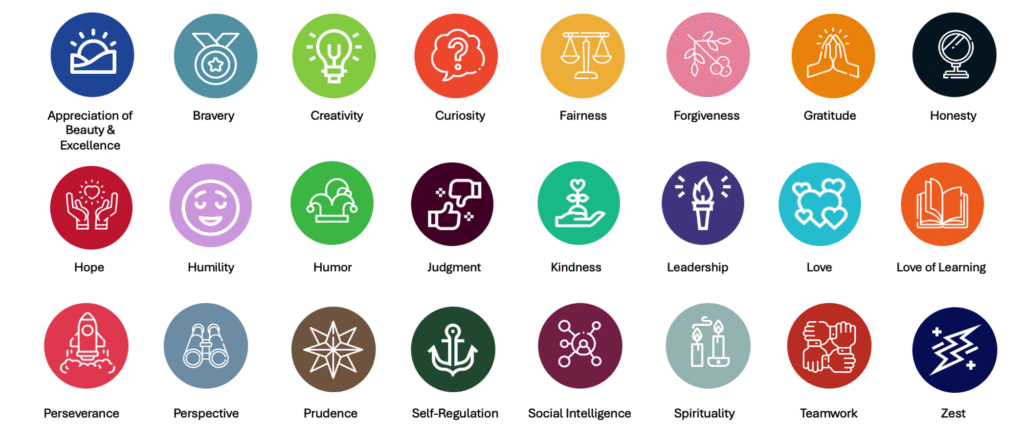
The research on character strengths began in the early 2000s during the rise of positive psychology. Led by Christopher Peterson and Martin Seligman (known as the father of Positive Psychology), this groundbreaking work resulted in the landmark textbook Character Strengths and Virtues: A Handbook and Classification and the VIA Survey which measures 24 character strengths.

These 24 strengths fall under six universal virtue categories that transcend cultures and nations:

  • Wisdom (Creativity, Curiosity, Judgment, Love of Learning, Perspective)
  • Courage (Bravery, Perseverance, Honesty, Zest)
  • Humanity (Kindness, Love, Social intelligence)
  • Justice (Fairness, Leadership, Teamwork)
  • Temperance (Forgiveness, Humility, Prudence, Self-Regulation)
  • Transcendence (Appreciation of Beauty & Excellence, Gratitude, Hope, Humor, Spirituality)
© 2025 Dr Sherrie Lee

Why Understanding Your Strengths Matters for Your Career

Let me share a personal story. When my job was made redundant and I had to consider opportunities outside the industry I’d worked in for five years, I felt like I’d been knocked off a spinning top with no way to get back on. In my search for clarity, I discovered the VIA Survey.

While I wasn’t surprised by my results—I’d done plenty of personality assessments before—something was different this time. The simple but thought-provoking descriptions of each strength gave me a fresh perspective on who I was at my core. It validated thoughts I’d had about alternative career paths and even provided language I could use in cover letters and interviews.

Today, I work as a career consultant, and I can tell you firsthand that understanding and applying your character strengths is transformative for career development.

Here’s why it matters:

  • Self-awareness is the foundation of career planning. Understanding your career direction, what you want to study, and how you want to develop professionally all starts with knowing yourself. Those are exactly the questions employers have about candidates: Who are you? Why do you want to work here?
  • It helps you align career decisions with your values. A keen awareness of what makes you YOU helps align your career choices with your personal values and motivations, allowing you to shape a meaningful career narrative.
  • It provides concrete material for job applications and interviews. Your character strengths give you specific, authentic language to use in cover letters and interview responses.

How to Discover Your Character Strengths

The most direct way to understand your character strengths is through the VIA Survey. What makes this assessment particularly valuable compared to other popular tools like the Gallup CliftonStrengths or MBTI assessment?

The VIA Survey is completely free. Unlike many career assessment tools that require payment upfront, the VIA Survey provides you with a comprehensive ranked list of all 24 character strengths at no cost. This makes it accessible to students and job seekers who might be managing tight budgets.

You get your complete strengths profile. Rather than focusing on just your top strengths (like some assessments do), the VIA Survey ranks all 24 strengths from highest to lowest. This gives you a fuller picture of your character profile and helps you understand not just what you’re strongest in, but also areas where you might want to develop.

It’s rooted in rigorous research. The VIA Survey is based on extensive scientific research in positive psychology, with validation across cultures and populations. The 24 character strengths framework has been tested and refined over two decades.

Extensive free resources available. The VIA Institute website offers a wealth of free resources that both individuals and career practitioners can use, including:

  • Detailed descriptions of each character strength
  • Research summaries and articles
  • Practical exercises for applying your strengths
  • Resources for educators and coaches
  • Workplace applications and team activities

The basic survey takes just 10-15 minutes to complete and immediately provides your personalised character strengths profile. If you want deeper insights, you can choose to purchase more detailed reports, but the free version gives you everything you need to get started on your strength-based career journey.

In my coaching practice, I also recommend reflection exercises that help you understand your values, skills, and working style. The key is to approach this as an ongoing process of self-discovery, not a one-time assessment.

Character Strengths for Career Clarity

Knowing your signature strengths can help you clarify your career path and ideas. I recently worked with a student pursuing a Bachelor of Arts in Psychology and Criminology. They knew they didn’t want to be a psychologist but weren’t sure what else was possible. 

When we reviewed their VIA results, we discovered that Love and Kindness were among their top strengths—qualities that were important to them in all aspects of life, including their future work. This insight sparked a conversation about potential roles in community services and various positions focused on helping people navigate difficult situations, including mental health challenges.

By connecting their natural strengths to career possibilities, this student found direction and purpose they hadn’t realised before with such clarity.

How Strengths Complement Your Technical Skills

Character strengths are also an important complement to your knowledge and skills. Your qualifications give you the knowledge and technical skills in your field. Your character strengths help you apply them effectively in the workplace.

For example, you might understand project management in terms of using spreadsheets, organising meetings, and tracking progress. But it’s your Social Intelligence that helps you communicate effectively with different stakeholders, your Love of Learning that helps you adapt and grow on the job, and your Perseverance that keeps you going when projects get challenging.

What Employers Are Looking For

Different roles and industries will emphasise some strengths over others. Here are some patterns I’ve observed:

  • Innovation and business development roles value cognitive strengths like Creativity and Curiosity
  • Customer-facing positions prioritise social strengths like Kindness and Teamwork
  • Analytical and detail-oriented roles benefit from Perseverance, Prudence, and Self-Regulation

But here’s the important part: your particular top strengths shouldn’t dictate what roles you pursue. You have the capacity for all 24 strengths. A good fit between your signature strengths and your work environment enhances satisfaction and performance, but it’s not the only factor for success. Your knowledge, skills, interests, and the broader job market all play important roles.

This is especially relevant given the World Economic Forum’s Future of Jobs Report prediction that we’ll have multiple careers in our lifetime. With 92 million roles being displaced and 170 million new jobs created this decade due to technological development and economic shifts, understanding and applying your strengths becomes even more crucial for navigating this dynamic and ever-changing job market.

Key Takeaway and Next Steps

As Aristotle said, “Knowing yourself is the beginning of all wisdom.”

Your top five signature strengths represent who you are at your core. Applying these strengths more often will not only help you feel better and become more resilient—it will lead you to discover more meaningful and satisfying work.

Ready to Discover Your Strengths?

If you’re curious about your character strengths, here’s how to get started:

1. Take the VIA Survey to get a ranked list of your 24 character strengths.

2. Note your top five strengths which are your signature strengths.

3. Discuss your results with trusted friends. What resonates, what surprises you, and where have you seen each other demonstrate these strengths?

4. Download my character strengths reflection worksheet to support your reflection.

5. Consider professional support. Find a career coach or attend workshops to explore how to apply your strengths in your career journey.

Remember, career development isn’t just about finding any job—it’s about finding work that aligns with who you are and allows you to contribute your unique gifts to the world. Your character strengths are your roadmap to getting there.

About the author

Dr Sherrie Lee is a career coach who specialises in helping tertiary students and international professionals discover and apply their character strengths for meaningful career development. She runs workshops and provides one-on-one coaching to support individuals in their career journeys. Sherrie is a Professional Member of the Career Development Association of New Zealand (CDANZ) and leads the CDANZ Special Interest Group on Character Strengths.

Don`t copy text!