Close

Not just another App: 4pics1word for English Learners

Not just another app - 4pics1word for English Learners

Apart from making your waiting (or waking) time less monotonous, 4pics1word is also a great vocabulary game.

4pics1word – Four pictures with one word in common

People around me are hooked on this game – the office lady on the train, someone in the checkout line, my colleague, my boss. The addictive word game available on both iPhone and Android appears simple but forces you to think out of the box (or the four boxes for that matter) to figure out the answer. Apart from making your waiting (or waking) time less monotonous, 4pics1word, I have discovered, is also a great vocabulary game.

The basic form of the puzzle is identifying a common word that each of the four pictures (or part thereof) depict. It could be a noun, adjective or adverb, plain words most of the time, but trickier to guess as you move up the levels. The word association exercise teases your mind, making you wonder whether you’ve lost all common sense, but is also a vocabulary builder in disguise, whether you admit it or not.

For English language learners, this game teaches collocation, synonyms, antonyms, word parts, and lots of brainstorming on the go. Here are some suggestions of how to use the game in a teaching context.

#1 Just play it

Learners can be introduced to the app and they can figure out the mechanism of the puzzles on their own. More likely, however, they will grab friends (and very soon, innocent bystanders) to ask them to help them solve the puzzle. The nature of the game cultivates a competitive (or self-improvement) spirit and the desire to outwit a bunch of pictures will soon have players unconsciously devouring dozens of word associations and patterns.

#2 Break the ice

Teachers can use the game as a warm-up activity and use the puzzle as a teaching point. Some puzzles may  have word associations that are too obscure or challenging for learners so explaining the reasoning behind the answer will not only help your students learn, but will also help them to be able to play the game more successfully on their own.

#3 Plan the lesson around it

Teachers can use the game as part of the lesson itself, getting students to explain how they arrived at the puzzles, asking them to keep a journal on new words and their explanations, and perhaps even getting them to compile a list of their favorite puzzles or the hardest ones to crack. Better yet, students could create their own 4pics1word puzzles for both classmates and teacher to solve.

#4 Make it an incentive

If students are already very keen to play the game, teachers could use it as an incentive and reward individuals or groups who solve the most number of puzzles and/or are able to explain their answers. So instead of just receiving virtual old coins, students can be rewarded with something more tangible.

4pics1word is a great example of turning a popular app into a teaching tool where students take to naturally and enthusiastically. While students can easily learn on their own (consciously or subconsciously) through playing the game, bringing their attention to word meanings and clarifying their doubts will help extend and improve their vocabulary.

If you have used the game in class, or if you’re an English learner and have benefitted from the game, please share your experience in the comments.

In the meantime, if you find yourself turning into an addict – skipping meals, losing sleep and ignoring crying children – do what I did – delete the app.


Me, Teacher Leader?

Me, Teacher Leader?

The successful teacher leader is one who is committed to making a difference in the school while the unsuccessful teacher leader is easily defeated by criticism and obstacles.

View Prezi on Teacher Leadership by Sherrie Lee

Teacher leadership is not reserved for the chosen few but a responsibility of all teachers. While school culture dampens the spirit of teacher leadership (Barth, 2001, p. 444), empowering teachers as leaders benefit students, teachers, administrators and the school (p. 445).

Who is the successful teacher leader?

The successful teacher leader is one who is committed to a set of beliefs about teaching and making a difference in the school (Barth, 2001; Ackerman & Mackenzie, 2006). She leads by example and thus begins to influence those around her. She perseveres despite obstacles (Barth, 2009, p. 447), claiming victories however small, and does not give up pursuing unrealized goals.

mountainjump

The unsuccessful teacher leader, on the other hand, is not focused in fulfilling goals and is overwhelmed by the daunting workload and critical colleagues. Ultimately, the teacher leader is unsuccessful because she finds greater comfort in remaining in her own classroom than stepping out of her comfort zone (Ackerman & Mackenzie, 2006).

Flickr: Dead End by Benny Lin

Am I a teacher leader?

The initial years of my teaching career were characterized by the traits of the unsuccessful teacher. I was discouraged by colleagues who believed that leadership was reserved for senior staff and administrators. Their skepticism led me to think that I was better off focusing on teaching rather than leading, and that trying to make changes was a waste of time. For example, I suggested compiling video-recordings of student presentations but was quickly censured for creating more and unnecessary work for everyone. Now as I complete my Master of Arts in Teaching, I am convinced that my teaching career is a unique opportunity to be a change agent.

When I put myself in the position of a teacher leader, I am committed to producing excellent work, collaborating with colleagues, and helping our students succeed. While obstacles are real, I am reminded by Barth (2001) to enjoy “half a loaf”, that is, finding success in “incremental change[s] in the desirable direction” (p. 447). One of my weaknesses, however, is that my enthusiasm and energy can easily wear off, especially in the face of difficult colleagues or seemingly futile pursuits. Nonetheless, I must remember that Rome was not built in a day and that being a teacher leader is a journey in itself, and a rewarding one at that.

 Rome was not built in a day and that being a teacher leader is a journey in itself, and a rewarding one at that.

Problem of practice

One powerful way of developing teacher leaders is through action research where teachers identify areas of concern and begin to take steps to resolve issues to benefit the school community. At my school, the business communication subjects are taken by students with varying English proficiency standards. While all students have received education in English as a first language, there are minority English language learners (ELLs) whose home language is not English and face challenges with using academic language. My action research project focused on this problem of practice and explored student identity and empowerment.


As an emerging teacher leader, I plan on sharing the findings and recommendations of my action research project at department meetings. In addition, the school’s staff development department organizes events where I will have the opportunity to share my research with a wider school audience. Through these sharing sessions, I will need to develop interpersonal skills such as gentle persuasiveness, especially when dealing with experienced yet resistance teachers. As Danielson (2007) notes, “[l]eading change within one’s own department or team may require considerable interpersonal skill and tact [and] the success of such an effort … depends on the teacher leader’s having established credibility and trust with his or her colleagues” (p. 17).

I anticipate most of the audience to be politely lukewarm toward the information I share as the teachers at my school are generally cautious in making changes, especially when there are no immediate and visible benefits. Unfortunately, the issue of student identity and empowerment is one that is complex; it requires effort and time in exploring identity and empowerment issues with students.

Here’s the plan

To counter skepticism among the crowd, persistence is key. First, I endeavor to take up every opportunity within the school, formally and informally, to share the importance of issues of identity and empowerment and how my own action research project benefits students. This entails identifying appropriate platforms to speak, as well as being aware of the barriers each audience brings to the sharing session. For example, if the audience is unfamiliar with terminology, then I will make the effort to modify my presentation in order to be clear, and more importantly, convincing. A teacher leader is committed first to her beliefs and second to harnessing people’s potential to take necessary action.

A teacher leader is committed first to her beliefs and second to harnessing people’s potential to take necessary action.

In addition, I must also show that my work is recognized by other educators, especially those with authority in the education field. Possible actions include publishing the findings of my study in an education or TESOL related journal and presenting my study at a local or regional conference. The process of publishing or presenting requires a keen understanding of the requirements of each, such as intended audience, paper length and writing style. Apart from the detailed requirements, I must also be aware of the approval process be prepared for rejection. As a novice researcher, the best result I expect is to having to resubmit my paper with changes.

Even if I am rejected, however, I view it as a learning experience. I anticipate mixed reactions to my leadership project. Teachers in my school are likely to have varying levels of commitment to address the needs of minority ELLs in our school, even if my study is accepted by a journal or conference. Whatever the outcomes, I aim to be open to feedback and use the experience to inform my next step in leadership. Success in teacher leadership depends on reaching out, modeling for others, and helping colleagues develop skills and understanding (Ackerman & Mackenzie, 2006, p. 68).

Success in teacher leadership depends on reaching out, modeling for others, and helping colleagues develop skills and understanding.

Never give up, never give up, never give up

Thus my desire is to work with the few who are willing and be focused on student success, without losing sight of the bigger picture of greater student empowerment through the actions and leadership of each and every teacher. Even if I end up being alone in my cause, may I continue taking risks “to provide a constant, visible model of persistence, hope, and enthusiasm” (Barth, 2001, p. 447).

Flickr: Rock Climber by Greg Foster

References

Ackerman, R. & Mackenzie, S.V. (2006). Uncovering teacher leadership. Educational Leadership, May, 2006, 66-70.

Barth, R.S. (2001). Teacher leader. Phi Delta Kappa, February, 2001, 443-449.

Danielson, C. (2007). The many faces of leadership. Educational Leadership, 65(1), 14-19.

Using a Graphic Organizer for Business Vocabulary

Using a Graphic Organizer


Business Vocabulary - Graphic Organizer
Business Vocabulary – Graphic Organizer

A graphic organizer explaining the value chain in a marketing subject.
Creative Commons License
This work is licensed under a Creative Commons Attribution-NonCommercial-ShareAlike 3.0 Unported License.


ESL Textbook Review

ESL Textbook Review


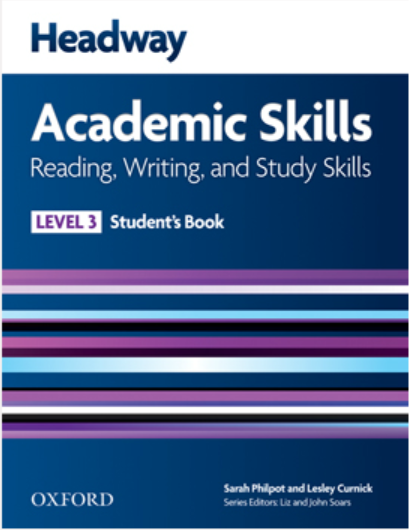
Headway Academic Skills 3: Reading, Writing, and Study Skills Student’s Book

Sarah Pilpot and Lesley Curnick

Oxford: Oxford University Press, 2011.

headway

Headway Academic Skills 3 aims to equip students in higher education with a comprehensive range of academic skills ranging from vocabulary strategies to essay planning in ten tightly packed units. It is an impressive and ambitious plan but will likely cause the student to be overwhelmed.

Description
The ten units in Headway Academic Skills 3 cover the following topics: education and learning, health and medicine, urban planning, natural resources, international trade, history conservation, modern engineering, the Olympics, describing statistics and trends, and communication and technology. Each unit covers academic skills in four main sections in the following sequence: reading, language for writing, writing and vocabulary development. In three of the units, the topic of research skills is covered as well. At the end of each unit is a review section which brings together the reading and writing skills learned in the unit. The main sections generally follow the presentation, practice and production (PPP) approach (Shehadeh, 2005, p. 14), that is, the presentation of specific language items and/or reading or writing strategies (termed “study skills” in the book) is followed by practice through exercises such as gap fill, spotting language features and completing graphic organizers, and finally the production stage where students use the target language and skills with less guidance. The review section itself serves as an overall production stage where students are expected to reproduce the language items and study skills covered in the unit more independently. The appendix contains a word list of the main vocabulary used, complete with word class and pronunciation. There is a separate Teacher’s Guide which contains tests and additional activities but is not part of this review.

Intended Audience 
According to the book summary, Headway Academic Skills 3 functions as a bridge between general and academic English, and can be used either independently or alongside a general English course. While it does not specify the proficiency level of students, the book will be helpful to both native speakers, as well as advanced ESL students who have just begun university.

Strengths and Weaknesses 
The overall goal of Headway Academic Skills 3 is to equip students in higher education with academic skills such as note-taking and essay-writing, as stated in the book summary. However, since the units are content driven rather than skills driven, there is more breadth than depth in the treatment of academic skills. One exemption is reading skills which are adequately explored in each unit, as well as reinforced across units, highlighting strategies related to external text features (e.g. skimming and scanning for information), as well as internal text features (e.g. text structure and signal words). Other skills like writing and vocabulary development, however, are not as well integrated; the language features and strategies are introduced once in the unit but are hardly mentioned again in other units, thus limiting students’ opportunities for developing those skills. Furthermore, the PPP approach, as stated by Shehadeh (2005), does not allow students to develop both accuracy and fluency in using language items as students tend to either end up focusing primarily on form and not fluency or focus primarily on meaning without incorporating the target language at all (pp. 14-15). Thus the lack of integration of academic skills across units and the weakness of the PPP approach undermine the very purpose of the book.

Apart from its main weakness of not providing integrated and appropriate opportunities for students to fully develop academic skills, the book also features topics which may be too impersonal for young adults to identify with. While the topics represent diverse cultures and are appropriate for a higher education audience, the approach taken does not lead students to be personally interested in the material. Activities revolve around the given reading passages or writing tasks with few opportunities for students to provide their viewpoints or creatively interact with the material provided. This lack of personal interaction is reinforced by the largely similar nature of the tasks such as underlining words and phrases, filling in gaps and matching items with corresponding answers.

Despite its instructional flaws, Headway Academic Skills 3 has several strengths. One of them is the use of near authentic materials such as journal articles, news reports and letter to capture the range of expository writing material a university student would likely to be exposed to. Even though some of the materials were probably re-written with a more appropriate level of grammar and vocabulary, it is more important for the materials to be more easily understood while simulating authenticity than for materials to be presented in its original but less comprehensible form, especially for students who struggle with such texts (Flowerdew & Peacock, 2001, p. 185).

Another strength is that the book can be adapted for use with either native English speakers or ESL students. While ESL students would probably appreciate the straightforward and simplified language used, all students will find it beneficial to learn specific reading and writing strategies. For first language students, teachers can consider using more challenging supplementary reading material for students to practice their academic skills.

Finally, Headway Academic Skills 3 does well in having visually appealing graphics and layout. For example, most of the photos used are clear, colorful and informative. In terms of the layout, the different sections are color-coded for easy reference. In addition, important information like study skills and language rules are highlighted in boxes and placed at the side so as not to interrupt the flow of the text. However, one minor complaint I have about the layout is that there is hardly any white space on each page and the limited spacing between tasks and sections. Thus the reader will find it difficult to focus on the text at first glance.

Conclusion 
Headway Academic Skills 3 succeeds in introducing a comprehensive range of reading and writing skills and strategies but falls short in providing integrated and meaningful practice across the units for students to master the skills. While the brightly colored photos and pages stand out, those elements will not be sufficient to engage students. Teachers who choose to use the book may make up for the lack of depth in the coverage of academic skills by being selective about which language items and strategies to focus on. Alternatively, teachers may design their own lessons and use the book’s activities as supplementary material. Either way, teachers should not overlook what is useful in the book for their purposes in teaching academic skills.

References 

Flowerdew, J., Peacock, M. (2001). The EAP curriculum: Issues, methods, and challenges. In J. Flowerdew M. Peacock (Eds.), Research perspectives on English for academic purposes (pp. 177-194). New York: Cambridge University Press.

Philpot, S. & Curnick, L. (2011). Headway academic skills 3: Reading, writing, and study skills student’s book. In L. Soars & J. Soars (Series Eds.), Headway academic skills. Oxford: Oxford University Press. 

Shehadeh, A. (2005). Task-based language learning and teaching: Theories and applications. In C. Edwards J. Willis (Eds.), Teachers exploring tasks in English language teaching (pp. 13-30). New York: Palgrave Macmillan. 

Don`t copy text!