
Close

The ‘other’ in ESOL: Is it really about othering?

Image by Gerd Altmann from Pixabay

I was confronted by a recent headline that read:

ESOL outdated: English for speakers of other languages guilty of othering

ESOL stands for English for Speakers of Other Languages. In New Zealand and other English-speaking countries (eg, Australia, US), the term is used to differentiate the intended audience from mainstream English language instruction. 

The article claims that “there is something Anglo-centric and othering about the term”. There’s an argument to be made that someone not born into an English speaking environment and who receives English language training is orienting themselves to an ‘Anglo’ worldview, eg, that English is important for them to want to learn it, that the world they live in or wish to live in operates on an English-speaking basis and all its norms and assumptions. The term is also Anglo-centric in that it is those who provide that type of English language instruction are dominated by the Anglo centres of the world (ie., US, Canada, UK, Australia, New Zealand).
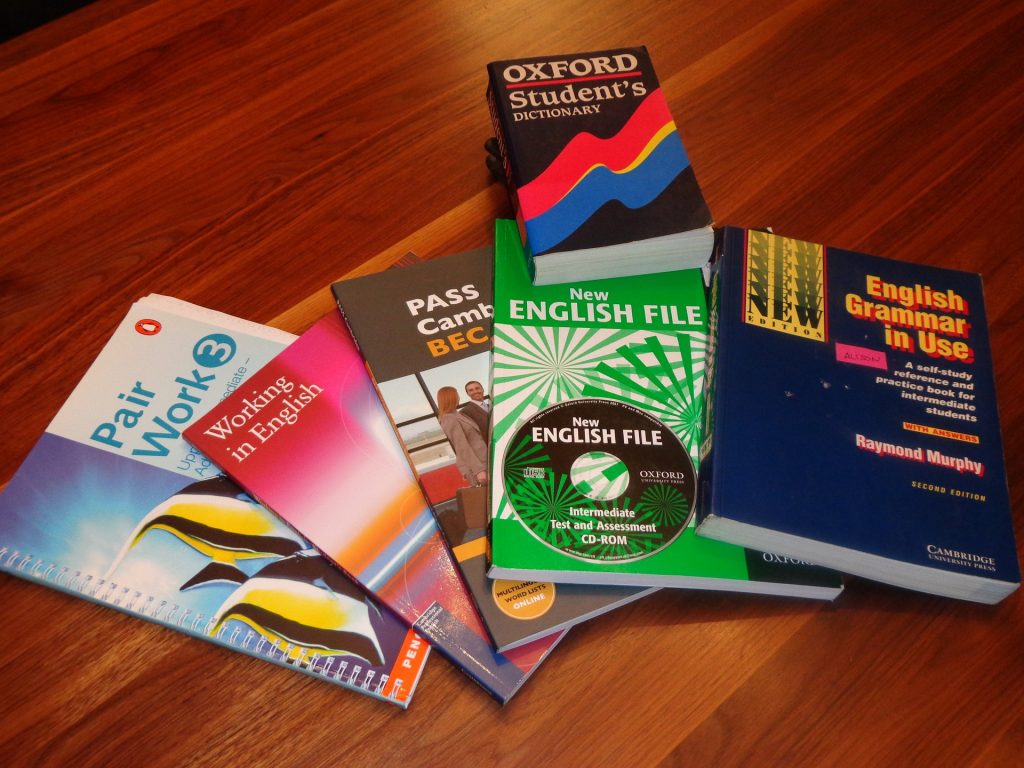
Image by Alison from Pixabay

I recognise that Anglo-centricity can give rise to othering, but it is also important to distinguish between the issue of Anglo-centricity – that is, how the English language and associated culture is the dominant and unquestioned way of life, and the issue of othering – marking someone or some group as different with intended or unintended negative connotations.

We can use any number of labels to identify those who are learning the English language, and labels in the English learning and teaching context help to differentiate pedagogical approaches. Whether the label or term becomes ‘othering’ will depend on the context in which it is used.

For the learner, ESOL might be a strange term for them since it’s a given that they speak other languages. Why not simply call it an English language class? Or better yet, describe what they can do with the English, eg, Conversational English, English for Work, Everyday English. And this is probably what happens with naming English classes. So while ESOL is used to refer to the type of English language instruction, learners don’t necessarily use the term to describe their own learning. So whether the term ESOL is ‘othering’ for the learner may be moot as they simply consider themselves English language learners.

Then what about others who use the term, like teachers of ESOL? The teaching of ESOL (or TESOL) as a type or approach of English language instruction will vary among teachers, but we can look to TESOL International Association for a core set of 6 principles for the exemplary teaching of English learners:

  1. Know Your Learners
  2. Create Conditions for Language Learning
  3. Design High-Quality Lessons for Language Development
  4. Adapt Lesson Delivery as Needed
  5. Monitor and Assess Student Language Development
  6. Engage and Collaborate within a Community of Practice

  These principles are intended to:

  • respect, affirm, and promote students’ home languages and cultural knowledge and experiences as resources
  • celebrate multilingualism and diversity
  • support policies that promote individual language rights and multicultural education
  • guide students to be global citizens
Image by Hebi B. from Pixabay

So if we hold the teachers of English to speakers of other languages to the principles and intentions of affirming the learners’ home languages and cultures, the term ESOL is far from ‘othering’: it is inclusive, respectful and aspirational.

And to go back to the issue of Anglo-centricity, the underlying ethos of the terms ESOL and TESOL would appear to challenge the status quo of Anglo-centricity in a way that aims to be beneficial for both English language learners and the wider community.

So why this accusation of ‘ESOL’ being guilty of ‘othering’? The ESOL terminology not only serves to make clear the audience of English language instruction, but also aims to affirm learners’ heritage and their linguistic and cultural resources.

It’s encouraging to know that there are advocates for inclusivity and those who call out discriminatory language. But has the word ‘other’ in ESOL tripped people up? There’s nothing othering about the term nor its intended use. And it’s concerning if we start reading ‘othering’ into a term that means no harm.

Sure, re-name course titles and qualifications to signal a wider audience of English language learners. But don’t erase a term or label when there’s a useful function for differentiation, and more importantly, when there’s a specific intention of making learners the centre in language training.

If we want to deal with ‘othering’, let’s look beyond the single word or label. Better yet, let’s welcome the ‘other’ relative to ourselves. If we recognise that those who are learning English speak ‘other’ languages, how about we start to be curious about their languages, and unpack what this ‘other’ means to us, and start to unravel a multitude of languages we can recognise, learn and embrace?

And if you’re ready, you’re in luck. New Zealand Chinese Language Week is coming up and runs from 25 September to 1 October. As a speaker of English, Mandarin and some Hokkien, I’m delighted to share ‘other’ languages with you, and I’m curious about ‘other’ languages different communities around me speak.

Ko taku reo, taku ohooho, ko taku reo taku mapihi mauria.

My language is my awakening, my language is the window to my soul.

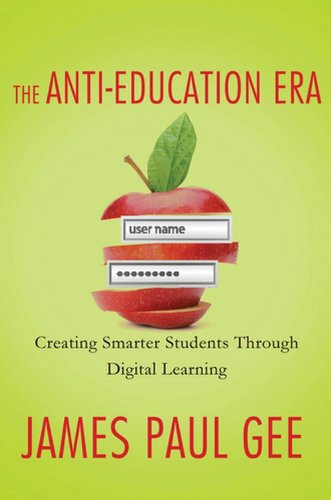
Book Review – The Anti-Education Era: Creating Smarter Students Through Digital Learning

Book Review - The Anti-Education Era: Creating Smarter Students through Digital Learning

Title: The Anti-Education Era: Creating Smarter Students Through Digital Learning

Author: James Paul Gee

Publisher: Palgrave Macmillan (January 8, 2013)

The Anti-Education Era: Creative Smarter Students Through Digital Learning by James Paul Gee

Before we can be convinced of the need to get smart through digital learning, we need to be convinced of our own stupidity.

The title implies that the book will explain how digital leaning will create smarter students in an era the author terms ‘anti-education’. While Gee does explain that and does it well without much reference to buzzwords in educational technology, what the title (as well as the blurb) does not warn us is that there will be a confrontation of the state of the human being and an uncovering of the failings that we are oblivious to. In fact, Part I of the book, which comprises 15 chapters, is plainly titled ‘How To Be Stupid’, while Part II, titled ‘How To Get Smart Before It Gets Too Late’,  has just six chapters.

In other words, before we can be convinced of the need to get smart through digital learning, we need to be convinced of our own stupidity – and Gee does that by exposing mental comfort stories, the dangerous lack of agency or purpose among members of a community (or citizens of a country), and the damaging consequences of our stupidity, e.g. self-deception, inequality and hopelessness.

Unapologetic and deeply convinced for a smarter and more moral world, Gee writes simply and candidly to question our assumptions about education, the economy and society, and calls us to action: to connect, collaborate and create collective intelligence.

I touch on a few of Gee’s arguments that have struck a chord with me.

First, the bad news

HOW SCHOOLS MAKE US STUPID

Humans have the capacity to be reflective and thereafter embark on good actions. Gee calls this the Circuit of Human Reflective Action. The conditions for smart actions to take place are:

1) Initial mentorship so we can learn from people and experience in specific areas/domains;

2) Lots of prior experience;

3) Clear goals;

4) The actions and goals must matter to us emotionally;

5) There is an opportunity to act in a way that elicits a meaningful response from our community (local/global).

Unfortunately, much of formal schooling is highly passive with students imbibing knowledge without much opportunity to take meaningful action based on what they have learned. The lack of a compelling or meaningful goal of studying and attending school is exacerbated by the focus on testing and gate-keeping examinations. Furthermore, some students have initial mentoring (in the form of parents, out-of-school experiences, etc.) and some have not; nonetheless, “we pretend they are on a level-playing field” (p. 16-17).

WHEN STATUS AND SOLIDARITY DIVIDE US

Status and solidarity are powerful cultural forces that shape our identity and influence our everyday actions. We seek status in terms of respect from others. We also seek solidarity with other in order to have a sense of belonging and being accepted.  Such forces, however, may dull our senses and better judgment when status and solidarity become the only end goals of a meaningful life.

As a consequence, we accept and perpetuate particular world views and actions contrary to empirical evidence and facts, common sense and moral standards. For example, aspiring to own a club membership like your peers when your income cannot support it; indulging in bullying tactics along with your buddies when you know the bullied is distressed. These examples may appear trivial but they scratch the surface of a world beset with social ills and inequalities.

In our limited world of people who we want to like us, and people we want to be like, we disregard more rational thought and action, and more sadly, disregard other humans who fall below our flawed standards of human existence.

Now, for some good news

AFFINITY SPACES FOR ALL

In order to engage our students in more critical and reflective thinking, we need to lead them to an affinity space where a community of learners who share common passions and goals. They may come from a variety of backgrounds and have varying levels of experience and expertise, but by exchanging ideas, opinions and thoughts with one another, the group solution to the challenge is going to be superior to an individual’s effort. “[H]umans think and act better when we do so by getting the help of others and giving help to them” (p. 174).

Such affinity spaces would look like discussion boards and interest groups related to the simulation video game The Sims where players find ways to create objects of their desire such as building their dream house and accessories, as well as the various user-generated communities where players interact with one another.

I do believe that affinity spaces are not limited to an online environment and it is important to have real-life face-to-face connections in any affinity space to encourage authentic relationships among learners.

Exactly how affinity spaces are to be constructed is not the focus in Part II of the book but the end is really the beginning of our conversation of how to make use of our 21st century tools to enhance our student’s thinking, reflecting and doing while creating purposeful goals for them in a diverse and global community.


Are MOOCs the future of learning?

Are MOOCs the future of learning?

With the ongoing discussion of whether MOOCs (Massive Online Open Courses) is the next revolution in education, I decided to embark on a MOOC myself. My first experience with online courses was not Massive nor Open. It was with the Master of Arts in Teaching program with USC. It was a full-fledged master program conducted via video conferencing which meant real-time interaction with professors and classmates. Having thrived in such an environment, I look to MOOCs with great expectations of lifelong learning without a hefty price tag or any price at all if possible.

My first experience with MOOCs was a shaky one. I can’t really say I fully experienced it since I was never fully engaged with the course. There was one course I did with Open2Study and another with Coursera. Both courses were related to learning and education but somehow there was too much going on in my life in the time I was supposed to complete it. The Open2Study course was conducted at a pace which required almost daily attention that I quickly abandoned it altogether. The pace of the Coursera course was much better but I still couldn’t keep up with the myriad of activities that were going on and felt pretty much a non-student. Without a concerted effort and a “studying” frame of mind, those two MOOCs amounted to a faint memory of videos and catchphrases.

Still hoping for a better outcome with MOOC, I recently enrolled for a Coursera course, History and Future of (Mostly) Higher Education, offered by Duke University and am now in the fourth week of the six-week course. This time I was more prepared to set aside some time to do the course. The first week, however, went by in the flash and I only caught up with the video lectures in the second week.

What got me hooked was the high quality video production with a friendly and engaging presenter  (Professor Cathy N. Davidson) and useful presentation pointers appearing from the side. It a short period of 10 to 15 minutes, I learned important concepts and got thinking about the implication of technology in education. The videos were stimulating enough for me to anticipate the following week’s materials.

One of the tools used in the course is forums which drive a socially-connected and engaging form of learning. I was not, however, particularly drawn to the forums because I am inundated enough with articles, debates and discussion on Twitter (my daily feed of news and trends). Furthermore, as a non-fee-paying student, I am just not as motivated to devote time and energy to share and exchange ideas with strangers, even if it means learning new things.

Professor Cathy Davidson reviewing guiding principles of the course

To me, the outcome of watching the videos was immediate knowledge. I could watch the videos anytime and in between tasks and gained a lot from a relative short span of focused attention. Forums, on the other hand, required more thoughtful and time-consuming contribution which had a less obvious reward. There was no tangible carrot nor stick to motivate the more socially engaging aspect of the course. I am a full-time working mother with three young children, and this makes me evaluate how worthwhile any pursuit is on an ongoing basis.

 Modes of learning aside, let me move on to what I have been learning so far: 1) We’re teaching like it’s 1992; 2) We need to teach for the future; and 3) Our conception of reality is created through the filter of our own mind and perception.

Pen & paper | Flickr: Loops San

Technology and communication practices have evolved since 1993 but education seems to be largely stuck in the days of pen and paper, individual summative assessments and the like.

1) We’re teaching like it’s 1992.

The significance of 1992 was lost on me until I learnt that the Internet was opened to the world on April 22, 1993. Since then, anyone with an internet connection could communicate with one another, expressing what they wanted, when they wanted, how they wanted. Technology and communication practices have evolved since 1993 but education seems to be largely stuck in the days of pen and paper, individual summative assessments and the like.

Personally, I find this to be true in Singapore. National examinations are in the traditional vein of individual summative assessment of the highest order, to the extent of determining your lot in life (whether perceived or real). In post-secondary institutions, however, coursework is more prevalent, especially at the polytechnic. There is a mix of individual and group assignments, some more collaborative than others, but not quite exploiting the full potential of our current technologies.

One reason behind this phenomenon of teaching like it’s 1992 is the fact that educators have grown up in the world pre-1993 and were schooled through and through in the ways and sensibilities of the time before the Internet. I certainly was. Some are looking forward to the future but many are comfortable and used to the past. Whatever the arguments are for staying put and not rocking the boat, I think there are more compelling reasons to decide that we have to change and act on it.

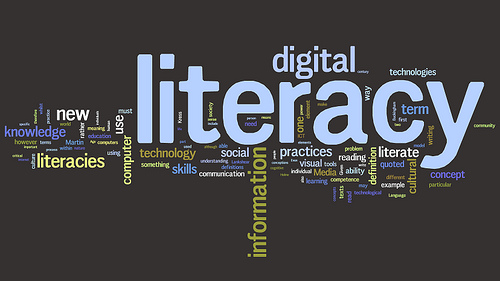
Digital literacies | Flickr: dougbelshaw

It’s not about getting students through a course on digital literacies, it’s about practising digital literacies in and out of the classroom.

2) We need to teach for the future.

I believe that we need to teach our students digital literacies. The post-1993 generation was born into an Internet world of instant communication and gratification. Having taught such students for the past 5 years, I’m convinced that I am more digitally savvy that most of them. They may have the latest gadgets and apps, but most of the time they are too trusting of the first few Google search results, think that, in fact, Google is the originator of the information, and pay little attention to issues of privacy and ethics.

I don’t think students are mastering how to evaluate internet sources because there is a (wrong) assumption that they are naturally digitally savvy and so teachers pay scant attention to this aspect of learning. To put another perspective on this issue, if there are no grades or tangible rewards attached to being digitally literate, students will not become literate. It’s not about getting students through a course on digital literacies, it’s about practising digital literacies in and out of the classroom.

We can never teach our students enough content for the future, but we ought to teach them how to navigate the future with greater critical analytical skills.

3) Our conception of reality is created through the filter of our own mind and perception.

One major concept I learnt and find so true in all areas of my life is Immanuel Kant’s concept of how our perception of the world is filtered by our own preconceived notions and ideas. If we see our students as well-oiled machines, responsive to instructions and high in productivity, then our approach to teaching and assessment will follow suit. Standardised testing, orderliness and measurable results become drivers of education.

While I believe that such a filter is outdated today and that a new filter of creative and collaborative learners is more appropriate, I feel trapped in a factory of deadlines where incomplete or faulty products or tossed aside. Most of the teaching my own children are experiencing right now is highly segmented, time-bound, and considered a done deal by way of tests. Creativity is relegated to physical activity and art lessons or specific assignments.

True creativity and collaborative practice can only be achieved if they are part and parcel of everyday learning – something I have never experienced in my own schooling experience but a future I hope for my children and their children.

A traditional classroom | Flickr: young shanahan

An online course can run like a factory if that’s the vision of the instructors. A traditional classroom can be turned into a laboratory of inquisitive minds if the teachers so wish.

So what about MOOCs?

Will MOOCs then be one of the solutions to instill creativity and collaborative practice in learning? MOOC is merely a vehicle. An online course can run like a factory if that’s the vision of the instructors. A traditional classroom can be turned into a laboratory of inquisitive minds if the teachers so wish. Granted that MOOCs has the potential of reaching out to more by using technologies that are innately collaborative in nature (e.g. forum posting, wikis, etc.), the challenge is to make use of that potential in a sustainable manner for a meaningful learning experience.

My own interaction with the current MOOC has been limited to watching video lectures so far. I have not set my mind on anything collaborative but I may if I find like-minded friends or colleagues who believe that it is a meaningful endeavour for their work or personal growth.

MOOCs can roll out its bells and whistles, but the choice is up to us to ride along with the revolution.

Not just another App: 4pics1word for English Learners

Not just another app - 4pics1word for English Learners

Apart from making your waiting (or waking) time less monotonous, 4pics1word is also a great vocabulary game.

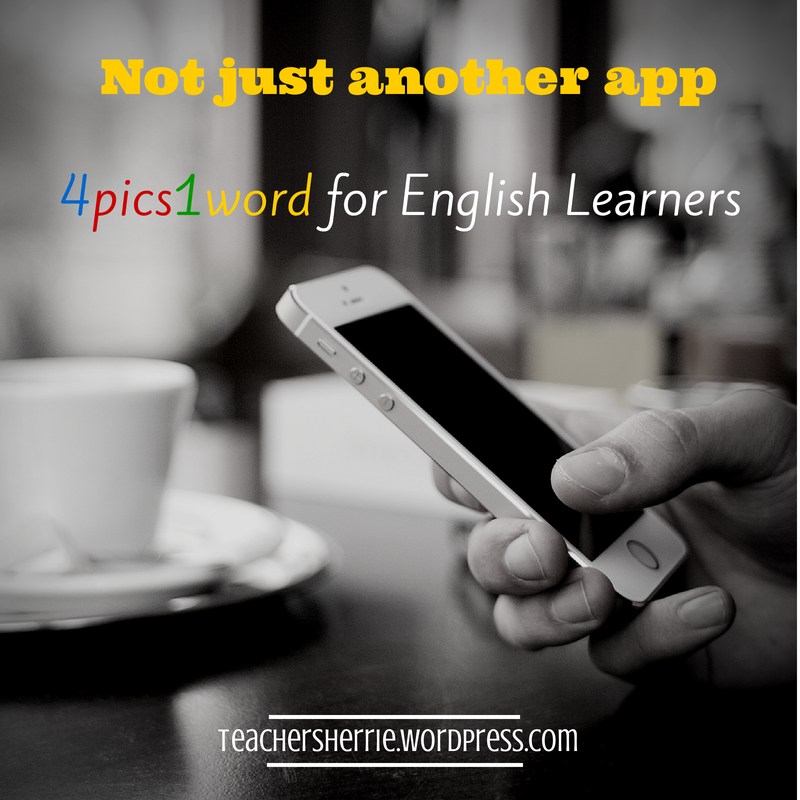
4pics1word – Four pictures with one word in common

People around me are hooked on this game – the office lady on the train, someone in the checkout line, my colleague, my boss. The addictive word game available on both iPhone and Android appears simple but forces you to think out of the box (or the four boxes for that matter) to figure out the answer. Apart from making your waiting (or waking) time less monotonous, 4pics1word, I have discovered, is also a great vocabulary game.

The basic form of the puzzle is identifying a common word that each of the four pictures (or part thereof) depict. It could be a noun, adjective or adverb, plain words most of the time, but trickier to guess as you move up the levels. The word association exercise teases your mind, making you wonder whether you’ve lost all common sense, but is also a vocabulary builder in disguise, whether you admit it or not.

For English language learners, this game teaches collocation, synonyms, antonyms, word parts, and lots of brainstorming on the go. Here are some suggestions of how to use the game in a teaching context.

#1 Just play it

Learners can be introduced to the app and they can figure out the mechanism of the puzzles on their own. More likely, however, they will grab friends (and very soon, innocent bystanders) to ask them to help them solve the puzzle. The nature of the game cultivates a competitive (or self-improvement) spirit and the desire to outwit a bunch of pictures will soon have players unconsciously devouring dozens of word associations and patterns.

#2 Break the ice

Teachers can use the game as a warm-up activity and use the puzzle as a teaching point. Some puzzles may  have word associations that are too obscure or challenging for learners so explaining the reasoning behind the answer will not only help your students learn, but will also help them to be able to play the game more successfully on their own.

#3 Plan the lesson around it

Teachers can use the game as part of the lesson itself, getting students to explain how they arrived at the puzzles, asking them to keep a journal on new words and their explanations, and perhaps even getting them to compile a list of their favorite puzzles or the hardest ones to crack. Better yet, students could create their own 4pics1word puzzles for both classmates and teacher to solve.

#4 Make it an incentive

If students are already very keen to play the game, teachers could use it as an incentive and reward individuals or groups who solve the most number of puzzles and/or are able to explain their answers. So instead of just receiving virtual old coins, students can be rewarded with something more tangible.

4pics1word is a great example of turning a popular app into a teaching tool where students take to naturally and enthusiastically. While students can easily learn on their own (consciously or subconsciously) through playing the game, bringing their attention to word meanings and clarifying their doubts will help extend and improve their vocabulary.

If you have used the game in class, or if you’re an English learner and have benefitted from the game, please share your experience in the comments.

In the meantime, if you find yourself turning into an addict – skipping meals, losing sleep and ignoring crying children – do what I did – delete the app.


Only Connect: My Ideological Stance in Content Area Instruction

Only Connect: My Ideological Stance in Content Area Instruction

I present my ideological stance in content area instruction by first providing background information about the students and their goals and challenges regarding attaining proficiency in academic literacy practices. I then briefly summarize my ideological stance regarding teaching students in content area instruction, followed by describing three pedagogical approaches to integrate academic literacy into my instruction so as to provide equity and access for all students to succeed in content understanding.

Background of students

 The classes I teach at the polytechnic (or technical college) in Singapore are heterogeneous – students have wide ranging abilities in academic reading and writing, as well as come from different socioeconomic backgrounds. However, the majority of the students can be said to be passive learners. Asian students have been brought up on a diet of passive reception of information and knowledge, thus many students tend to be quiet in class, not responding actively to teachers’ questions or whole class activities because they are not confident of their ability to do so and would rather wait for the teacher to provide the answers.

Goal: Academic Literacy

Students need to master academic literacy (i.e., academic reading and writing skills) in order to be successful in school. Such skills are important not only to understand content across different subjects, but also to do well in assessments. Furthermore, as many polytechnic students continue to further their studies at the university, mastering academic literacy is important for their educational goals. Gee (2012) defines literacy as a “[m]astery of a secondary Discourse” (p. 173), thus academic literacy of reading and writing entails mastering “distinctive ways of … writing/reading coupled with distinctive ways of acting, interacting, valuing, feeling, dressing, thinking, believing with other people and various objects, tools and technologies[.]” (p. 152). Gee argues that the mastery of a Discourse requires both acquisition through an exposure through models and learning through having meta-knowledge about the Discourse (p. 174). Thus students should not only be successful at academic skills and assimilating its accompanying actions and attitudes, they should also be aware of how they become successful in such a Discourse (p. 175), thus facilitating their cognitive development.

Challenge: Coercive Power Relations

In terms of the teachers’ attitudes toward students’ English language proficiency levels, students whose English language standardized test scores are high are expected to excel at academic reading and writing, while students who have low scores are unquestionably assumed to continue to struggle with academic reading and writing and will have little hope of making any improvements. Furthermore, students’ use of colloquial speech – their primary Discourse, to use Gee’s (2012) terms – in class is frowned upon and is seen as a reflection of their lack of academic abilities.  Thus students’ past test scores and their functioning in their primary Discourse have a deterministic effect on teachers’ expectations of students’ future performance. This reveals the coercive power relations between teachers and students where teachers indirectly prepare students to accept the status quo regarding their academic abilities (Cummins, 2003, p. 25).


My Ideological Stance in Content Area Instruction

View more PowerPoint from Sherrie Lee

My Ideological Stance in a Nutshell

My position is that students need to be weaned off passive learning and engage in active learning because the complex nature of their content area (e.g. business and marketing subjects), as well as the demands of higher education and the workplace in a rapidly evolving social and economic environment. In addition, in order to promote mastery of the discourse of academic skills, teaching must be lead to both acquisition and learning of the discourse. Furthermore, students need to be empowered to master academic skills so that they can succeed in school, regardless of their existing English language proficiency and the beliefs that they themselves or others have about their ability.

Pedagogical Approach 1: Cooperative Learning

I choose cooperative learning to encourage positive interdependence, individual accountability, equal participation and simultaneous interaction – the four basic principles of the cooperative learning approach (Kagan, 1998, p. 108) – to foster the development of active learning, academic skills and content understanding.

Sociocultural learning theory informs this approach as an important premise of cooperative learning is the social nature of the activities. Complex mental processes begin as social activities and evolve into internal mental activities which students can use independently in the future (Ormrod, 2011, p. 40). Thus cooperative learning influences the cognitive development of students. Furthermore, the use of pair and group work in cooperative learning allows a student’s learning to be scaffolded by more capable peers who offer assistance or co-constructed together with fellow similar ability peers (p. 45). In this way, the use of scaffolding in pair and group work promotes equity and access among the heterogeneous classes that I encounter.

Pedagogical Approach 2: Modeling

According to Gee (2012), “[t]eaching that leads to acquisition means to apprentice students in a master-apprentice relationship” (p. 175) through exposure to models “in natural, meaningful, and functional settings” (p. 174). In practice, this means using content-based instruction where the teaching of academic skills is done through “exposure to content that is interesting and relevant to learners” (Brinton, 2003, p. 201). For successful modeling of academic skills to take place, the selection of content should extend over several weeks. (p. 201). Furthermore, the modeling of academic skills is optimally effective when I am able to demonstrate “not only how to do a task but also how to think about the task” (Ormrod, 2011, p. 330). Such cognitive modeling can be achieved through think-alouds where I make my thinking explicit by verbalizing my thoughts while completing a task (Vacca, Vacca, & Mraz, 2011, p. 197), for example, when planning a persuasive essay. Furthermore, according to social cognitive theory, modeling not only teaches students new behaviors and skills, it also boosts their self-confidence (Ormrod, 2011, p. 334).

Pedagogical Approach 3: Using Primary Discourse

I use students’ primary Discourse as a vehicle to mediate their learning of a secondary Discourse. A person’s primary Discourse is acquired as a result of family socialization (Gee, 2012) and for many students, their primary Discourse includes oral literacy in non-standard colloquial speech.

Students’ oral literacy, however informal and deemed unacceptable, is the carrier for their personal perspectives that needs to addressed before teachers can move on less familiar literacies of reading and writing (Kern & Schultz, 2005, p. 384). By narrowly defining academic literacy as a “strict adherence to standard forms and conventions” (p. 389), students who do not meet the standards are viewed as deficient. However, by expanding the notion of literacy through linking students’ primary Discourse to the secondary Discourse of academic skills, I explore and validate how students communicate with the resources that they have, thus empowering all students, especially the low achievers. For example, encouraging students to use informal language to talk or write about their reactions to a reading passage is a way to address their unique or even culturally-specific ways of thinking. By validating their worldview, I motivate them to connect with the academic ways of thinking that I seek to teach (Delpit, 2002, p. 45).

Conclusion

Ultimately, using the three pedagogical approaches of cooperative learning, modeling and using students’ primary Discourse help to combat the coercive power relations that exist between teachers and students. I must first be conscious of such power relations, then explore more collaborative relations of power of interacting with students so as to negotiate the “acquisition of knowledge and formation of identity” (Cummins, 2003, p. 19). In other words, I must be conscious of affirming my students’ sense of identity by allowing them to be confident participants during lessons, as well as in all other interactions with me (p. 19). As Delpit (2002) so eloquently concludes, we must “reconnect them to their own brilliance and gain their trust so that they will learn from us” (p. 48).


This paper was written for a course in the MAT-TESOL program at USC in March 2012.

References

Brinton, D. M. (2003). Content-based instruction. In D. Nunan (Ed.), Practical English language teaching (pp. 199-224). New York: McGraw Hill.

Cummins, J. (2005). Teaching the language of academic success: A framework for school-based language policies. In Schooling and language minority students: A theoretical framework (3rd ed., pp. 3-32). Sacramento, CA: LBD Publishers.

Delpit, L. (2002). No kinda sense. In L. Delpit, (Ed.), The skin that we speak: Thoughts on language and culture in the classroom (pp. 34-48). NY: The New York Press.

Gee, J. (2012). Discourses and literacies. Social linguistics and literacies: Ideology in discourses (4th ed.) (pp. 147-178). New York, NY: Routledge.

Kagan, S. (1998). New cooperative learning, multiple intelligences, and inclusion. In J. W. Putnam and R. W. Slavin (Eds.), Cooperative learning and strategies for inclusion: Celebrating diversity in the classroom (pp. 105-136). Baltimore, MD: Brookes Publishing.

Kern, R. & Schultz, J. M. (2005). Beyond orality: investigating literacy and the literary in second and foreign language instruction. The Modern Language Journal, 89(3), pp. 381-392.

Ormrod, J.E. (2011). Educational psychology: Developing learners (7th ed.). Boston, MA:  Pearson.

Vacca, R. T., Vacca, J. L., & Mraz, M. (2011). Content area reading: Literacy and learning across the curriculum (10th ed.). Boston: Pearson.

Enhanced by Zemanta
Don`t copy text!