Close

International Education – Global Currency or Global Citizenship

Presentation at the Global Knowledge Economy Seminar organised by the Postgraduate Students’ Association held at the University of Waikato, Hamilton, New Zealand, on 15 October 2018

My topic today was New Zealand’s fourth largest export industry in 2016, then valued at more than $4 billion dollars, and supported more than 30 thousand jobs across the country. International education is big business for New Zealand, as it is for the traditional players – the English-speaking nations of the US, Canada, UK, and Australia.

The recent International Education Strategy released by the Ministry of Education has declared is aspirations for international education to be the vehicle for global citizenship. But I do wonder whether the forces of global currency overwhelm such lofty, but certainly important goals.

First, let’s think about why international students come to New Zealand. While the perceived high quality of educational offerings is one factor, research suggests that the stronger factors are:

  1. that New Zealand is overall a more affordable destination, and
  2. New Zealand’s reputation as clean, green, and safe.

Next, let’s consider what international education contributes to New Zealand. As I mentioned earlier, international education is an export sector, meaning, education is treated as a form of goods and services.

Looking at the 2016 stats, there were about 130 thousand international students enrolled in schools, language centres, private institutions, the polytechnics, and universities.

Half of the international students hail from China and India, both emerging middle-income countries and engines of global growth.

Universities take the largest share, hosting a fifth of the international student population, and receiving almost 40% of the tuition income.

This thin slice of statistics reflects what keeps the sector humming along. The sellers – educational institutions – desire income and profit, and the buyers – Asian students – want decent qualifications from an English-speaking country.


You might think that I’ve painted a rather crude picture of international education, but I’ve yet to meet someone who has attributed the $4 billion dollar figure to the desire for world peace.

But even if world peace is not at the forefront or the producers and consumers’ minds, it doesn’t mean that international education is only worth in terms of dollars and cents. It is, after all, not a sector that deals with milk powder or premium beef, but a sector that is capable of transforming lives of all students, the educators, and the community.

The University of Waikato, for example, hosts many nationalities among its students. As an international student myself, I feel privileged to be able to interact with my peers from Vietnam, India, China, Pakistan, Thailand, Malaysia, Indonesia, Tanzania, Nigeria, Vanuatu , Samoa, Fiji, Tonga, Timor Leste. I enjoy learning about their different histories and social customs.

I am beginning to build a global network of friends and colleagues. And while I cannot promise there will be world peace, I can say that I have grown to be more sensitive and appreciative of the different, and at times, conflicting, geopolitics across the world stage. In other words, I am learning how to be a global citizen. I’m not sure whether my Kiwi peers have the same experience, or feel the same way. But the research suggests that they are probably ambivalent or indifferent.

Perhaps Prime Minister Jacinda Arden could offer all of us some inspiration to become more globally minded and action-oriented. In her speech to the United Nations General Assembly, she said, and I quote:

“Given the challenges we face today, and how truly global they are in their nature and impact, the need for collective action and multilateralism has never been clearer.”

PM Arden was talking about climate change. I think the same applies to international education.

The value of international education must not remain solely at the level of trade. It has the enormous potential to build bridges across cultural and political divides. My conclusion is for you to take the first step in making it happen.

ASEAN Student Voice 2015

I was nominated by the Faculty of Education at the University of Waikato to attend an event organised by Education New Zealand (ENZ). The event is called Student Voice and it provides the opportunity for internationals students to network, and for ENZ to hear from the students themselves about their educational experiences in New Zealand. This year’s Student Voice was named ASEAN Student Voice 2015, in celebration of 40 years of partnership between New Zealand and ASEAN (Association of South East Asian Nations). It was held on 11-12 August, 2015 in Wellington.

I met 29 other international students from Brunei, Cambodia, Indonesia, Laos, Malaysia, Myanmar, Philippines, Thailand, Singapore and Vietnam, as well as 10 Kiwi students who had previously spent some time studying in ASEAN countries. The 40 of us spent two days discussing issues international students face, as well as learning from representatives from government, educational institutions, and private companies.

IMAG0359 FB_IMG_1439501040480

It was a packed programme, rich with ideas, possibilities, and inspiration. There were practical tips for job search and interview skills, as well as perspectives of what international education means for New Zealand. I was especially inspired by Simon Chu from Otago University, Lester Khoo from AUT, and Jimmy Walsh from Beca. While Simon and Lester shared their personal stories and motivations for building networks with international students, Jimmy spoke about the increasing importance for New Zealand to engage with ASEAN countries.

Despite a full programme, there was time during breaks and meals to interact with the participants. I formed new friendships and also had the opportunity to discuss my PhD research with fellow participants. My research on informal learning practices of international students struck a chord with many and I received insightful comments and encouraging words.

I didn’t have much time for sightseeing but managed to see a good part of the city early Wednesday morning. You can’t beat Wellington on a good day, as the locals say, and I’m blessed to have been in Wellington on a good day. Instead of ducking my head in wild wind, I faced the rising sun along the waterfront, and ambled along the streets as the city came to life.

IMAG0371
I left my heart in Wellington. The city reminds me of San Francisco – the waterfront, the hilly landscape, and a vibe that makes the city come alive.
IMAG0391
Chanced upon a magazine shop tucked behind a coffee place. Apparent, only one of two in New Zealand. The other of its kind is in Auckland. Here, I found serious reads and childhood favs (Beano!). Picked up kids mags that came with freebies.

IMAG0375 IMAG0373 IMAG0387
IMAG0405

IMAG0403
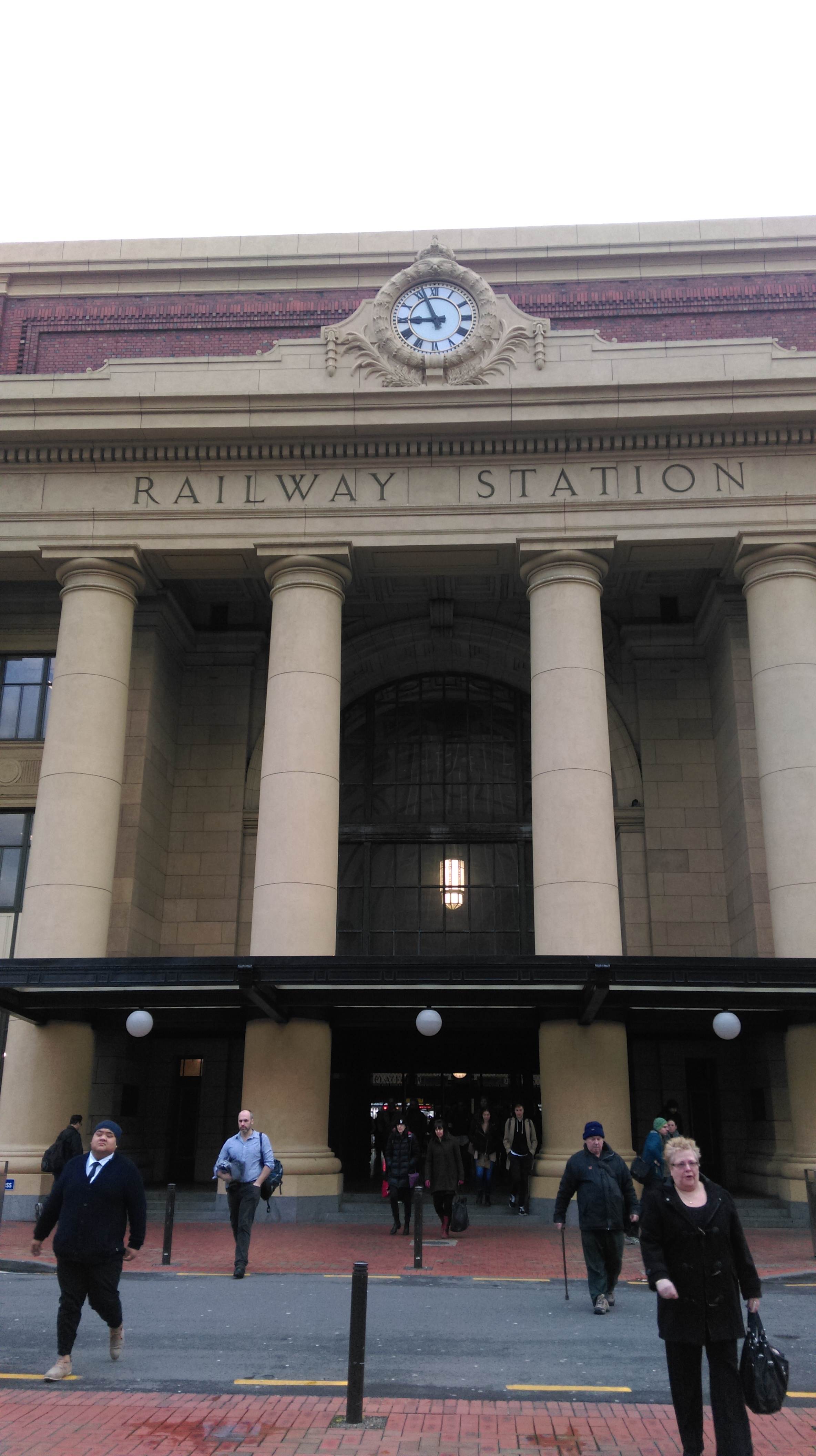
The Railway Station. A regular means of transport between suburbs and city.

The timing of ASEAN Student Voice 2015 was also opportune for personal reasons. I was invited to attend a gala dinner organised by the Singapore High Commission in celebration of Singapore’s 50th National Day. I had never been so excited to be part of a Singapore community since leaving home more than nine months ago.

IMAG0426
A cultural performance by a Singaporean arts group flown in for the occasion.
IMAG0427
A mishmash of Singapore dishes – or rather, a Kiwi version of Singapore dishes. Somewhere in there was Chicken Rice.
IMAG0428
The final course of our gala dinner – a dessert platter with Kiwi and SG elements. The only recognisable dessert for me were the three chocolates.
IMAG0429_1
A spontaneous selfie moment with the Singapore High Commissioner, His Excellency Mr Bernard Baker and his lovely wife, Susan.

Reflecting on ASEAN Student Voice 2015, I am impressed with New Zealand’s commitment to creating a positive international student experience, and even more impressed with the passion and personal convictions of the speakers. Their common message was about relationships – cultivating meaningful and long-lasting relationships between New Zealand and its ASEAN neighbours.

Group_MnisterJoyce
Group photo with Minister for Tertiary Education, Hon Steven Joyce
FB_IMG_1439534135828
Group photo from Education New Zealand (taken from FB page – Study in New Zealand)

I now have a renewed vigour for my research, and a clearer vision of how my New Zealand journey can make a difference in the international student experience for my immediate community and beyond. I’m grateful to have had this experience and look forward to many more.

Postscript (19 October 2015): Read the article by Education New Zealand about Student Voice 2015.

Don`t copy text!